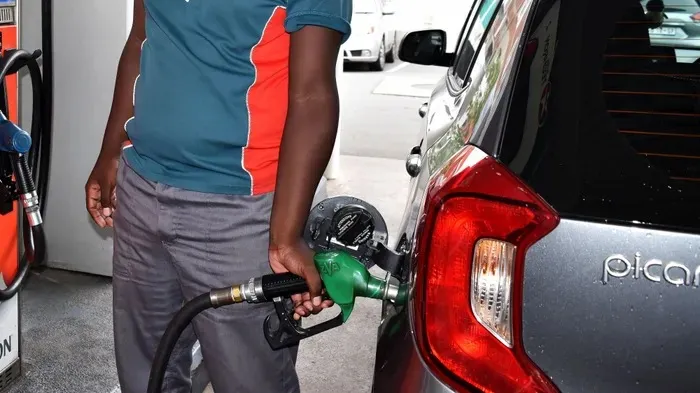
Massive fuel price hike for motorists from Wednesday in South Africa
Massive fuel price hike for motorists from Wednesday, May 6, as South African drivers brace themselves for one of the most severe economic shocks at the pumps in recent history. The upcoming adjustments are set to drastically impact household budgets, logistics, and the broader economy, with fuel prices surging sharply to unprecedented levels. Consumers who were already struggling with the high cost of living will now have to navigate even steeper transportation and daily commute expenses.
The Department of Mineral and Petroleum Resources (DMPR) officially confirmed the bleak outlook on Monday, revealing that both grades of petrol will increase by R3.27 per litre, while diesel will see an extraordinary and staggering jump of R6.19 per litre. This massive fuel price hike marks one of the biggest single-month increases South Africa has ever recorded, setting a worrying new baseline for transportation costs across the nation.
Record-Breaking Increases at the Pumps
The sheer scale of this increase means that South Africans will be paying substantially more just to keep their vehicles on the road and businesses operational. Following the implementation of these new prices, the cost of inland 93 Unleaded petrol will reach approximately R26.52 per litre.
Meanwhile, the wholesale price of 50ppm diesel is shattering previous records, surging to about R32.30 per litre in Gauteng. With the retail margin adding a further R2.50 to R3.00 depending on the specific outlet, consumers could easily see diesel prices pushing past R35 at the pumps.
Inland vs. Coastal: A Breakdown of New Costs
At the coast, the situation is marginally better but still exceptionally harsh. South Africans will pay R25.80 for a litre of 95 Unleaded petrol, while coastal wholesale diesel will rise to roughly R31.54. This establishes a grim new price record for diesel overall.
Although the petrol price remains slightly below the all-time peak of R26.09 per litre recorded at the coast in July 2022—following the outbreak of the war in Ukraine—the current economic climate makes this hike particularly difficult to absorb. Back in 2022, petrol prices dropped to R21.71 within three months as international oil prices receded, but analysts are far less optimistic about a rapid recovery this time around.
Understanding the Slate Levy and Its Heavy Toll
While global market dynamics play a massive role in the cost of fuel, domestic regulatory mechanisms have exacerbated the situation. A significant portion of this massive fuel price hike is tied directly to the implementation of the Slate Levy.
Initially, month-end data from the Central Energy Fund (CEF) had pointed to somewhat lower—though still severe—increases of R2.04 for 95 Unleaded petrol and R4.96 per litre for 50ppm diesel. However, the final official pricing announced by the DMPR included a heavy Slate Levy penalty, which added a further 122.70 cents (approximately R1.23) to the price of both fuels.
The Slate Levy is a self-adjusting mechanism used by the government to compensate fuel companies for daily price fluctuations that took place in the preceding month, ensuring that importers recover the actual costs of purchasing crude oil. According to the department, the cumulative slate reflected a massive negative balance of R14.17 billion at the end of March 2026. To recover this severe shortfall, the government had no choice but to pass the burden directly onto the consumer.
Global and Domestic Drivers: The “Perfect Storm”
South Africa is facing this economic pressure as the result of a “perfect storm” of international and domestic factors. May’s fuel price increases are almost entirely driven by surging international petroleum product prices. The ongoing and escalating conflicts in the Middle East have caused extreme volatility in global oil markets, pushing the price of Brent crude oil to uncomfortable highs. As supply chain fears persist, oil-producing nations have maintained tight control over their output, keeping the cost of refined petroleum products at a premium.
Domestically, the South African rand has struggled to maintain its footing against a dominant US dollar. Although the DMPR noted that the rand had a relatively negligible effect on this specific pricing structure—contributing only about three to five cents to the overall under-recovery—any sustained weakness in the local currency drastically limits South Africa’s ability to buffer against global oil price shocks. Furthermore, the national treasury is operating under severe fiscal constraints, making long-term tax reprieves difficult to sustain without compromising other critical public services.
The Domino Effect: Inflation, Logistics, and Grocery Bills
When the massive fuel price hike takes effect, the consequences will extend far beyond the petrol station. Diesel is the lifeblood of the South African economy. It powers the massive freight trucks that transport food and consumer goods, the tractors used in agricultural production, and the backup generators that businesses rely on to survive persistent electricity challenges.
An increase of over R6 per litre for diesel will instantly drive up the operational costs of the entire logistics and agricultural sectors. Retailers and manufacturers will inevitably pass these added transportation costs down to the consumer, sparking a renewed wave of inflation. Food prices, which have only recently begun to stabilize, are highly sensitive to diesel costs and are expected to spike in the coming weeks. For the average South African, this means paying for this fuel hike at the grocery store checkout counter, even if they don’t own a car.
Public Transport Under Strain
Public transport operators, including the massive minibus taxi industry, will face immense pressure to raise their fares to remain profitable. For millions of South Africans who rely on daily public transport to commute to work, fare increases could force them to allocate an unsustainable percentage of their monthly wages just to travel. This places an even heavier burden on the working class.
A Bigger Fuel Crisis Looms for June and July
Unfortunately, economists and energy analysts warn that this massive fuel price hike may not be an isolated event. South Africans could be in for even bigger price shocks in June and July.
The global geopolitical landscape remains highly unstable. Should there not be a rapid and lasting resolution to the war in the Middle East, international oil markets will continue to bake in a high “risk premium,” keeping crude oil prices elevated indefinitely. Furthermore, as the Northern Hemisphere prepares for its peak summer driving season, global demand for petrol and diesel will surge, putting even more upward pressure on international product prices.
YOU MAY LIKE:
December fuel price increase: Here’s what you’re likely to pay for petrol and diesel from Wednesday
Conclusion: Navigating a Harsh Economic Winter
In conclusion, Wednesday’s historic fuel price hike represents a critical juncture for the South African consumer and the broader economy. With petrol breaking past R26.00 and diesel surging into uncharted territory above R32.00, household incomes will be stretched to their absolute limits. Driven by global conflicts, a weakened currency, and domestic shortfalls recovered through the Slate Levy, the pressures pushing fuel prices upward show little sign of reversing in the immediate future.
South African consumers are advised to budget extremely conservatively for the upcoming winter months. To mitigate the impact of these rising costs, motorists are strongly encouraged to adopt fuel-efficient driving habits, form carpools, and consolidate their daily trips wherever possible. Until global supply chain tensions ease and the local currency strengthens, the pressure at the pumps will remain a heavy and inescapable burden on the nation’s economic landscape.
References
- Reuters – South Africa fuel prices and global oil impact
https://www.reuters.com/markets/commodities/south-africa-fuel-prices-oil-impact-2026-05-05/ - Bloomberg – Oil price surge drives fuel hikes in emerging markets
https://www.bloomberg.com/news/articles/2026-05-05/oil-price-surge-drives-fuel-hikes-emerging-markets
Kindly consider to support eKayNews, Buy Us a Coffee & Keep the News Flowing!

Love what we do? You can now support eKayNews directly! Your contributions empower us to deliver the breaking news, sports, and local updates you trust.
Ways to Support:
-
Subscribe: Choose any amount (cancel anytime).
-
Virtual Coffee: A quick, once-off donation to say thanks.
Note: Payments are 100% secure via PayFast. We never see your banking details.
To our amazing readers: Your support fills us with gratitude. You are the reason we can keep doing this every day. Thank you for being a vital part of the eKayNews family!
We’re feeling the love at eKayNews!

Facebook: [eKayNews on Facebook] X (Twitter): [eKayNews on X] WhatsApp: [Follow the eKayNews WhatsApp Channel] Join our inner circle for real-time news alerts!
📢 Advertising Packages on www.eKayNews.co.za
Package 1. Link Booster: We add 7 links to 7 articles over 7 days – R2,500
Package 2. Permanent Feature: Sponsored Blog Article (hosted permanently) – R4,000
Package 3. Prime Visibility: Home Page Banner Ad (30 days) – R5,000
Book now: Email info@ekaynews.co.za or WhatsApp us on +27710961185