S.A government issues statement about deadly new virus in South Africa
S.A government issues statement about deadly new virus as health officials urge the public to remain calm amidst a complex, international medical emergency. The alarming situation unfolded after a rare and highly dangerous pathogen was identified in passengers travelling on an international luxury vessel. With medical evacuations, sudden collapses at international airports, and emergency isolations dominating the headlines, the nation’s health authorities are working around the clock to contain the situation.
As global travel continues to connect the most remote corners of the world with major metropolitan hubs, the risk of rare zoonotic diseases crossing borders has become a stark reality. The recent events have thrust South Africa into the spotlight of international epidemiology, requiring swift action, rigorous contact tracing, and transparent public communication to prevent widespread panic.
Department of Health Manages the Hantavirus Alert
The national Department of Health (DoH) has officially stepped in to manage the crisis, confirming a rare case of Hantavirus in a critically ill British national who is currently receiving intensive care within South Africa.
The situation rapidly evolved from a suspected severe acute respiratory infection to a confirmed virological emergency. According to the department’s official communications, the patient had been travelling extensively before falling ill. The complexities of diagnosing rare viral infections at sea or on remote islands often lead to delayed treatment, which appears to have been a contributing factor in this unfolding medical drama.
The DoH explicitly requested that the public avoid panic, assuring citizens that world-class protocols are already in motion. The critically ill patient, whose condition necessitated a high-risk medical evacuation, is currently being treated in strict isolation at a highly advanced private health facility in Sandton, Johannesburg. “His laboratory test results came back positive for Hantavirus—a rare but potentially deadly virus transmitted primarily by rodents,” the department confirmed, adding that the patient remains in a critical but medically managed state.
Tracing the MV Hondius Cruise Ship Journey
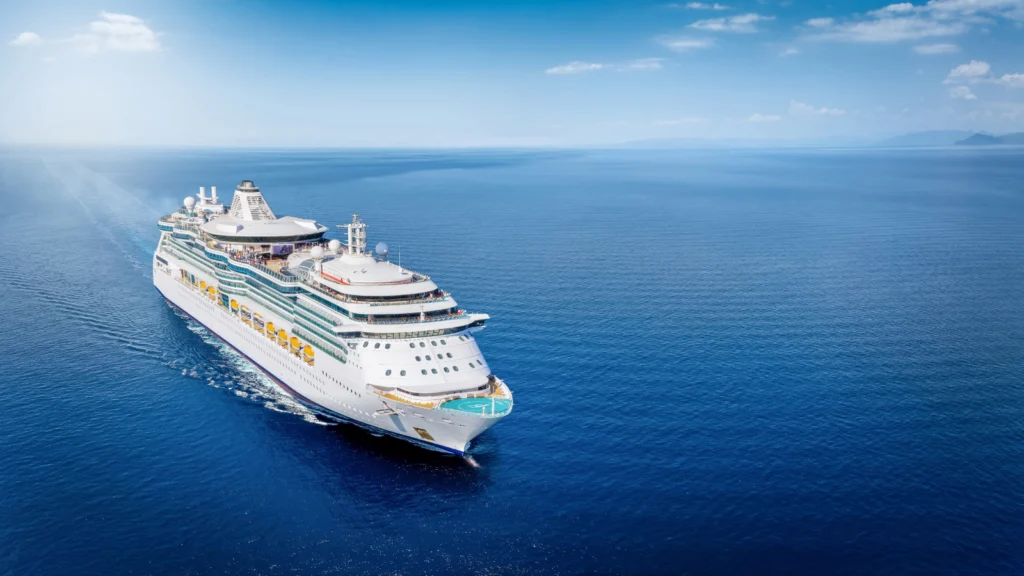
At the center of this medical investigation is the cruise ship MV Hondius. The vessel, known for its adventurous itineraries to some of the most isolated environments on earth, was carrying approximately 150 passengers.
The ship’s ambitious route began in Argentina and was scheduled to terminate in the Canary Islands, travelling via Cape Verde. However, it is the intermediate stops that have drawn the intense scrutiny of infectious disease experts. The cruise ship docked at several incredibly remote destinations, including mainland Antarctica, the Falkland Islands, South Georgia, Nightingale Island, Tristan da Cunha, St. Helena, and Ascension Island.
Epidemiologists are currently investigating where the exposure might have occurred. Given that Hantavirus is fundamentally a rodent-borne disease, experts are analyzing the ecology of the islands visited. Did the exposure occur during a shore excursion in a rustic, rodent-populated area? Or was there an infestation aboard the vessel itself? These are the critical questions authorities are attempting to answer as they retrace the steps of the infected passengers.
Passengers Face Hantavirus Pulmonary Syndrome Crisis
While the British national evacuated to Sandton is fighting for his life, the tragedy has already claimed lives, exposing the brutal reality of Hantavirus Pulmonary Syndrome (HPS). The Department of Health revealed that two additional passengers—a husband and wife—faced catastrophic medical emergencies linked to the same voyage.
“While the ship was travelling past South African shores, some of the passengers experienced serious health complications arising from what was initially considered severe acute respiratory infections,” the department noted. The sheer speed at which the illness progressed caught both ship medical personnel and international health authorities off guard.
The first of these tragic cases involved a 70-year-old male passenger. According to the timeline provided by authorities, he suddenly fell severely ill while the ship was navigating the treacherous waters from Ushuaia to St Helena Island. His clinical presentation was alarming and rapid, featuring a high fever, severe headache, debilitating abdominal pain, and acute diarrhoea. Despite emergency interventions, the man did not survive upon arrival at St Helena Island. His remains are currently being held on the remote island, awaiting complex repatriation procedures to return him to his home in the Netherlands.
South Africa Reacts to International Passenger Collapse
The tragedy did not end at St Helena. The second affected passenger was a 69-year-old woman, the spouse of the deceased 70-year-old man. In a distressing turn of events, the woman managed to travel to South Africa, but her health was already rapidly deteriorating.
While attempting to navigate through OR Tambo International Airport in Johannesburg to catch a connecting flight back to the Netherlands, the woman collapsed. Emergency medical personnel at the airport responded immediately, rushing her to a nearby health facility in Kempton Park. Despite the urgent medical assistance provided by South African doctors, the woman tragically succumbed to the illness.
The Department of Health has stated that laboratory test results for the deceased woman are still pending. However, given the epidemiological link to her husband and the confirmed case in the Sandton facility, health officials are treating the incident with the highest level of virological precaution. Whenever the S.A government issues statement about deadly new virus, it serves as a critical alert to medical personnel across all ports of entry to remain vigilant for atypical respiratory distress.
Understanding Hantavirus and How It Spreads
To understand the gravity of the situation and why the Department of Health has activated its emergency response networks, one must understand the pathogen itself.
Hantaviruses belong to a family of viruses spread primarily by rodents. Unlike many other respiratory viruses, such as influenza or coronaviruses, Hantavirus does not typically spread from person to person. Instead, individuals contract the disease through environmental exposure.
According to guidelines from the US Centers for Disease Control and Prevention (CDC), the virus is shed in the urine, droppings, and saliva of infected rats and mice. Human infection usually occurs when these rodent excretions dry out and become aerosolized—meaning the viral particles are swept up into the air as dust. When a person breathes in this contaminated air, the virus infiltrates the respiratory system. Though incredibly rare, the virus can also be transmitted through a direct bite or scratch from an infected rodent.
Signs and Symptoms of Hantavirus Pulmonary Syndrome
When a human is infected with a New World Hantavirus, the resulting disease is known as Hantavirus Pulmonary Syndrome (HPS). This is a severe, rapidly progressing, and potentially life-threatening respiratory disease that primarily targets the lungs and cardiovascular system. Symptoms usually appear anywhere from 1 to 8 weeks after the initial contact with an infected rodent or its environment.
The timeline of the disease makes it particularly dangerous, and medical experts categorize the symptoms into two distinct phases.
Early Phase Symptoms:
-
Fatigue and profound tiredness
-
Fever and chills
-
Deep muscle aches, particularly in the large muscle groups such as the thighs, hips, back, and shoulders
-
Severe headaches
-
Dizziness
-
Gastrointestinal distress, including nausea, vomiting, diarrhoea, and severe abdominal pain
Late Phase Symptoms (emerging 4 to 10 days after initial illness):
-
Severe coughing
-
Extreme shortness of breath
-
A terrifying sensation of chest tightness as fluid accumulates in the lungs
The mortality rate for Hantavirus Pulmonary Syndrome is staggering. Approximately 38% of all individuals who develop the severe respiratory symptoms will succumb to the disease.
Department of Health Contact Tracing in South Africa
The immediate priority for South Africa is containment and monitoring. While person-to-person transmission of Hantavirus is exceptionally rare, the government is leaving nothing to chance.
The Department of Health has announced that it is working in close, coordinated partnership with the National Institute for Communicable Diseases (NICD) and Gauteng provincial health authorities. Together, they have launched a massive epidemiological operation to conduct rigorous contact tracing. The goal is to identify, isolate, and monitor any individuals—including airport staff, emergency responders, hospital workers, and fellow passengers—who may have been exposed to the infected persons or their bodily fluids during the medical emergencies.
“In our view, there is no need for the public to panic because only two patients from the cruise ship have been within our borders,” the department stated clearly, attempting to soothe public anxiety. By maintaining strict isolation protocols for the surviving patient in Sandton and heavily sanitizing the areas where the female passenger collapsed at OR Tambo International Airport, the risk to the general South African public is considered incredibly low.
YOU MAY LIKE:
Trump HIV prevention plan shuts out South Africa — the nation most affected
Managing Global Travel and Zoonotic Threats Aboard a Cruise Ship
As the medical community awaits the final laboratory results for the deceased female passenger, the situation serves as a grim reminder of the vulnerabilities inherent in modern global travel. A luxury voyage meant to explore the pristine, untouched beauty of the Antarctic and the South Atlantic islands ended in a multi-national health crisis.
When the S.A government issues statement about deadly new virus, it highlights the essential role that destination and transit countries play in the global health security network. South Africa, with its advanced medical infrastructure and world-class communicable disease institutes, was uniquely positioned to intercept, diagnose, and manage this terrifying outbreak.
Moving forward, cruise ship operators and international health bodies will likely review sanitation and environmental hazard protocols for shore excursions in remote, rodent-populated territories. Until then, the DoH continues its vigilant watch, ensuring that the borders remain safe and that the tragic events initiated aboard the MV Hondius do not spiral into a wider domestic crisis.
References
- BBC News
What is hantavirus and how dangerous is it?
https://www.bbc.com/news/health - Reuters
Rare hantavirus cases raise health concerns among travellers
https://www.reuters.com/world/
Kindly consider to support eKayNews, Buy Us a Coffee & Keep the News Flowing!

Love what we do? You can now support eKayNews directly! Your contributions empower us to deliver the breaking news, sports, and local updates you trust.
Ways to Support:
-
Subscribe: Choose any amount (cancel anytime).
-
Virtual Coffee: A quick, once-off donation to say thanks.
Note: Payments are 100% secure via PayFast. We never see your banking details.
To our amazing readers: Your support fills us with gratitude. You are the reason we can keep doing this every day. Thank you for being a vital part of the eKayNews family!
We’re feeling the love at eKayNews!

Facebook: [eKayNews on Facebook] X (Twitter): [eKayNews on X] WhatsApp: [Follow the eKayNews WhatsApp Channel] Join our inner circle for real-time news alerts!
📢 Advertising Packages on www.eKayNews.co.za
Package 1. Link Booster: We add 7 links to 7 articles over 7 days – R2,500
Package 2. Permanent Feature: Sponsored Blog Article (hosted permanently) – R4,000
Package 3. Prime Visibility: Home Page Banner Ad (30 days) – R5,000
Book now: Email info@ekaynews.co.za or WhatsApp us on +27710961185