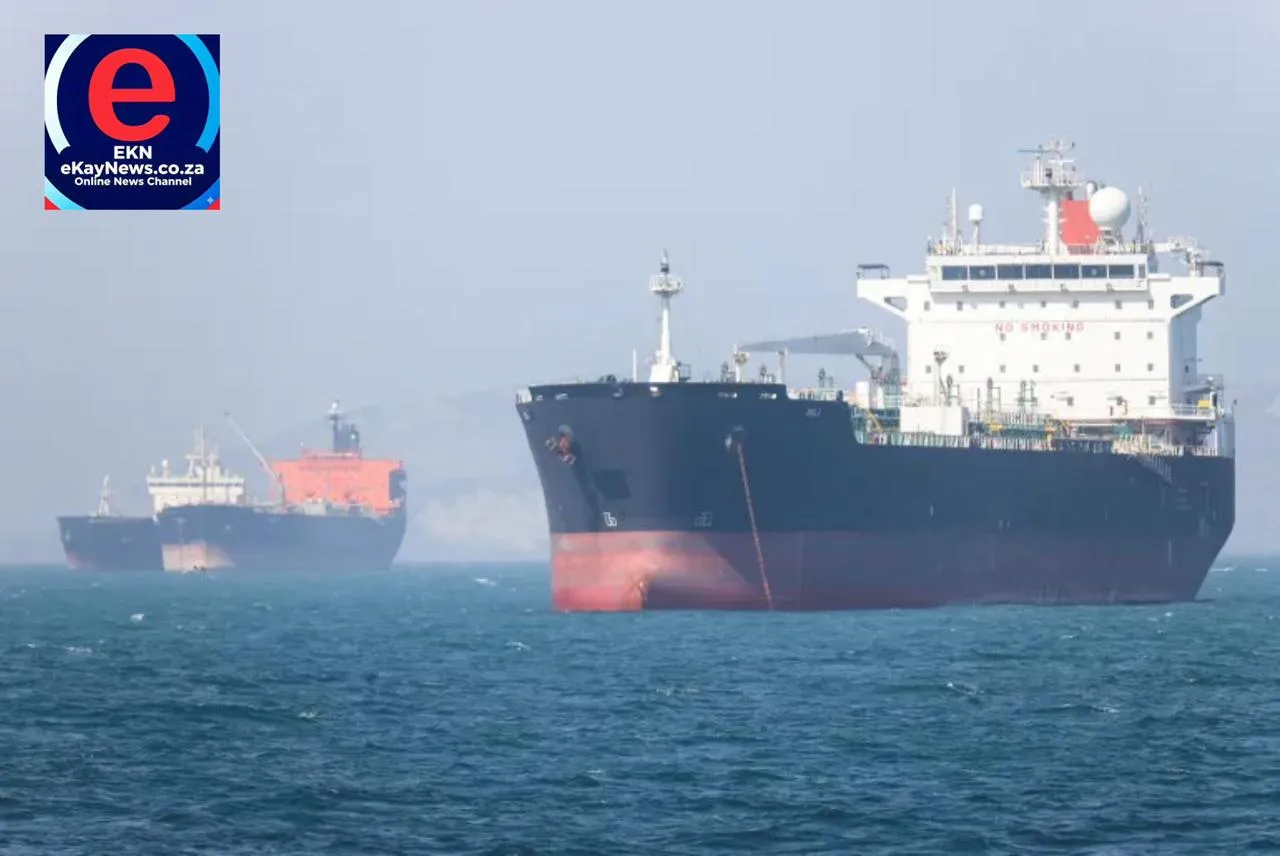
US and Iranian militaries trade shots as Strait of Hormuz tensions escalate
US and Iranian militaries trade shots as Strait of Hormuz tensions escalate, plunging the Middle East back into a state of high alert and testing the absolute limits of a fragile diplomatic truce. The recent clashes represent a significant deterioration in regional security, threatening to unravel weeks of delicate negotiations aimed at stabilizing one of the world’s most critical maritime chokepoints.
The battle to reopen the Strait of Hormuz has taken a violent turn, with both Washington and Tehran trading fire in a direct military confrontation. As the US military steps up its efforts to protect civilian shipping lanes, the United Arab Emirates has found itself dragged into the crossfire, coming under a multi-pronged aerial attack that signifies a dangerous expansion of the conflict.
The Fragile Ceasefire Under Severe Strain
The ceasefire between the United States and Iran, which cautiously took hold in early April, is now facing its most severe test to date. The agreement, originally designed to halt a tit-for-tat cycle of retaliation, appears to be unraveling rapidly on the waters of the Persian Gulf.
Following the unprecedented exchange of fire, President Donald Trump declined to explicitly confirm whether the truce remains in place, leaving international observers and global markets in a state of deep uncertainty. The ambiguity surrounding the ceasefire has raised fears that a full-scale regional conflict could be reignited if diplomatic channels are not immediately utilized.
The Breakdown of Diplomatic Trust
For weeks, international mediators have worked tirelessly to maintain the April truce, hoping it would lead to broader discussions regarding maritime security and economic sanctions. However, the reality that US and Iranian militaries trade shots as Strait of Hormuz tensions escalate underscores a fundamental lack of trust between the two nations.
-
Political Uncertainty: The White House has maintained a strategic silence regarding the official status of the truce, opting instead to focus on the immediate tactical objective of securing the waterway.
-
Military Readiness: Both the US military and the Iran military have placed their regional assets on high alert, anticipating further escalations in the coming days.
-
Allied Concerns: European and Gulf allies are expressing deep concern over the rapid deterioration of the security environment, urging both sides to step back from the brink.
The US Military Moves to Reopen the Waterway
At the heart of the current crisis is the Strait of Hormuz, a narrow passage through which roughly a fifth of the world’s globally consumed oil passes. On Monday, the US military initiated a bold new operation designed to break the Iranian blockade and restore freedom of navigation for commercial vessels.
The operation was not without immediate casualties. The Pentagon confirmed that its naval forces fired upon Iranian assets, successfully sinking six small boats that were actively targeting civilian merchant ships
Securing the Transit Corridors
Despite the violence, the US military reported a crucial victory for its new maritime initiative. Two American-flagged merchant ships successfully transited the Strait of Hormuz on Monday under the heavy protection of naval escorts.
This transit is highly symbolic, demonstrating Washington’s commitment to keeping the sea lanes open regardless of the threats posed by the Iran military. However, military analysts warn that providing continuous escorts for the hundreds of vessels that traverse the Gulf daily is logistically unsustainable in the long term, meaning a permanent political solution must be found.
United Arab Emirates Comes Under Direct Attack
As the US and Iranian militaries trade shots as Strait of Hormuz tensions escalate, the conflict has spilled over into neighboring territories. For the first time since the April ceasefire was implemented, the United Arab Emirates—a key American ally and global economic hub—reported coming under direct attack.
The UAE Defense Ministry released a statement confirming that its advanced air defense systems were forced to “engage” a massive barrage of incoming projectiles. In total, 19 airborne threats, consisting of 15 missiles and four armed drones, were fired toward Emirati territory by Iran.
Air Defenses Engaged in Fujairah Region
The attack heavily targeted the eastern emirate of Fujairah, a location of immense strategic importance. Fujairah sits outside the Strait of Hormuz on the Gulf of Oman, serving as a critical oil terminal that allows the UAE to bypass the vulnerable strait entirely.
Authorities in Fujairah reported that while the majority of the incoming threats were intercepted, one drone successfully penetrated the defensive shield, sparking a massive fire at a key oil facility.
-
Casualties: Three Indian nationals working at the facility were wounded in the blast, highlighting the human cost of the escalating geopolitical dispute.
-
Maritime Incidents: Adding to the chaos, the British military’s maritime monitoring agencies reported two separate cargo vessels ablaze off the coast of the UAE, though it remains unconfirmed if these fires were a direct result of the missile and drone barrage.
The Role of the Iran Military in the Escalation
The Iran military, particularly the Islamic Revolutionary Guard Corps (IRGC), has long utilized the Strait of Hormuz as a primary lever of geopolitical influence. By employing a doctrine of asymmetric warfare—utilizing swarms of fast-attack boats, sea mines, and unmanned aerial vehicles—Tehran can project power that far exceeds its conventional naval capabilities.
The recent deployment of small boats to harass civilian shipping is a classic tactic used by the Iran military to disrupt global markets and pressure the international community. However, the aggressive kinetic response by the US military, resulting in the sinking of six Iranian vessels, suggests a shifting paradigm in how Washington is willing to counter these tactics.
Tehran’s Response and Diplomatic Warnings
In the immediate aftermath of the attacks, Tehran adopted a strategy of strategic ambiguity. The Iranian government did not outright confirm or deny ordering the missile strikes on the United Arab Emirates or the naval harassment in the Strait.
However, early on Tuesday, Iran’s Foreign Minister Abbas Araghchi took to the social media platform X to issue a stark warning to both Washington and Abu Dhabi. He cautioned that both the US and the UAE “should be wary of being dragged back into quagmire,” a thinly veiled threat that further military action would result in a protracted and devastating regional war.
In similarly vague terms, Iranian state television quoted an anonymous military official who claimed that Tehran had “no plan” to target the UAE or its oil infrastructure.
Global Economic Impact of the Strait of Hormuz Blockade
It is impossible to overstate the economic ramifications when US and Iranian militaries trade shots as Strait of Hormuz tensions escalate. The waterway is the central artery of the global energy market. Any disruption, even a temporary one, sends immediate shockwaves through commodities markets, impacting everything from the price of gasoline in the American Midwest to manufacturing costs in East Asia.
As news of the sunken Iranian boats and the burning oil facilities in the United Arab Emirates broke, global benchmark crude prices experienced intense volatility. Energy traders are heavily factoring in the “risk premium” of a collapsed ceasefire, knowing that a prolonged closure of the Strait could lead to historic supply shortages.
Shipping and Oil Markets React
Insurance premiums for vessels entering the Persian Gulf have skyrocketed, and several major shipping conglomerates have temporarily halted all transit through the region until the security situation stabilizes.
The fact that the US military had to aggressively intervene to allow just two American-flagged vessels to pass highlights the severe operational risks civilian crews are currently facing.
As the smoke clears over the Gulf of Oman and diplomatic cables fly between world capitals, the situation remains incredibly fluid. The coming days will determine whether this exchange of fire was a temporary flare-up, or the opening salvo of a much larger, catastrophic conflict.
YOU MAY LIKE:
Iran fires missiles at US warship to prevent it entering Hormuz
Conclusion: A Region on the Brink
The recent escalation in the Strait of Hormuz has shattered the illusion that the April ceasefire between Washington and Tehran could hold without substantial diplomatic intervention. The reality that the US and Iranian militaries are trading direct fire signals a dangerous new phase in this geopolitical standoff, one where proxy warfare is rapidly being replaced by kinetic confrontation.
References
- Reuters
U.S. and Iran exchange fire amid rising Strait of Hormuz tensions
https://www.reuters.com/world/middle-east/ - BBC News
Strait of Hormuz crisis: Military escalation and global impact
https://www.bbc.com/news/world-middle-east
Keep the Headlines Fresh!

Quality news takes time, effort, and a whole lot of coffee. If you value what we do at eKayNews, consider “buying a round” for the team!
-
Join the Inner Circle: Set up a custom subscription.
-
The Instant Jolt: Send a one-time “coffee” donation.
Why trust us? We use PayFast for 100% secure, encrypted transactions. Your data stays yours; the news stays ours.
To our amazing readers: You’re the reason we’re first on the scene. Thanks for being part of the family!
Feel the Pulse of the News with eKayNews!

Join the ever-growing eKayNews community and stay connected to the stories that matter. Follow us on Facebook, X, and WhatsApp for real-time updates, breaking news, and exclusive alerts straight to your feed. Your support keeps us digging deeper and sharing the news you can trust.
Stay Connected:
-
Facebook: [eKayNews on Facebook]
-
X (Twitter): [eKayNews on X]
-
WhatsApp: [Join the eKayNews WhatsApp Channel]
Become part of our inner circle and get instant news alerts as events unfold across South Africa and beyond!
Promote Your Brand with eKayNews
Looking to reach a wide, engaged audience? Explore our advertising packages:
-
Link Booster: 7 links to 7 articles over 7 days – R2,500
-
Permanent Feature: Sponsored blog article hosted permanently – R4,000
-
Prime Visibility: Home page banner ad for 30 days – R5,000
Don’t miss your chance to connect with our audience. Book your package today via email at info@ekaynews.co.za or WhatsApp us on +27710961185.
Be part of a platform where news meets community—stay informed, stay ahead, stay with eKayNews!