Iran says US has responded to its latest peace proposal
Iran says US has responded to its latest peace proposal not with diplomatic concessions, but with a highly dangerous military escalation that has brought the Middle East to the absolute brink of all-out war. In a shocking and unprecedented development, Iranian state media confirmed on Monday afternoon that the nation’s coastal defense forces fired two advanced anti-ship missiles directly at a heavily armed US warship. The dramatic strike occurred as the vessel attempted to navigate into the contested waters of the Strait of Hormuz, completely ignoring repeated, explicit radio warnings from the Islamic Revolutionary Guard Corps (IRGC) to halt its advance immediately.
A Catastrophic Breakdown in Diplomacy
This violent clash represents a catastrophic breakdown in the fragile back-channel negotiations that had been taking place over the past several weeks. For days, the international community had been holding its collective breath, waiting for a diplomatic breakthrough. Now, the narrative has violently shifted. The fact that Iran says US has responded to its latest peace proposal through aggressive naval maneuvers highlights the complete erosion of trust between Washington and Tehran, plunging global markets and maritime security into a state of total chaos.
Missiles Strike a Defiant US Warship
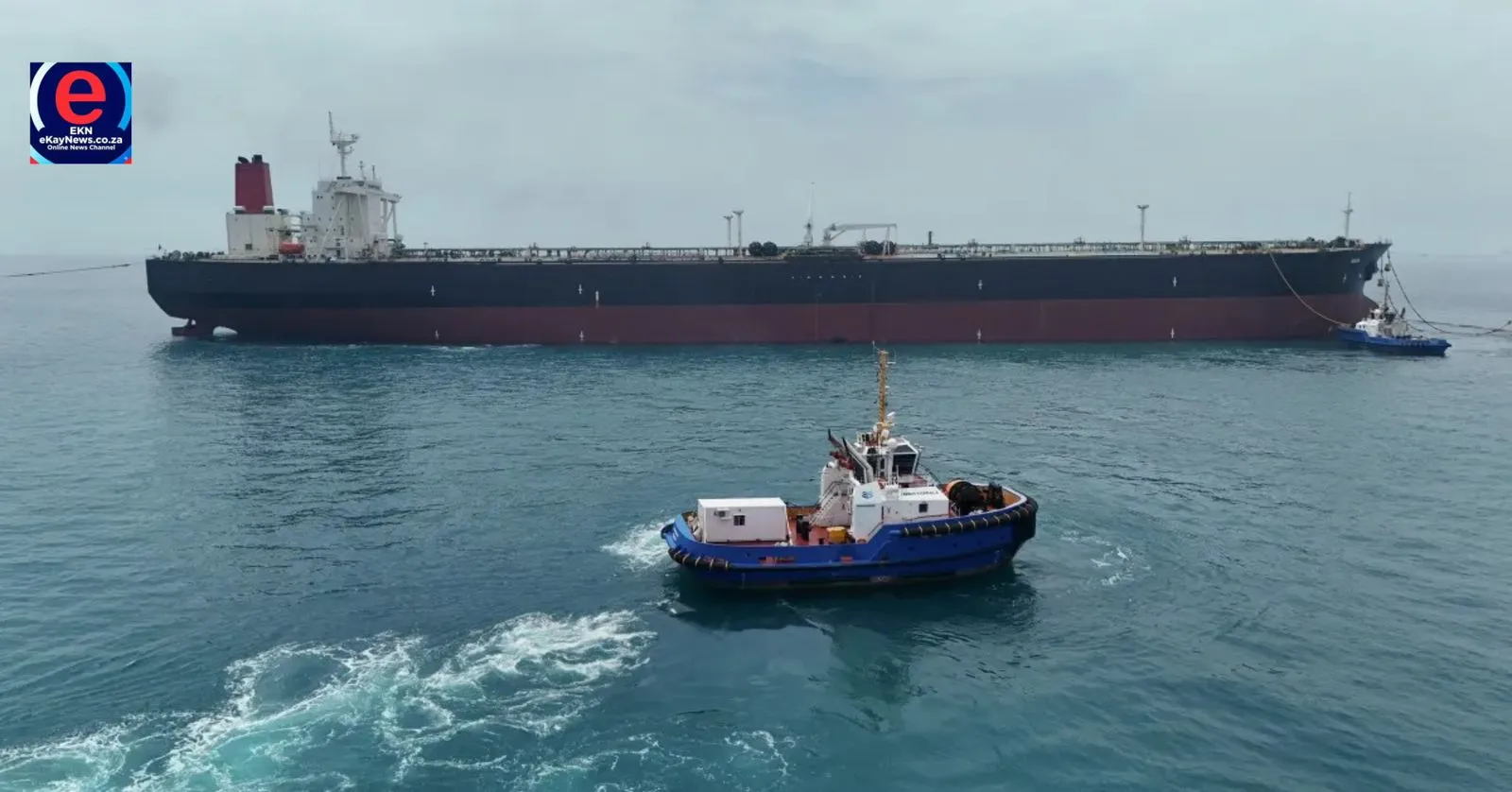
The incident on the waters of the Persian Gulf unfolded with terrifying speed. According to official statements released by Iranian military commanders, the US warship—identified as a guided-missile destroyer—was aggressively approaching the territorial waters fiercely guarded by Iran. After the vessel allegedly ignored multiple direct warnings to alter its course and exit the area, the order was given to engage. Two high-precision coastal defense missiles were launched, successfully striking the American destroyer and inflicting what state media describes as significant structural damage to the vessel’s hull and radar systems.
A Highly Calculated Geopolitical Risk
The decision to fire missiles at a sovereign American military vessel is a massive, highly calculated risk by the Iranian leadership. It sends a chilling, uncompromising message to the Western world that Tehran is fully prepared to defend its maritime borders with lethal force, regardless of the diplomatic consequences. While the Pentagon has yet to release a full, detailed damage assessment or officially confirm the number of potential casualties aboard the US warship, the visual evidence of the strike has already sent shockwaves through the global intelligence community.
The Strait of Hormuz Becomes a Volatile Flashpoint
The location of this military engagement is no accident. The Strait of Hormuz is arguably the most important strategic maritime chokepoint on the planet, serving as the primary transit route for approximately one-fifth of the entire world’s daily oil supply. Whoever controls this narrow body of water holds an unparalleled degree of leverage over the global economy. By firing missiles to defend this territory, Tehran is demonstrating its absolute willingness to weaponize its geography.
A Nightmare Scenario for Global Energy Markets
For months, the Strait of Hormuz has been the site of a tense, slow-burning standoff. Iran had previously restricted the flow of commercial traffic in direct retaliation for crippling Western economic sanctions and a US naval blockade. However, this direct kinetic strike against an active US warship elevates the crisis from an economic dispute to a hot military conflict. The closure or disruption of the Strait of Hormuz is the ultimate nightmare scenario for global energy markets, and the smoke rising from the American destroyer proves that this nightmare is rapidly becoming a reality.
Donald Trump and the International Naval Mission
To fully understand how this violent confrontation occurred, one must look at the recent policy decisions emanating from the White House. Just days prior to the attack, US President Donald Trump announced a highly controversial, aggressive new naval mission. Dubbed “Project Freedom,” Donald Trump explicitly ordered the United States Navy to begin actively guiding and escorting stranded commercial ships safely through the heavily mined and restricted waters of the Strait of Hormuz.
This presidential directive was viewed by Tehran not as a peacekeeping mission, but as a direct, unacceptable violation of Iranian sovereignty and a blatant provocation. Donald Trump had publicly warned that any interference with these naval escorts would be met with overwhelming force. Consequently, when the US warship entered the region to execute the President’s orders, the Iranian military viewed it as the ultimate test of their resolve. Despite the ongoing diplomatic talks, Iran says US has responded to its latest peace proposal by attempting to forcibly break the naval blockade, leaving them with no choice but to retaliate defensively.
How Iran Justifies Defending Its Waters
From the perspective of the Iranian government, the missile strike was an entirely legal and necessary act of self-defense. State-linked media outlets are currently working overtime to control the domestic and international narrative. They argue that the US warship was acting as an invading force, completely disregarding established international maritime protocols and violating territorial waters.
Furthermore, Iranian officials point to the hypocrisy of the West. They argue that while Donald Trump publicly entertains the idea of reviewing the 14-point peace proposal submitted by Tehran, he simultaneously orders his military into an aggressive posture right on Iran’s doorstep. This intense geopolitical friction is exactly why Iran says US has responded to its latest peace proposal with bad faith and hostility. The use of coastal defense missiles is being framed domestically as a heroic defense of the homeland against American imperialism, intended to completely deter any future attempts to breach the Strait of Hormuz.
The Future of the US Warship Fleet and Missile Defense
The immediate aftermath of this attack leaves the United States Navy facing a severe tactical dilemma. The successful deployment of Iranian anti-ship missiles against a technologically advanced US warship forces a rapid recalculation of American naval supremacy in the Persian Gulf. If a single destroyer can be compromised despite its state-of-the-art Aegis combat system and counter-measure defenses, the entire fleet operating within range of the Iranian coastline is currently at risk.
Military analysts are now fiercely debating the effectiveness of current naval defense protocols against the specific types of fast, low-flying missiles utilized by the IRGC. The Pentagon will undoubtedly have to drastically adjust its rules of engagement. Will they pull their remaining assets back to a safer distance, effectively ceding control of the Strait of Hormuz to Tehran? Or will they double down, sending aircraft carriers and heavier escorts into the firing line to prove a point?
Can Donald Trump Salvage the Peace Proposal?
The ball is now entirely in the court of the United States. President Donald Trump faces one of the most defining crises of his presidency. He must navigate the immense domestic political pressure to retaliate with overwhelming military force against the Iranian missile batteries, while simultaneously recognizing that a full-scale regional war could completely devastate the global economy and his own political future.
The tragic irony of the situation is that the diplomatic framework for a resolution was already sitting on the President’s desk. However, because Iran says US has responded to its latest peace proposal with naval aggression rather than negotiation, the window for a peaceful settlement is rapidly slamming shut. The international community, heavily reliant on the energy resources flowing through the Persian Gulf, can only watch and wait as Donald Trump consults with his generals to formulate a response to the burning US warship.
YOU MAY LIKE:
Conclusion
The coming days will be some of the most critical in modern history for the Middle East and the global economy. The missile strike on the US warship in the Strait of Hormuz has transformed a tense diplomatic standoff into an active military crisis. With both Washington and Tehran digging into their respective positions—and domestic pressures mounting on President Donald Trump—the path to de-escalation appears narrower than ever. The international community must now brace for the fallout, as the next 48 hours will undoubtedly determine whether the region can step back from the abyss or if it will plunge headfirst into a catastrophic, full-scale war.
References
- Reuters
Tensions rise in Strait of Hormuz amid U.S.-Iran confrontation
https://www.reuters.com/world/middle-east/ - BBC News
Strait of Hormuz: Why the waterway is so important
https://www.bbc.com/news/world-middle-east
Keep the Headlines Fresh!

Quality news takes time, effort, and a whole lot of coffee. If you value what we do at eKayNews, consider “buying a round” for the team!
-
Join the Inner Circle: Set up a custom subscription.
-
The Instant Jolt: Send a one-time “coffee” donation.
Why trust us? We use PayFast for 100% secure, encrypted transactions. Your data stays yours; the news stays ours.
To our amazing readers: You’re the reason we’re first on the scene. Thanks for being part of the family!
Feel the Pulse of the News with eKayNews!

Join the ever-growing eKayNews community and stay connected to the stories that matter. Follow us on Facebook, X, and WhatsApp for real-time updates, breaking news, and exclusive alerts straight to your feed. Your support keeps us digging deeper and sharing the news you can trust.
Stay Connected:
-
Facebook: [eKayNews on Facebook]
-
X (Twitter): [eKayNews on X]
-
WhatsApp: [Join the eKayNews WhatsApp Channel]
Become part of our inner circle and get instant news alerts as events unfold across South Africa and beyond!
Promote Your Brand with eKayNews
Looking to reach a wide, engaged audience? Explore our advertising packages:
-
Link Booster: 7 links to 7 articles over 7 days – R2,500
-
Permanent Feature: Sponsored blog article hosted permanently – R4,000
-
Prime Visibility: Home page banner ad for 30 days – R5,000
Don’t miss your chance to connect with our audience. Book your package today via email at info@ekaynews.co.za or WhatsApp us on +27710961185.
Be part of a platform where news meets community—stay informed, stay ahead, stay with eKayNews!