Trump says Iran has ‘not yet paid a big enough price’ as he reviews new peace proposal
Trump says Iran has ‘not yet paid a big enough price’ as he reviews new peace proposal, signaling a potentially massive roadblock in the ongoing diplomatic efforts to end the devastating conflict that has gripped the Middle East for over two months. As global markets teeter on the edge of instability and energy supplies face unprecedented disruptions, U.S. President Donald Trump has made his deep skepticism regarding Tehran’s latest diplomatic overtures explicitly clear to the public. The situation remains incredibly tense, with Iran’s Revolutionary Guard Corps (IRGC) simultaneously issuing a stark warning that the room for American decision-making “has narrowed.”
This high-stakes geopolitical standoff has left the international community watching with bated breath. The United States and its allies, alongside the Islamic Republic of Iran and its regional proxies, are locked in a complex chess match where military blockades, nuclear ambitions, and regional warfare all intersect. As the diplomatic back-and-forth continues, it is evident that a rapid resolution is far from guaranteed.
The Stance of Donald Trump on the Middle East Crisis
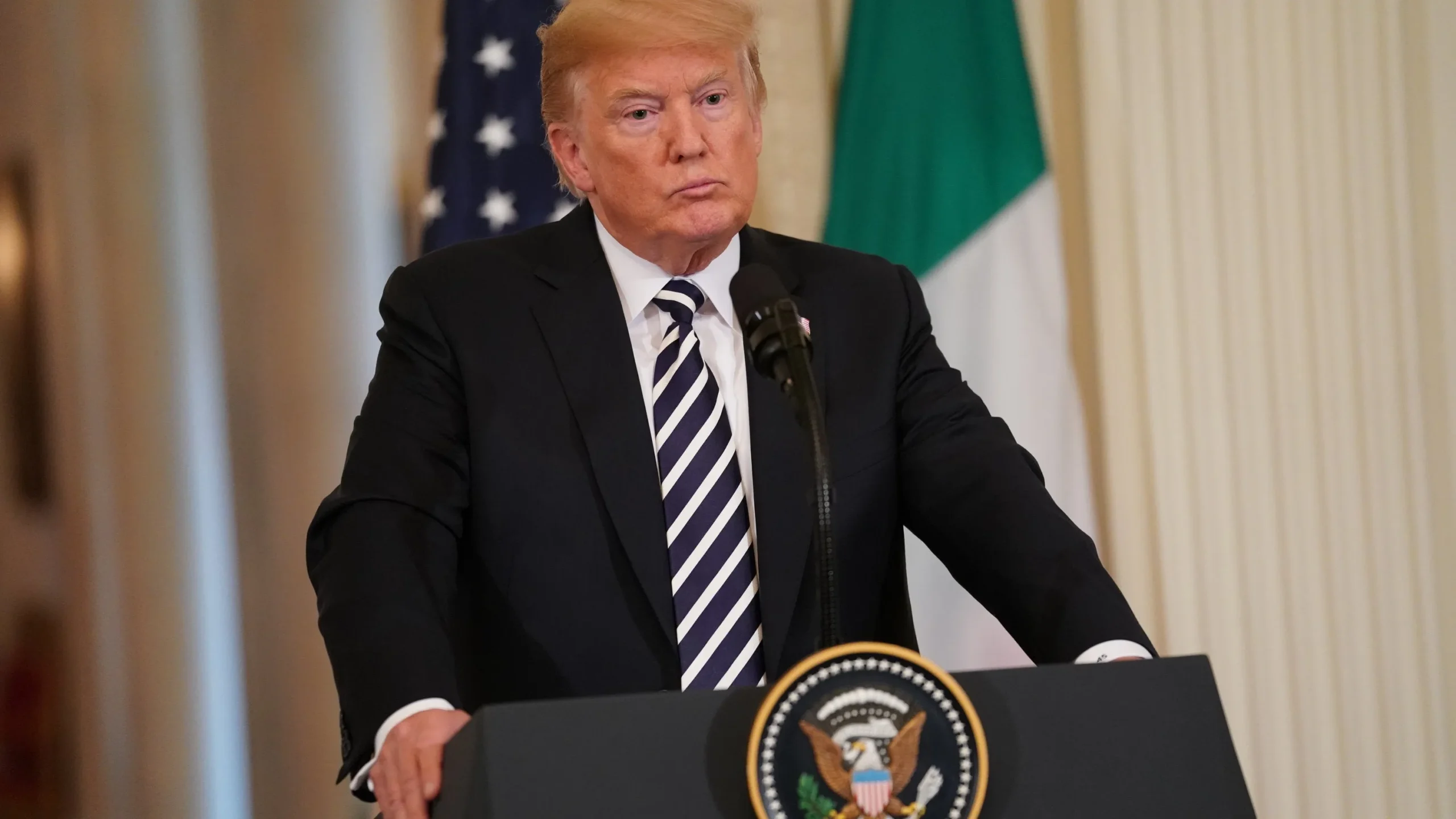
U.S. President Donald Trump stated over the weekend that while he had yet to review the exact wording and specific legal framework of a newly submitted Iranian diplomatic framework, he was highly unlikely to accept it. His reasoning is rooted in a belief that the Iranian government must face harsher consequences before a true treaty can be forged. His remarks, broadcasted prominently across social media platforms, concluded a highly volatile day in which he publicly mused about the distinct possibility of restarting devastating airstrikes against Iranian targets.
These comments represent the latest in a series of mixed signals emanating from the White House as the administration seeks to navigate an exit from the war it officially launched more than two months ago. The United States and Israel had mutually suspended their intense bombing campaigns against Iranian military and infrastructure targets four weeks ago to allow room for negotiations. However, they appear no closer to a comprehensive deal to end a war that has caused the biggest disruption ever recorded to global energy supplies.
In his direct post on social media, Donald Trump wrote with signature bluntness: “I will soon be reviewing the plan that Iran has just sent to us, but can’t imagine that it would be acceptable in that they have not yet paid a big enough price for what they have done to Humanity, and the World, over the last 47 years.” This 47-year reference points directly back to the 1979 Islamic Revolution, highlighting the deep, generational ideological chasm that defines the animosity between Washington and Tehran.
Decoding the peace proposal from Tehran
Despite the pessimism radiating from Washington, the diplomatic channels are not completely closed. The reality that Trump says Iran has ‘not yet paid a big enough price’ as he reviews new peace proposal does not negate the fact that a complex, 14-point document has been formally transmitted through international mediators.
On Saturday, a senior Iranian official, speaking strictly on the condition of anonymity to discuss highly confidential diplomacy, shed light on the mechanics of this new offering. Iranian media heavily suggests that Tehran’s 14-point peace proposal includes several massive demands: the complete withdrawal of U.S. military forces from areas immediately surrounding Iran, the lifting of the suffocating naval blockade, the immediate release of Iran’s frozen international financial assets, the payment of massive financial compensation for damages incurred during the war, the comprehensive lifting of all economic sanctions, and the ending of the war on all fronts—including the proxy battleground of Lebanon.
Perhaps most significantly, the senior Iranian official noted that the proposal would prioritize opening global shipping lanes first, actively separating the immediate military and economic crisis from the longer-term, highly complex discussions regarding Iran’s controversial capabilities.
Escalation and the Stranglehold on the Strait of Hormuz
While politicians negotiate behind closed doors, the physical reality on the waters of the Middle East remains incredibly perilous. A central pillar of the ongoing crisis revolves around the Strait of Hormuz, a narrow and strategically vital waterway that serves as the primary artery for the world’s petroleum industry.
For more than two months, Iran has been aggressively blocking nearly all international shipping from the Gulf, permitting only its own vessels and those of sympathetic nations to pass safely. This drastic measure was met with a direct counter-escalation last month when the United States imposed its own strict naval blockade of ships departing from Iranian ports. This mutual stranglehold has choked off approximately 20% of the entire world’s oil and liquid natural gas supplies.
The economic ripple effects of closing the Strait of Hormuz have been catastrophic. It has roiled global stock markets, panicked investors, and raised severe worries about the very real possibility of a wider, prolonged global economic downturn. For the average consumer, this geopolitical standoff translates directly into pain at the pump, pushing up U.S. gasoline prices to alarming levels.
Iran and the Regional War Spilling into Lebanon
The conflict is not contained to the waters of the Persian Gulf; it has violently spilled over into neighboring nations, heavily complicating any potential resolution. Iran has firmly stated that bilateral talks with Washington cannot meaningfully resume unless a comprehensive ceasefire also holds in Lebanon.
The situation in the Levant is dire. Israel invaded southern Lebanon in March to launch a major offensive against Hezbollah, the powerful, Iranian-backed Lebanese militant group that had been firing rockets across the northern Israeli border in direct military support of Tehran. While Lebanon and Israel technically agreed to a separate, fragile truce last month, the fighting has persistently continued, albeit on a somewhat smaller, more localized scale.
The volatility of this secondary front was highlighted on Sunday when the Israeli military issued an urgent, sweeping warning to the civilian residents of 11 towns and villages in Lebanon’s south. The military ordered thousands of Lebanese citizens to evacuate their homes immediately and move at least 1,000 meters (3,300 feet) away into open areas. The Israeli Defense Forces stated they were conducting targeted operations against Hezbollah operatives following what they described as a blatant violation of the ceasefire agreement, warning that anyone found near Hezbollah fighters or weapons facilities could be at severe risk. This localized escalation runs entirely in parallel to the broader war and threatens to completely derail the overarching diplomatic efforts.
The Contested nuclear program at the Heart of the Dispute
Beneath the blockades and proxy skirmishes lies the ultimate, defining issue of the last two decades of U.S.-Iran relations: the atomic ambitions of the Islamic Republic. The ongoing deadlock over the nuclear program remains the most significant hurdle to any lasting peace.
Iran’s latest diplomatic offering proposes to delay detailed talks on nuclear issues until a later date, focusing first on ending the immediate blockades and military strikes. However, this specifically contradicts Washington’s most rigid, repeated demand. The White House insists that Iran must immediately surrender its massive stockpile of more than 400 kilograms (approximately 900 pounds) of highly enriched uranium as a non-negotiable precondition to officially end the war.
Washington and its intelligence apparatus maintain that this highly enriched uranium could quickly be utilized to construct a functional nuclear bomb. Conversely, Iran vehemently denies these allegations, consistently claiming that its nuclear program is entirely peaceful, designed strictly for civilian energy production and advanced medical research.
Donald Trump and the Domestic Political Pressures
The timeline of these negotiations is heavily influenced by domestic American politics. While repeatedly projecting a public image that he is in no hurry to strike a deal, Donald Trump is undeniably operating under massive domestic pressure to break Iran’s suffocating hold on global shipping.
With U.S. gasoline prices surging due to the crisis, the economic anxiety of the American electorate is peaking. Trump’s Republican Party faces the very real, terrifying risk of a massive voter backlash over these higher costs of living as the country prepares to vote in the highly contested midterm congressional elections this coming November. A failure to reopen the shipping lanes and lower gas prices could cost the party its legislative majority.
This domestic reality makes the fact that Trump says Iran has ‘not yet paid a big enough price’ as he reviews new peace proposal a highly calculated political gamble. He must balance the desire to look incredibly tough on the international stage against the pressing need to relieve the economic burden on his own voters.
Analyzing the 14-Point peace proposal Demands
Despite the President’s initial skepticism, he did acknowledge on Saturday that he had yet to hear all the minute details of the Iranian offer. “They told me about the concept of the deal. They’re going to give me the exact wording now,” he stated during a press briefing.
When pressed by reporters on whether he might abruptly restart the suspended military strikes on Iranian soil, his response was predictably ambiguous. “I don’t want to say that. I mean, I can’t tell that to a reporter. If they misbehave, if they do something bad, right now we’ll see. But it’s a possibility that could happen.”
The senior Iranian official involved in the back-channel diplomacy argued that Tehran’s willingness to shelve the atomic discussions for a later stage was actually a massive concession. “Under this framework, negotiations over the more complicated nuclear issue have been moved to the final stage to create a more conducive atmosphere,” the official explained. By removing the most contentious issue from the immediate table, Tehran believes it is offering a pragmatic path to de-escalate the immediate military threat and reopen global trade.
Will Iran Submit to Washington’s Uranium Demands?
The core question remains whether a sequenced approach can satisfy the demands of the West. Reuters and other prominent news organizations have corroborated over the past week that Tehran is actively proposing to reopen the global shipping lanes well before the atomic disputes are definitively resolved. This new, phased timeline has now been explicitly spelled out in the formal documentation conveyed to the United States through international mediators.
However, given the historical lack of trust, Washington is highly reluctant to lift its crippling economic blockades without securing permanent, verifiable guarantees regarding the uranium stockpile. Tehran has previously indicated it is willing to discuss strict curbs on its atomic development in return for the permanent lifting of international sanctions—a framework strikingly similar to the parameters it accepted during the historic 2015 Joint Comprehensive Plan of Action (JCPOA), a deal that the Trump administration subsequently abandoned.
Global Economic Ripple Effects and the Strait of Hormuz Blockade
As the diplomatic stalemate drags on, the world watches the waters of the Middle East with growing alarm. The standoff at the Strait of Hormuz is not merely a regional dispute; it is a global economic crisis. Every day that the shipping lanes remain closed or heavily restricted, the global supply chain fractures further.
The Iranian demand for a “new control mechanism” for the strait is likely to be a major sticking point in the upcoming reviews of the document. The United States and its international naval coalition will almost certainly reject any framework that grants Tehran unilateral control or veto power over international maritime traffic in such a critical global chokepoint.
YOU MAY LIKE:
The Future of the nuclear program and Global Security
Ultimately, the resolution of this crisis will dictate the geopolitical reality of the Middle East for decades to come. If a compromise cannot be found within the framework of this new diplomatic offering, the world faces the grim prospect of a return to open warfare, expanded regional conflicts in places like Lebanon, and an unprecedented global energy shortage.
The headline that Trump says Iran has ‘not yet paid a big enough price’ as he reviews new peace proposal perfectly encapsulates the dangerous game of chicken currently being played by two heavily armed adversaries. As the text is reviewed and the political calculations are made in both Washington and Tehran, the window for a peaceful, negotiated settlement remains open—but as the IRGC ominously noted, that room is rapidly narrowing.
References
- CNN: Live updates: Iran war news; Trump says Iran has ‘not yet paid a big enough price’ as he reviews new peace proposal | CNN
- CNBC: Trump says he is likely to reject Iran peace proposal
Keep the Headlines Fresh!

Quality news takes time, effort, and a whole lot of coffee. If you value what we do at eKayNews, consider “buying a round” for the team!
-
Join the Inner Circle: Set up a custom subscription.
-
The Instant Jolt: Send a one-time “coffee” donation.
Why trust us? We use PayFast for 100% secure, encrypted transactions. Your data stays yours; the news stays ours.
To our amazing readers: You’re the reason we’re first on the scene. Thanks for being part of the family!
Feel the Pulse of the News with eKayNews!

Join the ever-growing eKayNews community and stay connected to the stories that matter. Follow us on Facebook, X, and WhatsApp for real-time updates, breaking news, and exclusive alerts straight to your feed. Your support keeps us digging deeper and sharing the news you can trust.
Stay Connected:
-
Facebook: [eKayNews on Facebook]
-
X (Twitter): [eKayNews on X]
-
WhatsApp: [Join the eKayNews WhatsApp Channel]
Become part of our inner circle and get instant news alerts as events unfold across South Africa and beyond!
Promote Your Brand with eKayNews
Looking to reach a wide, engaged audience? Explore our advertising packages:
-
Link Booster: 7 links to 7 articles over 7 days – R2,500
-
Permanent Feature: Sponsored blog article hosted permanently – R4,000
-
Prime Visibility: Home page banner ad for 30 days – R5,000
Don’t miss your chance to connect with our audience. Book your package today via email at info@ekaynews.co.za or WhatsApp us on +27710961185.
Be part of a platform where news meets community—stay informed, stay ahead, stay with eKayNews!