Trump says US and Iran in ‘positive’ talks, unveils plan to escort Hormuz ships
Trump says US and Iran in ‘positive’ talks, unveils plan to escort Hormuz ships as global markets reel from the most significant energy disruption in decades. President Donald Trump announced on Sunday that the United States is currently engaged in “very positive discussions” with Tehran, marking a potential de-escalation in a conflict that has paralyzed one of the world’s most vital maritime arteries.
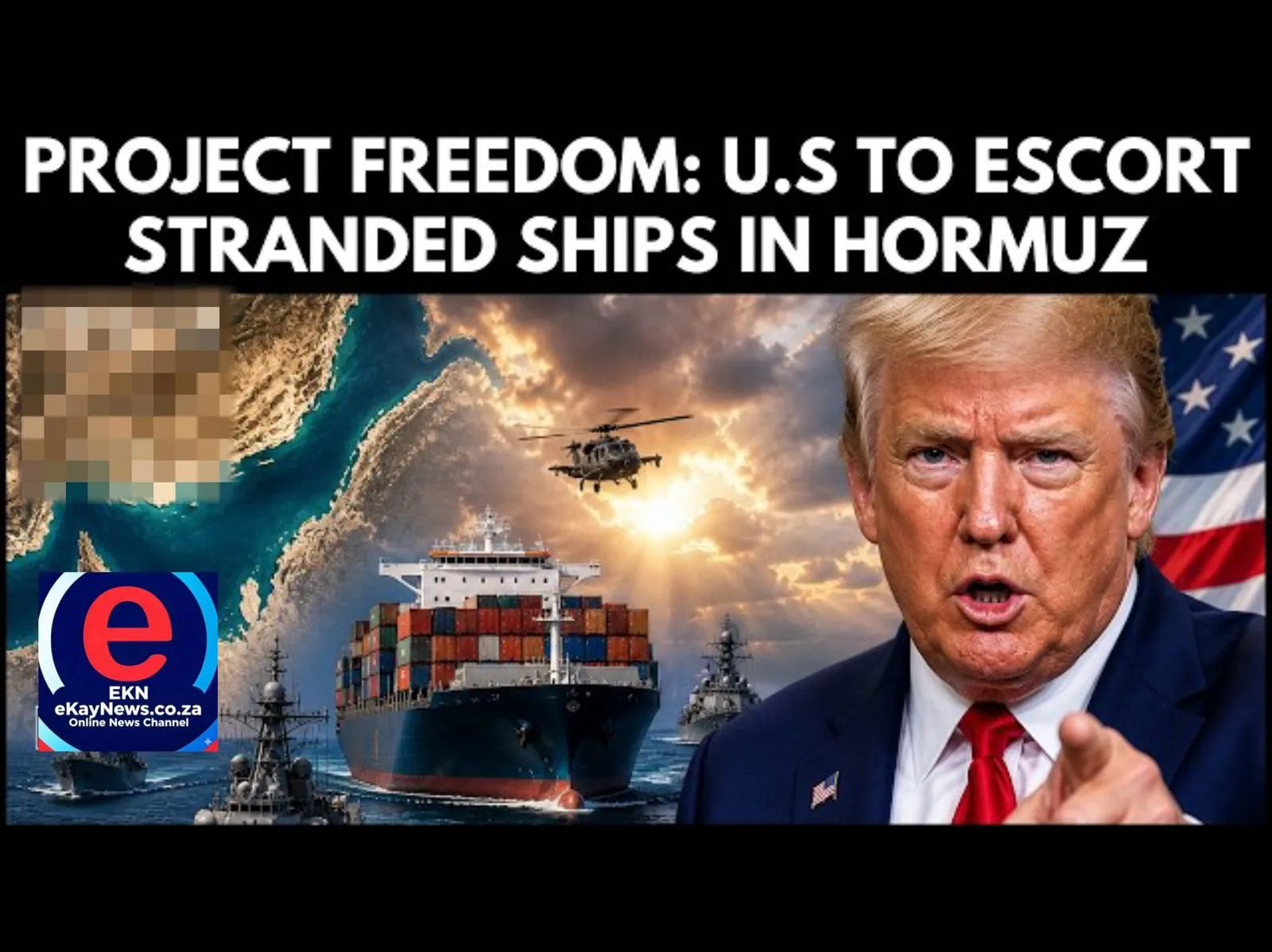
Simultaneously, the President unveiled a major maritime initiative dubbed “Project Freedom.” Starting Monday, U.S. forces will begin a coordinated effort to guide and protect hundreds of commercial vessels currently stranded within the Persian Gulf. This move comes as the Strait of Hormuz remains a focal point of geopolitical tension, with Donald Trump framing the intervention as a necessary “humanitarian” rescue for thousands of sailors trapped by the Iranian blockade.
Project Freedom: A Humanitarian Bridge in a War Zone
The centerpiece of the President’s announcement is the launch of Project Freedom, a mission designed to extract over 900 commercial ships that have been unable to transit the Strait of Hormuz since hostilities escalated earlier this year.
According to the President, the operation is less about military posturing and more about the welfare of the crews. “We will use best efforts to get their Ships and Crews safely out of the Strait,” Donald Trump stated in a lengthy post on Truth Social. Many of these vessels, monitored by firms like AXSMarine, have been at anchor for weeks, facing dwindling supplies of food, fresh water, and medical essentials.
Key Components of Project Freedom
-
Asset Deployment: U.S. Central Command (CENTCOM) is mobilizing guided-missile destroyers, over 100 aircraft, and approximately 15,000 service members to support the corridor.
-
Navigational Guidance: U.S. Navy assets will provide real-time intelligence to help civilian tankers avoid Iranian deep-sea mines.
-
The Southern Route: Ships are being advised to utilize Omani territorial waters, avoiding traditional lanes that have been heavily contested since the Iran conflict began on February 28.
Despite the heavy military presence, the administration has been careful to categorize the move as a “defensive” and “humanitarian” process. However, the stakes remain high; any miscalculation in the narrow waterway could shatter the fragile April 8 ceasefire.
The Strategic Stranglehold: Iran and the Strait of Hormuz
The current crisis traces back to February 28, 2026, when the U.S. and Israel launched Operation Epic Fury and Operation Roaring Lion, striking Iranian nuclear facilities and military infrastructure. In retaliation, Iran asserted its dominance over the Strait of Hormuz, effectively choking off the flow of 25% of the world’s seaborne oil.
While Donald Trump claims the Iranian Navy has been “annihilated”—citing the destruction of 158 vessels—Tehran remains a potent threat through its use of asymmetrical warfare, including high-speed attack boats and sophisticated sea mines.
The Duel of Blockades
The region is currently locked in a “double blockade” scenario:
-
The Iranian Blockade: Tehran has closed the Strait to all commercial traffic not coordinated with its own armed forces, demanding an end to U.S. sanctions and a total withdrawal of foreign troops.
-
The U.S. Counter-Blockade: Since April 13, Washington has enforced its own naval blockade, intercepting vessels traveling to or from Iranian ports to starve the regime of revenue.
Economic Shockwaves: Oil Prices and Global Inflation
The closure of the Strait of Hormuz has triggered what the International Energy Agency (IEA) describes as the “largest supply disruption in history.” The impact on the global economy has been immediate and devastating.
Oil prices have surged nearly 50% above pre-conflict levels, with Brent Crude hovering around $120 to $126 per barrel. This spike has trickled down into every sector of the global economy:
-
Fuel Costs: Diesel and jet fuel prices have more than doubled, causing a massive spike in logistics and travel costs.
-
Food Security: In Gulf Cooperation Council (GCC) states, which rely on the Strait for 80% of their food imports, a “grocery emergency” has forced retailers to airlift staples, leading to price hikes of up to 120%.
-
Industrial Strain: In Europe, the suspension of Qatari LNG exports has pushed major economies like Germany to the brink of a technical recession.
German Foreign Minister Johann Wadephul has been vocal in his demands for a reopening, stating that Iran must “verifiably renounce nuclear weapons” to end the standoff. However, with oil prices remaining “higher for longer,” the pressure on the Trump administration to find a diplomatic breakthrough is immense.
Diplomatic Breakthrough or Calm Before the Storm?
Despite the military buildup of Project Freedom, the phrase “Trump says US and Iran in ‘positive’ talks, unveils plan to escort Hormuz ships” offers a glimmer of hope. The President’s mention of “very positive discussions” suggests that back-channel negotiations, reportedly mediated by Pakistan, may finally be yielding results.
The Iranian 14-Point Plan
Tehran’s Foreign Ministry has proposed a 14-point peace plan focused on “ending the war.” While the U.S. has not officially endorsed the plan, Special Envoy Steve Witkoff confirmed that the two nations are “in conversation.”
“I am fully aware that my Representatives are having very positive discussions with the Country of Iran, and that these discussions could lead to something very positive for all.” — Donald Trump
However, skepticism remains. Iranian spokesman Esmaeil Baqaei cautioned that Tehran is “reviewing” the U.S. response and will take “whatever response is necessary.” Furthermore, Iranian military commanders have warned that any U.S. attempt to guide ships through the Strait without direct Iranian coordination will be viewed as a violation of the ceasefire.
YOOU MAY LIKE:
Iran fires missiles at US warship to prevent it entering Hormuz
Conclusion: The Path Forward for Project Freedom
As the world watches the first vessels prepare to move under the umbrella of Project Freedom this Monday, the global economy hangs in the balance. The successful transit of these ships could act as a confidence builder, lowering oil prices and signaling that the Strait of Hormuz is once again becoming a navigable waterway.
However, the road to peace between the U.S. and Iran remains fraught with peril. While Trump says US and Iran in ‘positive’ talks, unveils plan to escort Hormuz ships, the underlying issues of nuclear proliferation, regional hegemony, and economic sanctions remain unresolved. For now, the “humanitarian” mission of Project Freedom is the world’s best hope for preventing a total global economic collapse.
The coming days will determine if this is the start of a lasting peace or merely a tactical pause in a much larger conflict. For the 20,000 sailors currently stranded at sea, the success of these “positive talks” cannot come soon enough.
References
- Reuters
Trump says U.S. in talks with Iran as Gulf tensions disrupt shipping
https://www.reuters.com/world/middle-east/ - BBC News
Strait of Hormuz crisis: Why global oil supply is at risk
https://www.bbc.com/news/world-middle-east
Keep the Headlines Fresh!

Quality news takes time, effort, and a whole lot of coffee. If you value what we do at eKayNews, consider “buying a round” for the team!
-
Join the Inner Circle: Set up a custom subscription.
-
The Instant Jolt: Send a one-time “coffee” donation.
Why trust us? We use PayFast for 100% secure, encrypted transactions. Your data stays yours; the news stays ours.
To our amazing readers: You’re the reason we’re first on the scene. Thanks for being part of the family!
Feel the Pulse of the News with eKayNews!

Join the ever-growing eKayNews community and stay connected to the stories that matter. Follow us on Facebook, X, and WhatsApp for real-time updates, breaking news, and exclusive alerts straight to your feed. Your support keeps us digging deeper and sharing the news you can trust.
Stay Connected:
-
Facebook: [eKayNews on Facebook]
-
X (Twitter): [eKayNews on X]
-
WhatsApp: [Join the eKayNews WhatsApp Channel]
Become part of our inner circle and get instant news alerts as events unfold across South Africa and beyond!
Promote Your Brand with eKayNews
Looking to reach a wide, engaged audience? Explore our advertising packages:
-
Link Booster: 7 links to 7 articles over 7 days – R2,500
-
Permanent Feature: Sponsored blog article hosted permanently – R4,000
-
Prime Visibility: Home page banner ad for 30 days – R5,000
Don’t miss your chance to connect with our audience. Book your package today via email at info@ekaynews.co.za or WhatsApp us on +27710961185.
Be part of a platform where news meets community—stay informed, stay ahead, stay with eKayNews!