Iran says US has responded to its latest peace proposal as tensions mount
Iran says US has responded to its latest peace proposal, marking a potentially decisive moment in the protracted and devastating conflict that has captured the world’s attention. According to recent announcements broadcasted heavily across Iranian state-linked media networks, Tehran has officially received a formal reply from Washington regarding its comprehensive 14-point diplomatic framework. As the global community watches these developments with intense scrutiny, the stakes for international security and economic stability could not be higher.
The Iranian foreign ministry spokesperson confirmed that the highly anticipated American response, which was delicately delivered via diplomatic channels in Pakistan, is currently undergoing rigorous internal review by top officials in Tehran. This development was first brought to light by the Tasnim news agency, an outlet known for its deep connections to the Islamic Republic’s security apparatus.
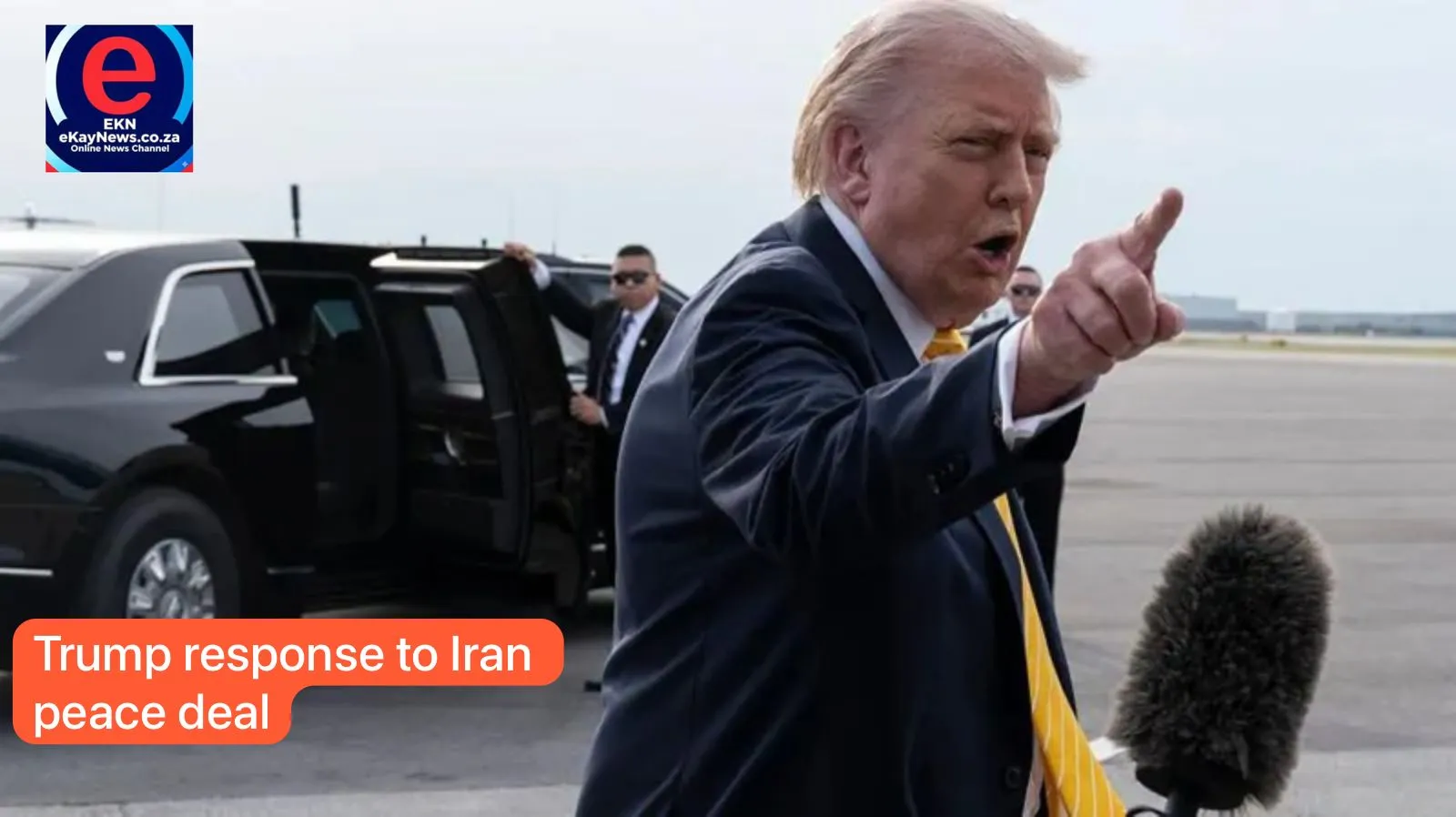
While the United States has yet to issue a formal, public confirmation that it has dispatched this reply to Tehran, the rhetoric from the White House suggests that intense back-channel communications are indeed flowing. However, reaching a consensus remains an incredibly difficult task. U.S. President Donald Trump reportedly disclosed to Israel’s Kan News over the weekend that the core tenets of the Iranian offering remain fundamentally unacceptable to his administration, setting the stage for what could be a grueling series of geopolitical maneuvers.
The United States evaluates the stringent 14-point diplomatic framework
The fact that Iran says US has responded to its latest peace proposal does not mean that a permanent resolution is imminent. Iranian state media has offered significant insights into the exact demands laid out within their 14-point plan. The document acts as a direct, aggressive counter-offer to a previous nine-point plan submitted by the United States, which had primarily envisaged a simpler two-month ceasefire.
Tehran’s proposal is sweeping in its scope. It explicitly asks Washington to completely withdraw all of its military forces from areas positioned near Iran’s sovereign borders. Furthermore, it demands an immediate and total end to the crippling U.S. naval blockade currently suffocating Iranian commercial ports. Crucially, the framework also calls for a comprehensive cessation of all regional hostilities, specifically insisting that allied operations, such as Israel’s ongoing military offensive in Lebanon, be halted immediately.
Adding an intense layer of urgency to the diplomatic chess match, the Iranian document also stipulates that a finalized, binding agreement between the two warring nations must be reached within a strict 30-day window. Iranian state media heavily emphasized that the proposal urges both sides to pivot their ultimate focus toward permanently “ending the war,” rather than simply extending the current, highly fragile ceasefire holding pattern.
The fierce debate surrounding the contested nuclear program
As diplomats review the documents, one massive, historic hurdle remains firmly in the way of a lasting treaty: the atomic ambitions of the Islamic Republic. Iran’s Foreign Ministry spokesman, Esmaeil Baghaei, was directly quoted by state media making a definitive statement regarding this issue. He clarified that, “at this stage, we do not have nuclear negotiations.”
This stance is a direct rejection of a primary, non-negotiable demand established by Washington. The United States has consistently insisted that any permanent cessation of hostilities must include sweeping concessions and deep, verifiable curbs on Tehran’s atomic capabilities.
The standoff over the nuclear program remains the ideological core of the U.S.-Iran conflict. Iran has repeatedly and vehemently denied that it is actively seeking to construct a nuclear bomb. The state’s official narrative maintains that its massive enrichment programme is strictly intended for peaceful purposes, such as civilian energy production and advanced medical research. Despite these claims, international watchdog agencies note that the country currently stands as the only non-nuclear-armed state globally to have successfully enriched uranium to near weapons-grade levels. For the American administration, allowing this capability to remain unchecked is viewed as an existential threat to regional stability.
“Project Freedom” and the crisis in the Strait of Hormuz
While the political debate rages on regarding the nuclear program, a severe, immediate economic crisis continues to unfold on the waters of the Middle East. Iran has severely limited commercial maritime traffic through the vital Strait of Hormuz since the outbreak of open warfare in late February. In retaliation, the United States has strictly enforced a punishing naval blockade on all major Iranian shipping ports.
This mutual stranglehold has effectively paralyzed one of the most critical economic chokepoints on the planet. On Sunday, President Trump took a definitive public stance on the maritime crisis, announcing that the U.S. military would actively begin assisting international countries whose commercial ships have been left stranded and vulnerable in the heavily contested waterway.
“For the good of Iran, the Middle East, and the United States, we have told these Countries that we will guide their Ships safely out of these restricted Waterways, so that they can freely and ably get on with their business,” the President declared in a highly circulated post on social media, though he deliberately abstained from specifying exactly which allied nations would be receiving this American naval escort.
How the United States plans to navigate restricted waterways
President Trump has officially dubbed this aggressive new maritime escort initiative “Project Freedom.” He confirmed that the naval operations would commence immediately on Monday. In a stark warning to the Iranian Revolutionary Guard Corps (IRGC) naval forces, Trump added that if this international shipping process is interfered with in any capacity, the interference “will have to be dealt with forcefully.”
This maneuver in the Strait of Hormuz significantly raises the potential for direct, kinetic military confrontation at sea, even as back-channel diplomatic letters are being exchanged between capitals. It perfectly illustrates the dual-track strategy currently being employed by Washington: maintaining absolute, overwhelming military and economic pressure while simultaneously exploring the viability of a new peace proposal.
Domestic pushback and the future of the peace proposal
The confirmation that Iran says US has responded to its latest peace proposal comes at a time when the political landscape inside Washington D.C. is becoming increasingly fractured. On Saturday, Trump publicly confirmed that his administration had indeed received the latest Iranian document.
Taking to his Truth Social platform, the U.S. president offered a blunt, highly skeptical assessment. “I will soon be reviewing the plan that Iran has just sent to us, but can’t imagine that it would be acceptable in that they have not yet paid a big enough price for what they have done to Humanity, and the World, over the last 47 years,” he wrote.
Later that same day, speaking candidly to the press pool at his residence in Palm Beach, Florida, Trump elaborated slightly, stating that he had been briefed “about the concept of the deal,” but was currently waiting for his diplomatic team to provide him with “the exact wording now.”
When questioned directly by international journalists regarding the very real possibility that devastating military strikes against strategic targets deep inside Iran could be renewed if talks fail, Trump did not mince words. He openly confirmed it was “a possibility,” adding, “If they misbehave. If they do something bad. But right now we’ll see.”
Congressional deadlines and the broader strategy for Iran
Despite the ongoing diplomatic efforts, the U.S. president appeared deeply disinclined to withdraw American influence from the conflict entirely. He projected a stance of long-term commitment, telling reporters, “we’re not leaving” and “we’re going to do it, so nobody has to go back in two years or five years.”
However, Trump’s firm posture on the international stage is facing significant, growing resistance on the domestic front. The legal mechanics of American warfare are quickly becoming a massive point of contention in Washington. By established U.S. law, specifically under the War Powers Resolution, a sitting president must formally receive the approval of Congress within 60 days of notifying lawmakers of the commencement of military action; otherwise, they are legally obligated to cease hostilities.
Friday marked exactly the 60th day since Trump formally notified the U.S. Congress of the initial military strikes against Iran on March 2, which occurred two days after the U.S. and Israel jointly launched their major attacks. Seeking to bypass this legislative hurdle, Trump wrote a formal letter to members of the U.S. Congress on Friday. He argued forcefully that he did not need to meet any deadline for legislative approval to continue the war. His legal rationale was that the conflict had been effectively “terminated” since a fragile ceasefire officially took effect on April 8, thereby pausing the 60-day clock on any such constitutional obligation. Furthermore, he controversially claimed that the ongoing, devastating naval blockade of Iranian commercial ports did not legally represent a direct continuation of armed conflict.
Growing frustration among U.S. Republican lawmakers
As the situation drags on and Iran says US has responded to its latest peace proposal, the legal and strategic arguments emanating from the Oval Office are not sitting well with everyone on Capitol Hill. Trump’s latest remarks arrive precisely as U.S. lawmakers—including several highly influential figures from within his own Republican party—are growing increasingly, and publicly, frustrated. Many legislators view the current situation as a vastly costly, highly complex war hampered by incredibly murky, shifting objectives.
Missouri Republican Senator Josh Hawley recently broke ranks, calling explicitly on the Trump administration to begin redeploying American forces away from the immediate conflict zone. Hawley forcefully argued that despite the White House’s claims regarding the ceasefire, formal Congressional approval would be absolutely necessary for the war effort to legally continue. “I don’t really want to do that,” Senator Hawley stated plainly regarding the prospect of voting to authorize an extended war. “I want to wind it down.”
“While the administration may point to ongoing negotiations, events on the ground and the rhetoric coming out of Tehran tell a different story,” Senator Murkowski astutely pointed out. However, she also highlighted the incredibly complex trap the U.S. currently finds itself in regarding the geopolitical balance of the Middle East. “But if the US steps back abruptly and prematurely, we almost certainly leave their critical capabilities intact. And those are not risks that I’m willing to take.”
Murkowski concluded her assessment with a sentiment that perfectly captures the anxious mood in Washington: “But the answer is not a blank cheque for another endless war.”
YOU MAY LIKE:
Conclusion: A critical juncture for global stability
The next few days will be absolutely critical in determining the trajectory of the Middle East and the global economy. The revelation that Iran says US has responded to its latest peace proposal indicates that the channels of communication, however strained, remain partially open. Yet, with American warships actively preparing to escort international vessels through the Strait of Hormuz under “Project Freedom,” and Tehran flatly refusing to place its nuclear program on the current negotiating table, the foundational elements for a massive escalation remain firmly in place.
As the world waits to see the exact text of the American response and how the leadership in Tehran will react to it, the diplomats operating in the shadows of Pakistan and Oman face an uphill battle. The entire international community, heavily reliant on the energy resources of the Persian Gulf and desperate to avoid a broader regional war, can do nothing but watch closely.
References
- Reuters
U.S. and Iran exchange messages as tensions rise in Middle East
https://www.reuters.com/world/middle-east/ - BBC News
Iran-US tensions: latest developments and diplomatic efforts explained
https://www.bbc.com/news/world-middle-east
Keep the Headlines Fresh!

Quality news takes time, effort, and a whole lot of coffee. If you value what we do at eKayNews, consider “buying a round” for the team!
-
Join the Inner Circle: Set up a custom subscription.
-
The Instant Jolt: Send a one-time “coffee” donation.
Why trust us? We use PayFast for 100% secure, encrypted transactions. Your data stays yours; the news stays ours.
To our amazing readers: You’re the reason we’re first on the scene. Thanks for being part of the family!
Feel the Pulse of the News with eKayNews!

Join the ever-growing eKayNews community and stay connected to the stories that matter. Follow us on Facebook, X, and WhatsApp for real-time updates, breaking news, and exclusive alerts straight to your feed. Your support keeps us digging deeper and sharing the news you can trust.
Stay Connected:
-
Facebook: [eKayNews on Facebook]
-
X (Twitter): [eKayNews on X]
-
WhatsApp: [Join the eKayNews WhatsApp Channel]
Become part of our inner circle and get instant news alerts as events unfold across South Africa and beyond!
Promote Your Brand with eKayNews
Looking to reach a wide, engaged audience? Explore our advertising packages:
-
Link Booster: 7 links to 7 articles over 7 days – R2,500
-
Permanent Feature: Sponsored blog article hosted permanently – R4,000
-
Prime Visibility: Home page banner ad for 30 days – R5,000
Don’t miss your chance to connect with our audience. Book your package today via email at info@ekaynews.co.za or WhatsApp us on +27710961185.
Be part of a platform where news meets community—stay informed, stay ahead, stay with eKayNews!