R2,400 fee for people with solar panels on their roofs in a Gauteng municipality
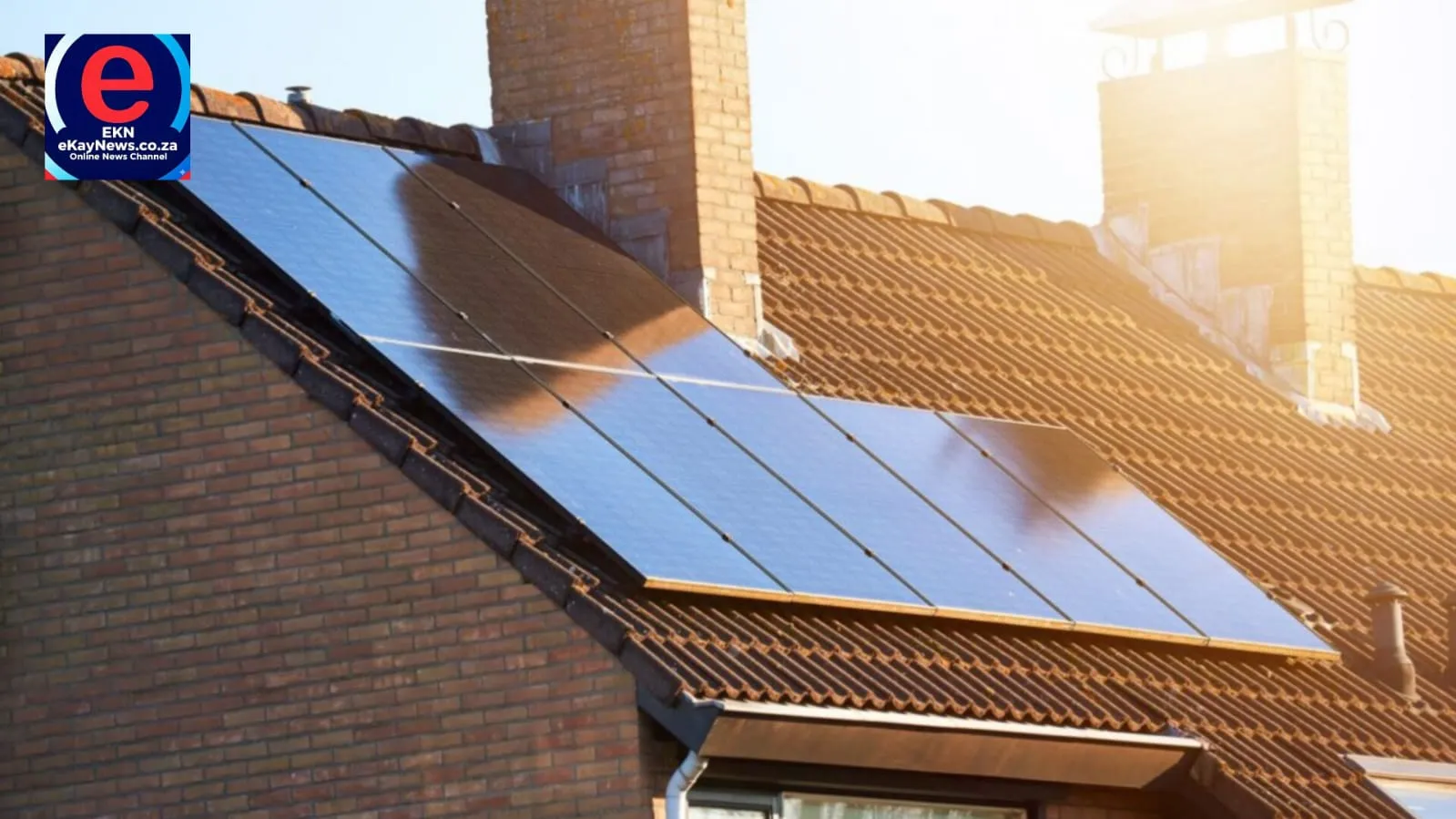
R2,400 fee for people with solar panels on their roofs has become the centre of a growing debate after Gauteng’s Emfuleni Municipality proposed introducing a once-off registration fee of R2,400 and a recurring monthly charge of R463 for households with rooftop solar systems.
The proposal has triggered widespread criticism from civil rights organisation AfriForum, local political representatives, and residents who argue that the municipality has not demonstrated the legal authority required to introduce such charges.
The municipality’s proposal comes as more South African households continue investing in rooftop solar installations to reduce dependence on Eskom and shield themselves from years of load shedding and rising electricity costs.
If approved, the proposed tariffs would affect homeowners across Emfuleni, which includes Vanderbijlpark, Vereeniging, Sebokeng, Three Rivers and Sharpeville.
Emfuleni Municipality proposes new rooftop solar charges
The proposed tariff structure forms part of Emfuleni Municipality’s Draft Integrated Development Plan (IDP) and tariff application.
According to the proposal, residents who install rooftop photovoltaic (PV) systems would pay:
- A once-off solar panel registration fee of R2,400
- A recurring monthly network charge of R463
Municipal officials argue that the fees are intended to help recover electricity network costs as more households generate their own electricity instead of purchasing power from the municipality.
Across South Africa, municipalities have increasingly faced declining electricity revenue due to:
- Greater adoption of rooftop solar
- Illegal electricity connections
- Poor municipal revenue collection
- Improved household energy efficiency
These trends have placed additional financial pressure on municipalities already struggling with debt.
AfriForum questions legality of proposed solar fees
Civil rights organisation AfriForum has challenged the proposal, arguing that several important legal requirements may not have been satisfied.
Following a review of the municipality’s Draft IDP, AfriForum said it found several apparent shortcomings.
According to the organisation, concerns include:
- No clear policy framework supporting the charges
- Uncertainty regarding compliance with National Energy Regulator of South Africa (NERSA) tariff applications
- No completed cost-of-supply study
- No apparent by-law amendments authorising the proposed fees
AfriForum has formally requested detailed information from the municipality to justify the introduction of the charges.
These include:
- Council resolutions
- Legal opinions
- Cost-of-supply calculations
- Tariff calculations
- Public participation records
- Correspondence with NERSA
The organisation argues that transparency is essential before any additional financial burden is placed on residents.
Solar panel registration fee faces legal scrutiny
Residents deserve legal certainty
AfriForum’s Manager for Local Government Affairs, Morné Mostert, said municipalities cannot simply introduce new charges because residents invested in lawful renewable energy systems.
According to Mostert, every new tariff must comply with:
- The Constitution
- Municipal Systems Act
- Municipal Finance Management Act
- Electricity regulatory legislation
He argued that residents should not be expected to pay new levies unless municipal officials can demonstrate that every legal requirement has been met.
Mostert further stated that any proposed fee must be supported by proper financial analysis and introduced only after transparent public participation.
If these requirements have not been fulfilled, he believes the legality of the proposal remains questionable.
Financial pressures facing Emfuleni Municipality
The proposal also highlights the severe financial challenges confronting Emfuleni Municipality.
The municipality has experienced years of financial instability and has struggled to maintain reliable electricity services.
In 2023, electricity distribution and revenue collection responsibilities were transferred to Eskom after ongoing financial difficulties.
By January 2026, Emfuleni’s historical bulk electricity debt reportedly stood at approximately R7.74 billion, making it one of South Africa’s most financially distressed municipalities.
Officials argue that declining electricity sales have significantly reduced municipal income, forcing authorities to explore alternative revenue streams.
Political opposition grows
The proposal has also attracted criticism from political parties.
Freedom Front Plus (FF Plus) councillor Gerda Senekal described the planned levy as a desperate attempt to generate additional revenue.
She argued that residents invested substantial amounts of their own money into solar systems after enduring years of unreliable electricity supply.
Rather than rewarding those investments, she believes the municipality is effectively penalising responsible homeowners.
Senekal also questioned whether residents should be expected to fund municipal financial shortcomings through additional charges.
She encouraged residents to participate actively during the public consultation process before any final decisions are made.
South Africa electricity tariffs are changing
Municipalities searching for new revenue
The debate surrounding South Africa electricity tariffs is not unique to Emfuleni.
Across the country, municipalities have increasingly introduced:
- Fixed network charges
- Capacity charges
- Service availability fees
These measures aim to compensate for declining electricity sales as more households generate their own power.
Historically, municipalities relied heavily on electricity sales to fund various local government services.
However, the rapid expansion of rooftop solar has reduced electricity consumption from municipal grids, creating substantial revenue shortfalls.
Municipal finance experts argue that electricity infrastructure still requires maintenance, regardless of whether households generate some of their own electricity.
As a result, network charges have become increasingly common across several municipalities.
Growth of rooftop solar in South Africa
South Africa experienced unprecedented growth in rooftop solar installations during the country’s prolonged load-shedding crisis.
Thousands of households and businesses invested heavily in:
- Solar photovoltaic panels
- Battery storage systems
- Inverters
- Backup power solutions
These investments enabled many consumers to reduce dependence on Eskom while improving energy security.
For many homeowners, solar systems represent long-term investments worth hundreds of thousands of rand.
As municipalities introduce new charges, concerns are growing that additional levies could discourage further investment in renewable energy.
Industry experts warn that policy uncertainty could slow South Africa’s transition toward cleaner energy generation.
Public participation remains crucial
Although the proposal has attracted significant attention, it has not yet become final policy.
Residents will still have opportunities to submit comments and objections during the municipality’s public participation process.
Public consultation plays an important role in municipal tariff approvals.
During this process, residents, businesses, civic organisations and other stakeholders can challenge proposed charges or request amendments before final implementation.
AfriForum has encouraged affected residents to monitor developments closely and participate in consultations.
Balancing municipal finances and renewable energy
Municipalities face a difficult balancing act.
On one hand, electricity infrastructure requires ongoing investment and maintenance regardless of declining electricity sales.
On the other, many residents argue they should not be penalised for investing their own funds into renewable energy after years of unreliable electricity supply.
Experts suggest that any future tariff structure should balance municipal sustainability with incentives that continue encouraging private investment in renewable energy.
Transparent cost studies, clear legal authority and meaningful public consultation will likely determine whether proposals such as Emfuleni’s gain public acceptance.
YOU MAY LIKE:
Conclusion
The proposed R2,400 fee for people with solar panels on their roofs has sparked an important national conversation about municipal finances, renewable energy and consumer rights.
While Emfuleni Municipality argues that new charges are necessary to maintain electricity infrastructure, organisations such as AfriForum believe the proposal requires far greater legal justification and transparency before implementation.
With South Africa continuing to expand its use of rooftop solar systems, similar debates are expected to emerge in other municipalities. The outcome of Emfuleni’s proposal could therefore influence future approaches to rooftop solar charges, solar panel registration fees, and broader South Africa electricity tariffs as local governments seek new ways to remain financially sustainable.
References (Mainstream Media)
- MyBroadband – R2,400 fee for people with solar panels on their roofs in a Gauteng municipality
https://mybroadband.co.za/news/energy/656434-r2400-fee-for-people-with-solar-panels-on-their-roofs-in-a-gauteng-municipality.html - BusinessTech – Municipalities look to charge households with rooftop solar as electricity sales decline (Related coverage on municipal solar tariffs and fixed charges).
https://businesstech.co.za/ - Engineering News – South African municipalities and electricity tariff developments (Coverage of municipal electricity pricing, NERSA approvals and energy policy).
https://www.engineeringnews.co.za/ - Daily Maverick – South Africa’s municipal electricity crisis and rooftop solar growth (Analysis of municipal finances and distributed energy).
https://www.dailymaverick.co.za/
Keep the News Flowing – Buy the Team a Coffee! ☕

Love the updates? Help us stay on the beat! Whether it’s a quick one-time donation or a monthly subscription, your support keeps the eKayNews lights on and the stories flowing.
-
Secure & Simple: We use PayFast for total transaction peace of mind.
-
Make an Impact: Every “coffee” you send directly supports our newsroom.
Your Brand, Our Audience: Let’s Make Headlines Together! 🚀

Looking for real engagement? At eKayNews, we don’t just share news—we build connections. Whether you’re a local startup or a growing business, our advertising packages are designed to put your brand in front of a loyal, highly engaged audience.
Choose Your Spotlight:
-
Link Booster (R2,500): Dominate the feed with 7 links across 7 days.
-
Permanent Feature (R4,000): Your story, hosted on our site for a lifetime.
-
Prime Visibility (R5,000): Claim the top spot with a 30-day homepage banner.
Ready to grow? 📩 Email us: info@ekaynews.co.za 💬 WhatsApp us: +27 71 096 1185
Get Connected:
-
Facebook & X (Twitter) : Follow us for real-time updates and community debates.
-
WhatsApp Channel: Get exclusive alerts sent directly to your phone.
Stay informed, ahead, connected with the eKayNews family!