Ramaphosa on Illegal Migration and Anti-Foreigner Protests
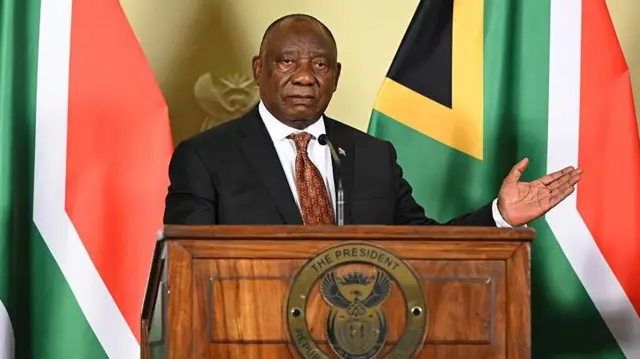
Ramaphosa on Illegal Migration and Anti-Foreigner Protests has become one of the most discussed topics in South Africa as concerns about border security, undocumented migration, employment opportunities, public services and social stability continue to dominate national conversations. President Cyril Ramaphosa addressed the nation amid growing tensions linked to illegal migration and rising anti-foreigner protests in several communities across the country.
The address came at a critical time, with demonstrations taking place in various provinces and increasing calls for stronger action against undocumented migrants. At the same time, Ramaphosa emphasized that South Africa must remain committed to constitutional values, human rights and the rule of law while addressing challenges associated with illegal migration.
The government response announced by the president includes stricter border controls, stronger enforcement of immigration laws, anti-corruption measures, increased workplace inspections and reforms to migration policies. The address sought to reassure South Africans that government is taking decisive action while warning against vigilantism, xenophobia and violence.
Growing Concerns About Illegal Migration in South Africa
Illegal migration has become a major public concern in South Africa. Citizens have increasingly voiced frustrations regarding employment, crime, pressure on public services and the perceived impact of undocumented migrants on local communities.
According to Ramaphosa, many South Africans are asking legitimate questions about whether the country’s borders are secure and whether government is effectively enforcing immigration laws. These concerns have emerged in communities, workplaces, schools, healthcare facilities and across social media platforms.
The president acknowledged that the concerns are real and deserve serious attention. He stressed that government has a responsibility to ensure that every person within South Africa’s borders is in the country legally and that anyone working or operating a business has the necessary legal authorization.
However, Ramaphosa also cautioned against blaming illegal migration for all of South Africa’s economic challenges. He pointed out that unemployment, poverty and slow economic growth are complex issues requiring long-term solutions, including investment, industrial expansion and job creation.
Ramaphosa’s Position on Illegal Migration
President Ramaphosa made it clear that South Africa has the right to protect its borders and enforce its immigration laws. He stated that illegal migration poses challenges for national security, service delivery and economic development.
At the same time, Ramaphosa reaffirmed South Africa’s commitment to human rights and international obligations. The country continues to welcome visitors, refugees and asylum seekers through lawful processes.
The president emphasized several key principles:
- Every person in South Africa should be in the country legally.
- Immigration laws must be respected and enforced.
- Human dignity must be protected.
- Government alone is responsible for enforcing immigration laws.
- Communities should not take the law into their own hands.
Ramaphosa warned that no individual or group has the authority to stop people on the street and demand proof of nationality. Such actions undermine the rule of law and can contribute to social tensions.
Anti-Foreigner Protests Intensify Across South Africa
The president’s address followed a series of anti-foreigner protests in various parts of South Africa. Communities have expressed anger over undocumented migration and the operation of businesses by foreign nationals.
In recent weeks, demonstrations have occurred in several areas, with protesters demanding stronger immigration enforcement and the removal of undocumented migrants from their communities.
Some foreign nationals have chosen to return to their home countries through voluntary repatriation efforts organized by embassies and foreign governments. Reports indicated that citizens from countries such as Ghana, Nigeria, Mozambique and Malawi expressed interest in returning home amid growing tensions.
The increase in anti-foreigner protests has raised concerns about potential violence and xenophobia. Ramaphosa stressed that while citizens have a right to raise concerns, those concerns must be addressed through lawful channels rather than intimidation or vigilantism.
Government Rejects Xenophobia
A key theme of Ramaphosa’s address was the rejection of xenophobia and intolerance.
The president stated that South Africans are not inherently xenophobic and that there is no place in the country for:
- Xenophobia
- Racism
- Afrophobia
- Tribalism
- Ethnic discrimination
- Violence against foreign nationals
He warned against misinformation campaigns and social media content designed to inflame tensions between South Africans and foreign nationals.
Ramaphosa said government would act against individuals and groups attempting to exploit public concerns about illegal migration for political, criminal or personal gain.
Government Response to Illegal Migration
The government response announced by Ramaphosa consists of a comprehensive strategy aimed at improving migration management while strengthening law enforcement and border security.
The approach has been endorsed by Cabinet and supported by various levels of government.
Strengthening Law Enforcement
One of the most significant aspects of the government response is the intensification of immigration enforcement operations.
Authorities including:
- The Department of Home Affairs
- Border Management Authority
- South African Police Service (SAPS)
- Department of Employment and Labour
will increase efforts to identify undocumented migrants and enforce immigration laws.
Government also plans to establish dedicated immigration courts to accelerate deportation processes and reduce administrative delays.
According to Ramaphosa, more than 450,000 attempted illegal border crossings were intercepted over the past year, demonstrating the scale of the challenge facing South Africa.
Workplace Inspections and Employer Accountability
The president highlighted concerns about businesses employing undocumented foreign nationals.
Some employers exploit undocumented workers by:
- Paying below minimum wage
- Ignoring labour regulations
- Providing poor working conditions
- Avoiding legal obligations
Ramaphosa announced that penalties for employers who violate immigration laws will be increased. Companies found guilty of knowingly employing undocumented migrants could face stronger fines and potential imprisonment.
The Department of Employment and Labour is also recruiting 10,000 inspectors to strengthen enforcement efforts and improve compliance across sectors.
Border Security Measures
Securing South Africa’s borders forms a central part of the government’s migration strategy.
Ramaphosa stated that every sovereign nation has the responsibility to know:
- Who enters the country
- Why they are entering
- How long they are permitted to stay
The president emphasized that secure borders do not represent hostility toward neighboring countries but are essential for maintaining national sovereignty and effective governance.
Technology and Infrastructure Investments
Government plans to invest further in:
- Border surveillance technology
- Modern infrastructure
- Additional personnel
- Security systems
These measures are intended to prevent illegal migration while supporting legal travel, trade and tourism.
Relocation of Refugee Reception Centres
Another major reform involves relocating refugee reception centres closer to border posts. The first phase will begin with the Tshwane refugee reception centre.
According to government, this move will:
- Improve efficiency
- Strengthen security
- Accelerate asylum processing
- Ensure fairer determination of refugee claims
Officials believe processing applications closer to entry points will help identify genuine protection needs more effectively.
Tackling Corruption Within Immigration Systems
Ramaphosa acknowledged that corruption has contributed significantly to illegal migration challenges. Corrupt officials who facilitate unlawful entry or issue fraudulent documentation undermine public confidence and weaken immigration controls.
To address these issues, government is intensifying anti-corruption investigations within the Department of Home Affairs and related institutions.
The president warned that officials involved in corruption will face:
- Dismissal
- Criminal prosecution
- Legal penalties
Government intends to pursue these cases aggressively as part of broader migration reforms.
Digital Identity and Population Register Reforms
A major component of the government response involves modernization of South Africa’s identity systems.
Ramaphosa announced plans for an Intelligent Population Register containing biometric information for every individual within the country.
The initiative will support the development of a Digital ID system aimed at:
- Reducing identity fraud
- Improving record accuracy
- Strengthening security
- Enhancing public administration
Phasing Out Green ID Books
Government also plans to discontinue the green barcoded identity book. Authorities believe the older system has been vulnerable to fraud and identity theft.
A deadline will be announced after which green ID books will no longer be recognized as official identification.
Additionally, government plans to prevent misuse of Traffic Registration Numbers, which have reportedly been used as unofficial identification documents.
Immigration Law Reforms
Ramaphosa argued that South Africa’s immigration framework contains legal loopholes that have been exploited over time.
Government is therefore pursuing several legislative reforms.
National Labour Migration Policy
The National Labour Migration Policy has been finalized and proposes:
- Employment quotas for foreign nationals
- Stronger monitoring mechanisms
- Improved compliance standards
- Enhanced employer accountability
The policy seeks to balance labour market needs while protecting employment opportunities for South Africans.
Employment Services Amendment Bill
Cabinet has approved the Employment Services Amendment Bill for introduction to Parliament.
The legislation will empower government to establish quotas regarding the employment of foreign nationals within specific industries and occupational categories.
Supporters argue that the measure will promote fair labour practices while ensuring that South Africans benefit from available employment opportunities.
Supporting Local Businesses and Communities
Many communities have expressed concerns about the growing presence of foreign-owned spaza shops and informal businesses.
Ramaphosa acknowledged these concerns and stated that government has a responsibility to support local enterprise development.
Measures include:
- Registration of informal businesses
- Regulatory improvements
- Support for South African entrepreneurs
- Expansion of the Spaza Shop Fund
The objective is to create a more balanced and competitive economic environment while encouraging local participation in community economies.
Regional Cooperation on Migration
Ramaphosa emphasized that migration is not solely a South African issue.
Migration pressures are influenced by:
- Poverty
- Conflict
- Economic instability
- Regional development challenges
As a result, South Africa intends to work closely with neighboring countries and continental organizations such as the African Union and SADC.
Government plans to engage regional partners in developing long-term solutions that address the root causes of migration.
The president also announced that envoys will be sent to various African countries to communicate South Africa’s migration policies and strengthen diplomatic cooperation.
Balancing Security and Human Dignity
Throughout his address, Ramaphosa repeatedly stressed that South Africa must balance border security with respect for human rights.
He rejected the notion that addressing illegal migration requires hostility toward foreign nationals.
Instead, the president argued that South Africa can:
- Protect its borders
- Enforce its laws
- Preserve human dignity
- Uphold constitutional values
This balance remains central to the government’s migration strategy.
YOU MAY LIKE:
Conclusion
Ramaphosa on Illegal Migration and Anti-Foreigner Protests marks a significant moment in South Africa’s ongoing debate about migration, border security and social cohesion. The president acknowledged public frustrations regarding illegal migration while outlining a comprehensive government response designed to strengthen enforcement, secure borders, combat corruption and reform immigration policies.
At the same time, Ramaphosa emphasized that anti-foreigner protests must not evolve into xenophobia, violence or vigilantism. He urged South Africans to respect the rule of law and allow government institutions to enforce immigration regulations.
As South Africa moves forward, the success of these measures will depend on effective implementation, regional cooperation and economic growth. The challenge facing the country is not only to address illegal migration but also to build a secure, prosperous and inclusive society where constitutional values remain protected.
The debate surrounding illegal migration, anti-foreigner protests, Ramaphosa, South Africa and the broader government response is likely to remain at the forefront of national discussions in the months ahead.
References
- The South African Government – President Cyril Ramaphosa: Address on illegal migration and anti-foreigner protests
Keep the News Flowing – Buy the Team a Coffee! ☕

Love the updates? Help us stay on the beat! Whether it’s a quick one-time donation or a monthly subscription, your support keeps the eKayNews lights on and the stories flowing.
-
Secure & Simple: We use PayFast for total transaction peace of mind.
-
Make an Impact: Every “coffee” you send directly supports our newsroom.
Your Brand, Our Audience: Let’s Make Headlines Together! 🚀

Looking for real engagement? At eKayNews, we don’t just share news—we build connections. Whether you’re a local startup or a growing business, our advertising packages are designed to put your brand in front of a loyal, highly engaged audience.
Choose Your Spotlight:
-
Link Booster (R2,500): Dominate the feed with 7 links across 7 days.
-
Permanent Feature (R4,000): Your story, hosted on our site for a lifetime.
-
Prime Visibility (R5,000): Claim the top spot with a 30-day homepage banner.
Ready to grow? 📩 Email us: info@ekaynews.co.za 💬 WhatsApp us: +27 71 096 1185
Get Connected:
-
Facebook & X (Twitter) : Follow us for real-time updates and community debates.
-
WhatsApp Channel: Get exclusive alerts sent directly to your phone.
Stay informed, ahead, connected with the eKayNews family!