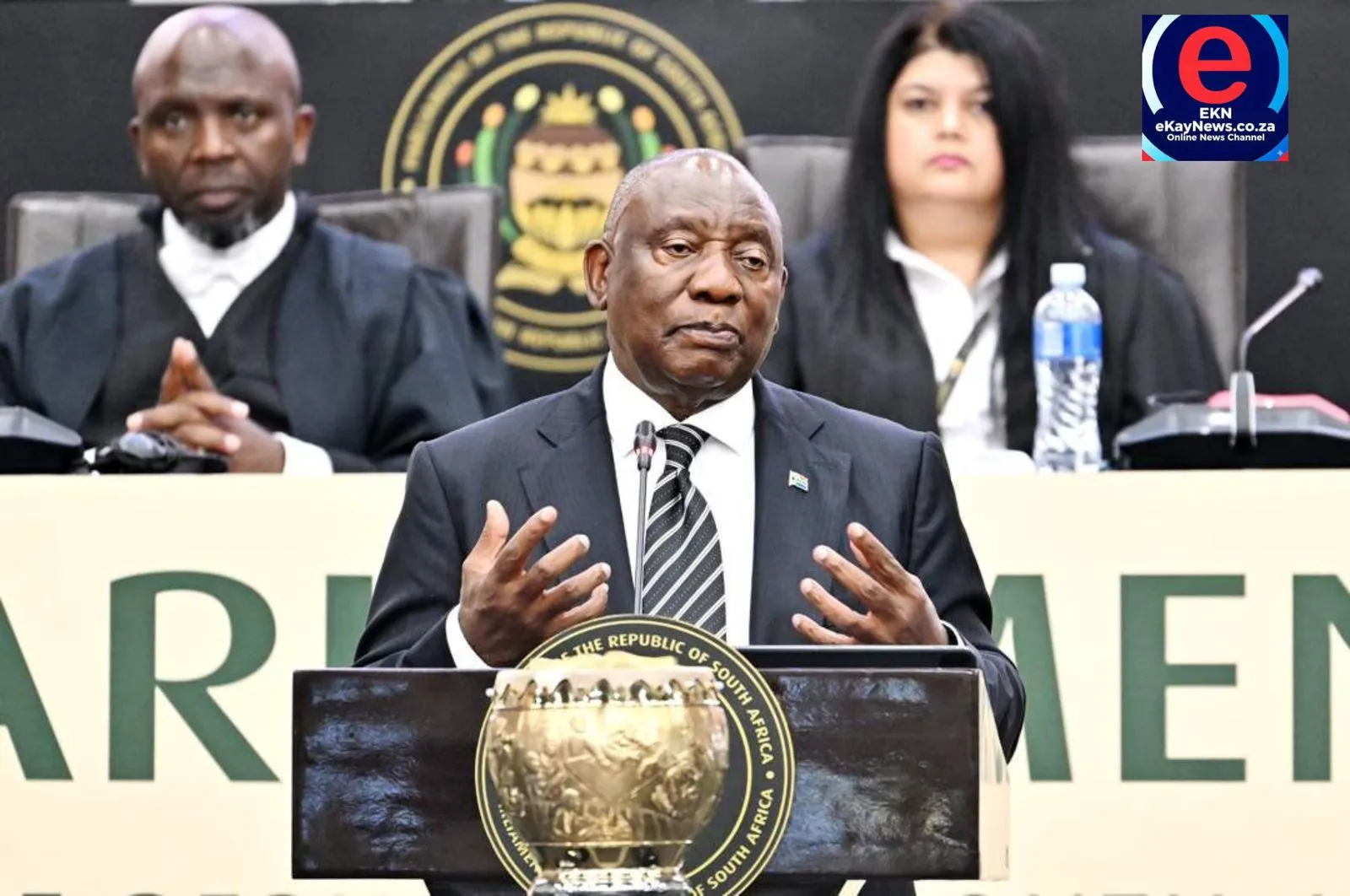
Ramaphosa takes Phala Phala report to court in bid to block impeachment process
Ramaphosa Seeks to Block Phala Phala Impeachment Process as President Cyril Ramaphosa launches a major legal challenge aimed at stopping Parliament’s impeachment inquiry linked to the controversial Phala Phala farm scandal. The urgent court application, filed in the Western Cape High Court, seeks to halt parliamentary proceedings while a separate review application challenges the findings of an independent panel report that concluded there was prima facie evidence that the president may have committed serious misconduct and constitutional violations.
The latest legal development has reignited one of South Africa’s most contentious political controversies and could have significant implications for the future of the presidency, parliamentary oversight, and constitutional accountability.
Cyril Ramaphosa Moves to Stop Impeachment Proceedings
President Cyril Ramaphosa has approached the courts in an effort to prevent the National Assembly and its impeachment committee from proceeding with the inquiry process.
The application asks the court to suspend all impeachment-related proceedings until the review application against the independent panel report has been fully heard and decided.
According to court papers, Ramaphosa argues that allowing the impeachment process to proceed before the review application is finalized could result in irreversible damage to his reputation both within South Africa and internationally.
The president’s legal team contends that if the parliamentary process continues while questions about the legality of the panel report remain unresolved, the consequences could be severe regardless of the final outcome.
Claims of Irreparable Reputational Harm
A key argument in Ramaphosa’s affidavit is that the impeachment inquiry itself poses a threat to his standing as head of state.
The affidavit states that the proceedings could cause “irreparable” reputational harm, affecting not only his political future but also South Africa’s international image.
Ramaphosa argues that the inquiry would generate widespread public attention and potentially create a perception of wrongdoing before the courts have determined whether the panel report was legally sound.
His legal team maintains that fairness requires the review process to be completed first.
The Origins of the Phala Phala Controversy
The Phala Phala scandal has remained a major issue in South African politics since allegations first emerged concerning the theft of foreign currency from the president’s game farm in Limpopo.
The controversy began after former State Security Agency director-general Arthur Fraser lodged a complaint alleging that large sums of foreign currency had been hidden inside furniture at the farm and that the theft had not been properly reported.
The allegations triggered widespread public debate and prompted calls for investigations into whether any laws or constitutional provisions had been violated.
Parliamentary Action and Independent Investigation
In response to the allegations, Parliament established an independent panel under its impeachment rules.
The panel was tasked with determining whether sufficient evidence existed to indicate that the president may have committed serious misconduct, violated the Constitution, or become unable to perform the duties of office.
The three-member panel consisted of former Chief Justice Sandile Ngcobo, retired Judge Thokozile Masipa, and Advocate Mahlape Sello.
Their findings would later become the foundation for ongoing impeachment efforts.
Independent Panel Findings Under Scrutiny
The panel delivered its report on 30 November 2022.
Its conclusion was that the information before it disclosed prima facie evidence suggesting that Ramaphosa may have committed serious violations of the Constitution or the law and may have engaged in serious misconduct.
Those findings triggered significant political fallout and renewed calls for accountability.
However, Ramaphosa has consistently disputed the report’s conclusions and now seeks to have it reviewed and set aside entirely.
Ramaphosa Challenges Legal Threshold
One of the central arguments advanced by Ramaphosa is that the panel misunderstood the legal standard it was required to apply.
According to his affidavit, the panel relied too heavily on a prima facie test rather than determining whether there was sufficient admissible evidence to justify impeachment proceedings.
The president argues that impeachment under Section 89 of the Constitution requires intentional or malicious misconduct performed in bad faith.
His legal team contends that the panel failed to properly assess whether evidence supporting such serious allegations actually existed.
Questions Over Evidence and Procedure
A significant aspect of the court application concerns the nature of the evidence relied upon by the panel.
Ramaphosa argues that the panel improperly considered hearsay material and failed to distinguish between allegations, information, and admissible evidence.
Reliance on Arthur Fraser’s Allegations
The affidavit specifically challenges the panel’s reliance on materials submitted by Arthur Fraser.
Among the disputed materials are a confidential Namibian police report and an audio recording that allegedly formed part of the information reviewed by the panel.
According to Ramaphosa, the panel did not adequately consider whether these materials were lawfully obtained or legally admissible.
His legal team argues that this failure constituted a significant procedural irregularity.
Concerns About Hearsay Evidence
Ramaphosa further contends that the panel ignored established legal principles regarding hearsay evidence.
The affidavit argues that hearsay should generally be excluded unless specific legal requirements are met.
By allegedly relying on hearsay material, the panel may have reached conclusions unsupported by legally admissible evidence.
This argument forms a major pillar of the president’s effort to overturn the report.
Denial of Wrongdoing
Throughout the legal papers, Ramaphosa firmly rejects allegations of misconduct.
He denies accusations that he engaged in undeclared paid work while serving as president.
He also rejects claims that he violated anti-corruption legislation by failing to report the theft.
Defence of Security Arrangements
The president has also defended the actions of Major General Wally Rhoode and other security officials involved following the theft.
Ramaphosa argues that state resources were not improperly used and that the response to the incident complied with relevant legal and administrative requirements.
These denials are intended to reinforce his position that the allegations lack sufficient evidentiary support.
Constitutional Court Ruling Revives Matter
The current legal battle gained renewed urgency following a recent Constitutional Court ruling.
Earlier this year, the Constitutional Court found that Rule 129I of the National Assembly rules was unconstitutional.
The rule had previously allowed Parliament to terminate impeachment proceedings without conducting a substantive inquiry.
Impact on the Impeachment Inquiry
The Constitutional Court ordered that the matter proceed through a properly constituted impeachment committee.
As a result, Parliament began preparations to establish the committee and move forward with the inquiry process.
This ruling effectively revived impeachment proceedings that had previously stalled after the National Assembly voted against adopting the panel report in December 2022.
The court’s decision transformed what many believed was a closed chapter into an active constitutional process.
South African Parliament Prepares for Next Steps
The role of the South African Parliament remains central to the unfolding developments.
Parliament is responsible for constituting the impeachment committee and ensuring that constitutional procedures are followed.
However, the process has not been without controversy.
Opposition parties have accused the governing ANC of delaying the nomination and establishment of committee members.
Political Implications
The outcome of the court application could significantly influence parliamentary proceedings.
If the court grants Ramaphosa’s request, the impeachment process could be paused until the review application is resolved.
If the application is dismissed, Parliament may proceed with the inquiry regardless of the ongoing legal challenge.
Either outcome is likely to have substantial political consequences.
Broader Constitutional Questions
Beyond the immediate dispute, the case raises broader constitutional questions about accountability, separation of powers, and presidential removal procedures.
The legal challenge may clarify how independent panels should assess evidence in future impeachment-related matters.
It may also establish important precedents regarding the relationship between judicial review and parliamentary processes.
Balancing Accountability and Fairness
Supporters of the impeachment process argue that Parliament has a constitutional obligation to investigate serious allegations involving the president.
Supporters of Ramaphosa, however, contend that fairness requires the courts to first determine whether the panel report was lawfully compiled.
This tension highlights the challenge of balancing accountability with procedural fairness within a constitutional democracy.
What Happens Next?
The Western Cape High Court will now determine whether the impeachment proceedings should be temporarily halted.
Its decision could shape the immediate future of the Impeachment Inquiry and influence how Parliament proceeds with the matter.
Legal experts expect the case to attract significant public attention due to its constitutional importance and political implications.
Regardless of the outcome, further appeals and legal challenges remain possible.
YOU MAY LIKE:
Ramaphosa files court papers to challenge Phala Phala report
Conclusion
Ramaphosa Seeks to Block Phala Phala Impeachment Process through an urgent court application that challenges both the findings and procedures of the independent panel report at the center of the controversy. President Cyril Ramaphosa argues that the report relied on flawed legal reasoning, inadmissible evidence, and procedural irregularities, while also warning that impeachment proceedings could cause lasting damage to his reputation.
As the Constitutional Court ruling pushes Parliament toward establishing an impeachment committee, the Western Cape High Court now faces a critical decision that could determine whether the process moves forward or is delayed pending judicial review. The outcome will not only affect Ramaphosa’s political future but may also shape the constitutional framework governing presidential accountability in South Africa for years to come.
References (Mainstream Media)
- News24 – Ramaphosa launches legal bid to stop impeachment process
https://www.news24.com/news24/politics/political-parties/ramaphosa-launches-legal-bid-to-stop-impeachment-process-over-phala-phala-20260613 - Business Day – Ramaphosa challenges Phala Phala panel report in court
https://www.businesslive.co.za/bd/national/politics/2026-06-13-ramaphosa-challenges-phala-phala-panel-report-in-court
Keep the News Flowing – Buy the Team a Coffee! ☕

Love the updates? Help us stay on the beat! Whether it’s a quick one-time donation or a monthly subscription, your support keeps the eKayNews lights on and the stories flowing.
-
Secure & Simple: We use PayFast for total transaction peace of mind.
-
Make an Impact: Every “coffee” you send directly supports our newsroom.
Your Brand, Our Audience: Let’s Make Headlines Together! 🚀

Looking for real engagement? At eKayNews, we don’t just share news—we build connections. Whether you’re a local startup or a growing business, our advertising packages are designed to put your brand in front of a loyal, highly engaged audience.
Choose Your Spotlight:
-
Link Booster (R2,500): Dominate the feed with 7 links across 7 days.
-
Permanent Feature (R4,000): Your story, hosted on our site for a lifetime.
-
Prime Visibility (R5,000): Claim the top spot with a 30-day homepage banner.
Ready to grow? 📩 Email us: info@ekaynews.co.za 💬 WhatsApp us: +27 71 096 1185
Get Connected:
-
Facebook & X (Twitter) : Follow us for real-time updates and community debates.
-
WhatsApp Channel: Get exclusive alerts sent directly to your phone.
Stay informed, ahead, connected with the eKayNews family!