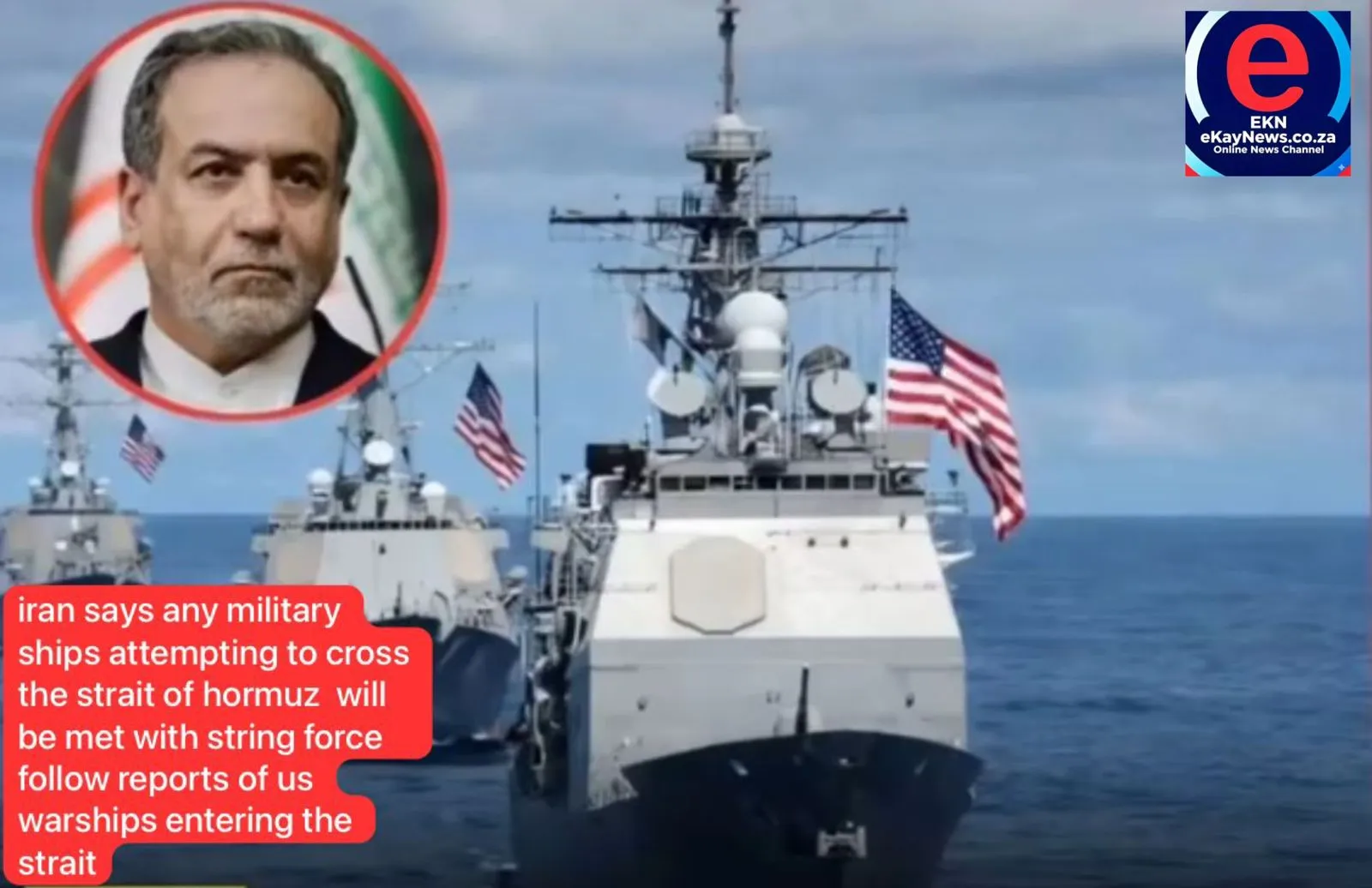
Iran Warns Military Ships In Strait Of Hormuz Violate Ceasefire After Trump’s Blockade Threat
Iran Warns Military Ships In Strait Of Hormuz Violate Ceasefire After Trump’s Blockade Threat has escalated tensions in one of the world’s most critical maritime chokepoints, raising global concerns over energy security and geopolitical stability.
The warning, reportedly issued by naval forces linked to Islamic Revolutionary Guard Corps Navy, signals a sharp deterioration in already fragile relations between Iran and the United States. The development follows statements attributed to Donald Trump regarding a potential maritime blockade.
Rising Tensions in the Strait of Hormuz
The Strait of Hormuz is one of the most strategically vital waterways in the world. Roughly a fifth of global oil consumption passes through this narrow passage, making it a critical artery for international energy markets.
Iranian officials have warned that any foreign military vessels entering the strait under current conditions could be viewed as violating a fragile ceasefire arrangement. While no internationally recognized ceasefire agreement has been publicly confirmed, rhetoric from both sides suggests an informal de-escalation effort may have been underway.
Why the Strait Matters
- It connects the Persian Gulf to global markets
- Major exporters like Saudi Arabia, UAE, and Qatar rely on it
- Disruption immediately affects global oil prices
Even minor tensions in the Strait of Hormuz often trigger volatility in oil markets due to its importance.
Trump’s Blockade Threat and Its Implications
Statements linked to Donald Trump about enforcing a maritime blockade have significantly heightened tensions. A blockade, under international law, is considered an act of war if enforced, making the situation particularly sensitive.
What Is a Maritime Blockade?
A maritime blockade involves restricting access to ports or coastlines to prevent the movement of goods and military assets. If implemented in the Strait of Hormuz, it could:
- Disrupt global oil supply chains
- Trigger military confrontation
- Increase shipping insurance costs
- Impact global economic stability
Iran has consistently warned against any foreign attempts to control or restrict access to the strait, emphasizing its strategic sovereignty over surrounding waters.
Conflicting Narratives Over Diplomatic Talks
Reports indicate that recent diplomatic engagements between the U.S. and Iran ended without a breakthrough. However, details remain inconsistent and unverified from independent sources.
Iranian officials have expressed skepticism toward negotiations, citing a lack of trust. Statements attributed to senior Iranian political figures suggest that Iran remains firm on maintaining its strategic interests, particularly regarding its nuclear program and control over key maritime routes.
Iran’s Position
Iran maintains that:
- It will not compromise on national sovereignty
- The Strait of Hormuz remains under its influence
- External pressure will not dictate its defense policies
These positions reflect long-standing Iranian policy rather than new developments.
Impact on Global Oil Prices
Any disruption in the Strait of Hormuz directly affects oil prices, given the volume of crude passing through daily.
Market Reactions
Historically, tensions in the region have led to:
- Immediate spikes in crude oil prices
- Increased fuel costs globally
- Supply chain uncertainty
While specific price figures fluctuate daily, energy analysts consistently warn that instability in the Strait of Hormuz can trigger rapid increases in fuel costs worldwide.
Broader Economic Consequences
Beyond oil, the strait is also crucial for transporting:
- Liquefied natural gas (LNG)
- Industrial chemicals
- Fertilizers
Disruptions could therefore impact agriculture, manufacturing, and energy sectors globally.
Global Ripple Effects
- Higher transportation costs
- Inflationary pressure on goods
- Energy shortages in import-dependent nations
Countries heavily reliant on Middle Eastern energy exports are especially vulnerable.
Military Risks and Strategic Calculations
The presence of naval forces in and around the Strait of Hormuz raises the risk of miscalculation.
Key Risks Include:
- Accidental clashes between naval vessels
- Escalation from warnings to direct confrontation
- Disruption of commercial shipping lanes
Military analysts often highlight that even a minor incident in such a confined and heavily trafficked waterway can escalate quickly.
International Response and Concerns
Global powers and international organizations typically call for restraint in such situations, emphasizing the importance of keeping vital shipping lanes open.
Common International Priorities:
- Freedom of navigation
- Stability in energy markets
- Prevention of armed conflict
Any sustained disruption in the Strait of Hormuz would likely prompt coordinated diplomatic efforts from multiple countries.
Outlook: What Comes Next?
The situation remains fluid, with developments largely dependent on political decisions and diplomatic engagement.
Iran Warns Military Ships In Strait Of Hormuz Violate Ceasefire After Trump’s Blockade Threat continues to dominate headlines as observers watch for signs of escalation or de-escalation.
Possible Scenarios:
- Diplomatic De-escalation
Renewed talks could reduce tensions and stabilize markets. - Continued Standoff
Ongoing warnings without direct conflict may keep markets volatile. - Military Escalation
Any enforcement of a blockade or confrontation could trigger broader conflict.
YOU MAY LIKE:
Iran releases Hormuz Strait footage, ‘warning US warship to stay away’
Conclusion
The Strait of Hormuz remains a focal point of global geopolitical tension. With Iran asserting its strategic control and the United States signaling potential military measures, the risk of escalation cannot be ignored.
Iran Warns Military Ships In Strait Of Hormuz Violate Ceasefire After Trump’s Blockade Threat highlights the fragile balance between diplomacy and conflict in a region critical to global energy supplies. As the situation evolves, the world watches closely, aware that even small developments in this narrow waterway can have far-reaching consequences.
References
- Reuters – U.S. blockade announcement and military action
US military says it will start blockade of all ships going to and from Iran - Forbes – Iran Warns Military Ships In Strait Of Hormuz Violate Ceasefire After Trump’s Blockade Threat
Keep the Headlines Fresh!

Quality news takes time, effort, and a whole lot of coffee. If you value what we do at eKayNews, consider “buying a round” for the team!
-
Join the Inner Circle: Set up a custom subscription.
-
The Instant Jolt: Send a one-time “coffee” donation.
Why trust us? We use PayFast for 100% secure, encrypted transactions. Your data stays yours; the news stays ours.
To our amazing readers: You’re the reason we’re first on the scene. Thanks for being part of the family!
Feel the Pulse of the News with eKayNews!

Join the ever-growing eKayNews community and stay connected to the stories that matter. Follow us on Facebook, X, and WhatsApp for real-time updates, breaking news, and exclusive alerts straight to your feed. Your support keeps us digging deeper and sharing the news you can trust.
Stay Connected:
-
Facebook: [eKayNews on Facebook]
-
X (Twitter): [eKayNews on X]
-
WhatsApp: [Join the eKayNews WhatsApp Channel]
Become part of our inner circle and get instant news alerts as events unfold across South Africa and beyond!
Promote Your Brand with eKayNews
Looking to reach a wide, engaged audience? Explore our advertising packages:
-
Link Booster: 7 links to 7 articles over 7 days – R2,500
-
Permanent Feature: Sponsored blog article hosted permanently – R4,000
-
Prime Visibility: Home page banner ad for 30 days – R5,000
Don’t miss your chance to connect with our audience. Book your package today via email at info@ekaynews.co.za or WhatsApp us on +27710961185.
Be part of a platform where news meets community—stay informed, stay ahead, stay with eKayNews!