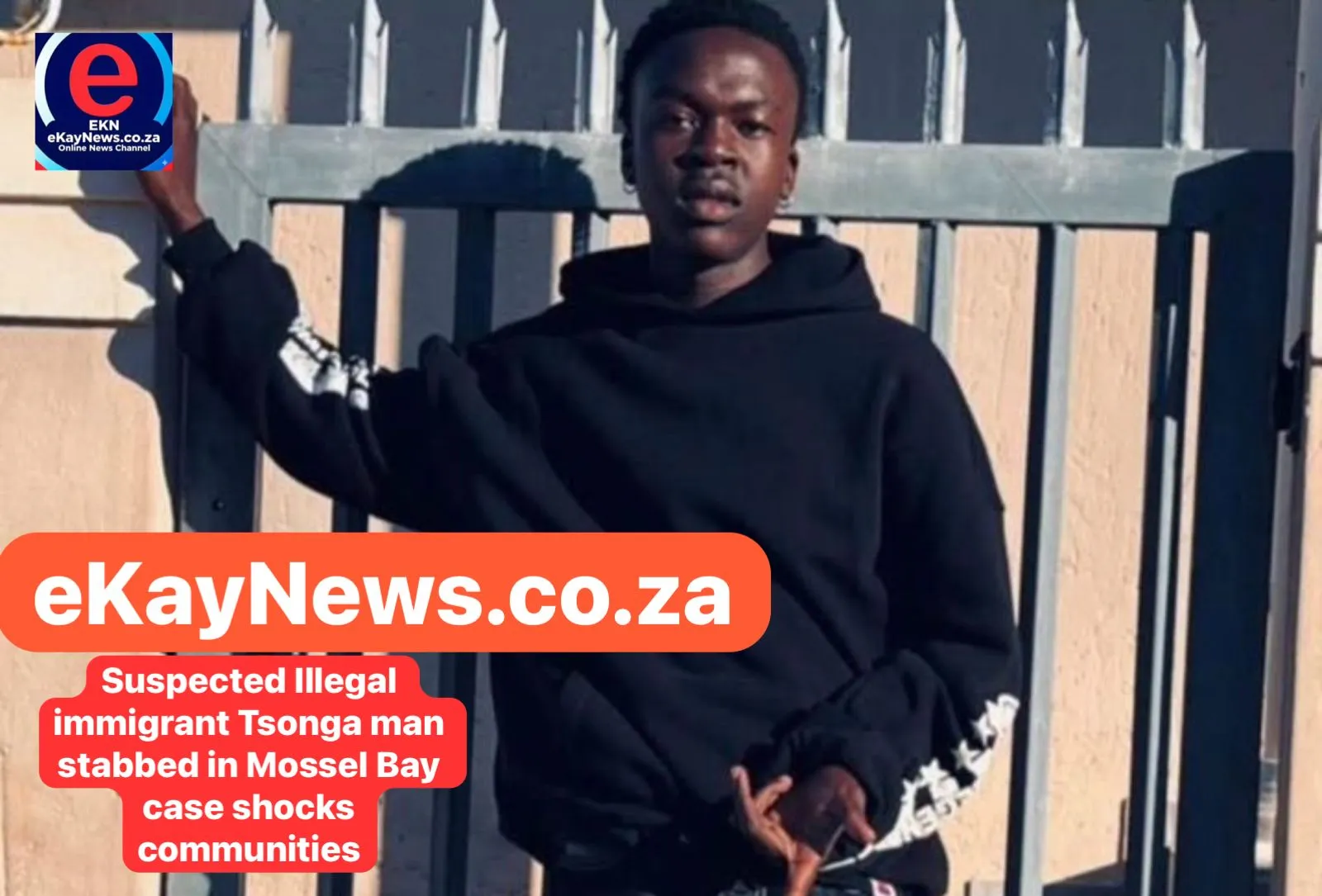
Suspected Illegal immigrant Tsonga man stabbed in Mossel Bay case shocks communities
Suspected Illegal immigrant Tsonga man stabbed in Mossel Bay has triggered shock and anger across communities after a 19-year-old South African man was killed during reported unrest in the Western Cape coastal town. The incident, which occurred on 31 May 2026, has raised renewed concerns about xenophobia, policing, and community tensions linked to identity-based violence.
Authorities confirmed that the victim, Nhlamulo Sambo, originally from Giyani in Limpopo, died after being stabbed during an altercation in Mossel Bay. Police say investigations are ongoing, and no arrests have yet been made.
Family members, however, claim the young man was wrongly identified as a foreign national before the fatal attack, turning the tragedy into a national debate about xenophobia and misinformation.
MosselBay stabbing incident raises xenophobia and unrest concerns
The Suspected Illegal immigrant Tsonga man stabbed in Mossel Bay case has intensified discussions about xenophobia and social unrest in parts of South Africa.
Family members allege that Nhlamulo Sambo was targeted after being mistaken for an undocumented migrant due to his appearance and Xitsonga language background. His mother has publicly appealed for assistance to help with funeral arrangements, as the family reportedly lacks financial support.
Police, however, have stated that the motive behind the stabbing remains unclear. Officials have not confirmed any link to immigration-related violence and say the case is being treated as a criminal investigation.
The situation has fueled tension online, with conflicting narratives emerging between community members, political commentators, and activists.
Tsonga identity and community tensions in Mossel Bay
The Suspected Illegal immigrant Tsonga man stabbed in Mossel Bay incident has highlighted deeper issues of identity and community division in South African society.
Sambo’s death has been widely discussed under themes of Tsonga identity, discrimination, and social fragmentation. Some reports suggest he was attacked during unrest in an area experiencing heightened tensions over informal settlements and migration-related disputes.
Political voices have also entered the debate, with differing interpretations of the killing. Some argue it reflects growing xenophobia, while others insist it was a separate criminal incident unrelated to immigration enforcement.
MosselBay stabbing investigation continues amid unrest
As the Suspected Illegal immigrant Tsonga man stabbed in Mossel Bay story continues to develop, Western Cape police have urged the public to avoid spreading unverified claims.
Authorities confirmed that the suspect has not yet been arrested and that investigators are still gathering evidence from the scene and witnesses.
Community leaders have called for calm, warning that misinformation could escalate tensions further in already sensitive areas affected by unrest.
Police spokespersons emphasized that all possible motives, including criminal and social factors, are being considered.
Xenophobia debate grows after stabbing in Mossel Bay
The Suspected Illegal immigrant Tsonga man stabbed in Mossel Bay case has reignited national debate on xenophobia in South Africa.
Activists argue that rising anti-foreigner sentiment and inflammatory rhetoric can contribute to violence in vulnerable communities. Others insist that law enforcement and immigration control must be strengthened to prevent unlawful activity.
The tragedy has become symbolic of broader national concerns, including unemployment, inequality, and strained community relations.
YOU MAY LIKE:
Conclusion
The Suspected Illegal immigrant Tsonga man stabbed in Mossel Bay incident remains under active investigation, with police yet to confirm the exact motive behind the killing. While the case continues to unfold, it has already exposed deep emotional and political divisions in South Africa, particularly around xenophobia, identity, and community safety.
Authorities have urged restraint as they work to establish the facts, while the victim’s family seeks justice and support during a difficult time.
References (Mainstream Media Sources)
- BBC News – Xenophobic violence and migration tensions in South Africa
https://www.bbc.com/news/world-africa- - African Times – “They Killed My Son Like a Dog” — Grieving Mother Claims Teen Was Targeted for Speaking Xitsonga
Keep the News Flowing – Buy the Team a Coffee! ☕

Love the updates? Help us stay on the beat! Whether it’s a quick one-time donation or a monthly subscription, your support keeps the eKayNews lights on and the stories flowing.
-
Secure & Simple: We use PayFast for total transaction peace of mind.
-
Make an Impact: Every “coffee” you send directly supports our newsroom.
Your Brand, Our Audience: Let’s Make Headlines Together! 🚀

Looking for real engagement? At eKayNews, we don’t just share news—we build connections. Whether you’re a local startup or a growing business, our advertising packages are designed to put your brand in front of a loyal, highly engaged audience.
Choose Your Spotlight:
-
Link Booster (R2,500): Dominate the feed with 7 links across 7 days.
-
Permanent Feature (R4,000): Your story, hosted on our site for a lifetime.
-
Prime Visibility (R5,000): Claim the top spot with a 30-day homepage banner.
Ready to grow? 📩 Email us: info@ekaynews.co.za 💬 WhatsApp us: +27 71 096 1185
Get Connected:
-
Facebook & X (Twitter) : Follow us for real-time updates and community debates.
-
WhatsApp Channel: Get exclusive alerts sent directly to your phone.
Stay informed. Stay ahead. Stay connected with the eKayNews family!