Kuwait Says Airport Hit by Iranian Strikes Amid Escalating Gulf Tensions
Kuwait says airport hit by Iranian strikes as the Middle East faces another dangerous escalation involving Iran, the United States, and regional allies. Kuwaiti authorities confirmed that an Iranian drone attack struck a passenger terminal at Kuwait International Airport, causing injuries and significant damage while forcing aviation authorities to suspend air traffic operations.
The attack came amid renewed military confrontation between Iran and the United States, with both sides exchanging missile and drone strikes across the Gulf region. The latest hostilities have raised fears of a wider regional conflict and have further complicated efforts to secure a durable ceasefire agreement between Washington and Tehran.
The growing confrontation has also intensified concerns over the security of the Hormuz Strait, one of the world’s most important energy corridors, through which a significant portion of global oil supplies passes every day.
Iranian Strike Hits Kuwait International Airport
Kuwaiti military officials confirmed that an Iranian drone strike targeted Terminal One at Kuwait International Airport, resulting in injuries and extensive material damage.
According to Kuwaiti Defence Ministry spokesperson Brigadier General Saud Abdulaziz Al-Atwan, the attack represented a serious escalation in regional hostilities.
Authorities immediately suspended airport operations and diverted incoming flights to alternative airports as emergency services responded to the incident.
The government described the attack as an act of aggression that endangered civilian lives and critical infrastructure.
Airport Operations Disrupted
The damage caused by the strike forced aviation authorities to temporarily halt air traffic, creating significant disruptions for travelers.
Emergency response teams quickly secured the affected area while medical personnel treated those injured in the attack.
While officials did not disclose the exact number of casualties, they confirmed that several individuals required medical attention following the strike.
The incident marks one of the most serious attacks on civilian infrastructure in Kuwait in recent years.
US Strikes Target Iranian Assets
The airport attack followed a series of US Strikes against Iranian-linked targets in the Gulf region.
According to the US military’s Central Command (CENTCOM), American forces launched operations targeting vessels and military infrastructure connected to Iran.
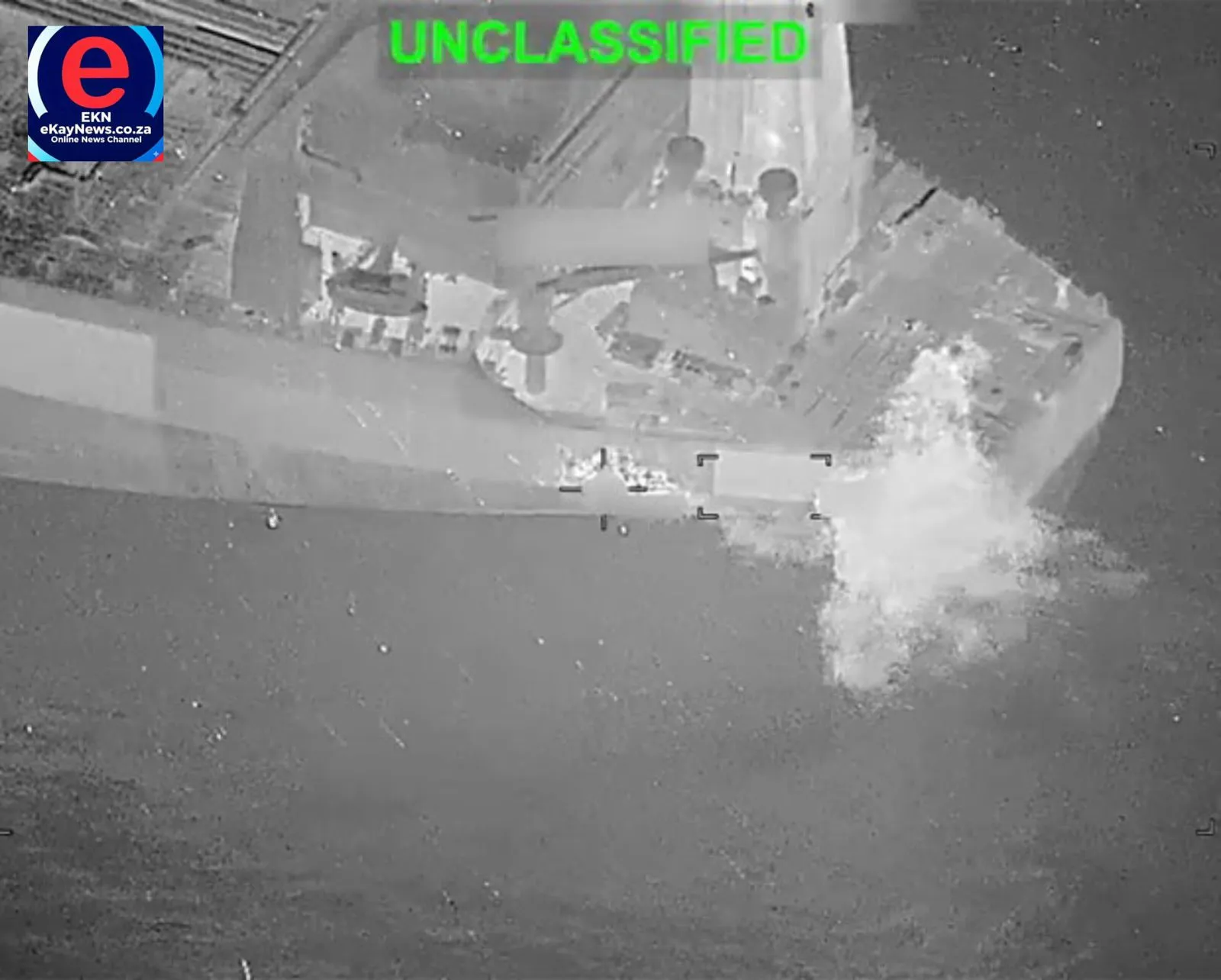
One of the most significant operations involved the Botswana-flagged tanker M/T Lexie, which US officials claimed was attempting to violate the American blockade of Iranian ports.
CENTCOM stated that the vessel ignored multiple warnings over a 24-hour period before a Hellfire missile was used to disable its engine while it was traveling through international waters.
American officials described the operation as necessary to enforce maritime restrictions and maintain regional security.
Strike on Qeshm Island
US forces also conducted military operations on Iran’s Qeshm Island, targeting a military ground control station believed to support drone activities.
According to CENTCOM, the strikes were aimed at reducing threats posed to civilian shipping and allied military assets operating in the region.
The operation marked another chapter in the growing military confrontation between Washington and Tehran.
Iran condemned the strikes and accused the United States of escalating tensions through aggressive military actions.
Iran Responds With Missiles and Drones
Iran’s Islamic Revolutionary Guard Corps (IRGC) claimed responsibility for several retaliatory attacks following the American operations.
The IRGC stated that its forces launched missiles and drones targeting US military interests in the Gulf.
Among the claims was an assertion that Iranian forces had attacked the headquarters of the US Fifth Fleet in Bahrain.
However, American military officials denied that any successful strike had occurred against the naval headquarters.
Iranian officials insisted that the attacks were intended as a direct response to what they described as unlawful US military aggression.
Escalating Missile Exchanges
The latest exchange highlights the growing reliance on Missiles and drone warfare in the ongoing confrontation.
Military analysts note that both sides have increasingly utilized precision-guided weapons, unmanned aerial systems, and advanced surveillance technologies.
These developments have significantly increased the risk of rapid escalation, particularly in densely populated regions and vital shipping corridors.
As tensions continue to rise, regional governments remain concerned about the potential consequences for civilian populations and economic stability.
Strait of Hormuz Remains at the Center of the Crisis
The Hormuz Strait continues to play a central role in the dispute between the United States and Iran.
Located between Iran and the Arabian Peninsula, the narrow waterway serves as one of the world’s most important maritime routes for oil and natural gas exports.
Any disruption to shipping through the strait has immediate consequences for global energy markets.
Iran has repeatedly threatened to restrict maritime access through the waterway in response to Western pressure and sanctions.
The United States, meanwhile, has maintained a strong military presence in the region to protect commercial shipping and ensure freedom of navigation.
Economic Impact of Hormuz Tensions
Energy markets closely monitor developments involving the Strait of Hormuz.
Even temporary disruptions can cause significant increases in oil prices and transportation costs.
Recent military activity has already contributed to volatility in international energy markets, with traders concerned about the possibility of prolonged conflict.
Analysts warn that further escalation could impact fuel prices, inflation, and economic growth across multiple regions.
Ceasefire Talks Face New Challenges
The latest attacks have further complicated diplomatic efforts aimed at reducing tensions.
US Secretary of State Marco Rubio recently suggested that progress was being made toward a new understanding with Iran regarding regional security and nuclear issues.
Rubio indicated that discussions were advancing and that a potential agreement remained within reach.
However, Iranian officials have expressed skepticism about the prospects for a breakthrough.
Iran Suspends Peace Efforts
Iranian Foreign Minister Abbas Araghchi signaled that Tehran may suspend ongoing negotiations due to continued military actions involving both the United States and Israel.
He argued that any ceasefire agreement must apply across all areas of conflict, including Lebanon.
According to Iranian officials, continued military operations undermine trust and make diplomatic progress more difficult.
These statements highlight the fragile state of negotiations and the growing uncertainty surrounding future peace efforts.
Regional Tensions Extend Beyond Kuwait
The conflict is no longer limited to direct confrontations between Iran and the United States.
Military activity in Lebanon, Bahrain, Iraq, Syria, and the broader Gulf region continues to influence the security environment.
Israeli airstrikes in southern Lebanon have further complicated ceasefire efforts, despite diplomatic attempts to reduce hostilities.
Reports from Lebanon indicate that multiple strikes have occurred in recent days, resulting in civilian casualties and infrastructure damage.
The interconnected nature of regional conflicts means that developments in one area often have immediate consequences elsewhere.
Growing Security Concerns
Regional governments are increasing security measures to protect airports, military facilities, ports, and energy infrastructure.
The possibility of additional drone and missile attacks remains a significant concern.
International observers fear that a single miscalculation could trigger a broader confrontation involving multiple countries.
As military operations continue, governments across the Middle East remain on high alert.
International Community Calls for Restraint
World leaders and international organizations have urged all parties to exercise restraint and avoid actions that could further destabilize the region.
Diplomatic channels remain active, with several governments attempting to facilitate dialogue between Washington and Tehran.
Experts argue that a negotiated solution remains the most effective way to prevent further violence and safeguard regional stability.
However, continued military exchanges make diplomacy increasingly difficult.
YOU MAY LIKE:
US bombs Iranian military sites, Kuwait reports incoming fire
Trump now says US left Iran’s military alone as he considers deal
Conclusion
Kuwait says airport hit by Iranian strikes in what has become one of the most serious escalations between Iran and the United States in recent months. The attack on Kuwait International Airport, combined with fresh US Strikes on Iranian targets and retaliatory missile launches, has heightened fears of a broader regional conflict.
With the Hormuz Strait remaining strategically vital and diplomatic negotiations facing mounting obstacles, the coming weeks could prove critical for regional stability. As Missiles and drones continue to dominate the battlefield, the international community is watching closely in hopes that diplomacy can prevent a deeper crisis from unfolding across the Middle East.
References from mainstream media
-
The Guardian: “Kuwait says airport hit by Iranian strikes as US and Iran launch fresh attacks”
https://www.theguardian.com/world/2026/jun/03/us-fires-missile-tanker-strait-of-hormuz -
Al-Monitor: “Drone strikes close Kuwait airport as Iran and US clash in Gulf”
https://www.al-monitor.com/originals/2026/06/drone-strikes-close-kuwait-airport-iran-and-us-clash-gulf
Keep the News Flowing – Buy the Team a Coffee! ☕

Love the updates? Help us stay on the beat! Whether it’s a quick one-time donation or a monthly subscription, your support keeps the eKayNews lights on and the stories flowing.
-
Secure & Simple: We use PayFast for total transaction peace of mind.
-
Make an Impact: Every “coffee” you send directly supports our newsroom.
Your Brand, Our Audience: Let’s Make Headlines Together! 🚀

Looking for real engagement? At eKayNews, we don’t just share news—we build connections. Whether you’re a local startup or a growing business, our advertising packages are designed to put your brand in front of a loyal, highly engaged audience.
Choose Your Spotlight:
-
Link Booster (R2,500): Dominate the feed with 7 links across 7 days.
-
Permanent Feature (R4,000): Your story, hosted on our site for a lifetime.
-
Prime Visibility (R5,000): Claim the top spot with a 30-day homepage banner.
Ready to grow? 📩 Email us: info@ekaynews.co.za 💬 WhatsApp us: +27 71 096 1185
Get Connected:
-
Facebook & X (Twitter) : Follow us for real-time updates and community debates.
-
WhatsApp Channel: Get exclusive alerts sent directly to your phone.
Stay informed. Stay ahead. Stay connected with the eKayNews family!