Trump says Israel-Lebanon ceasefire extended by three weeks
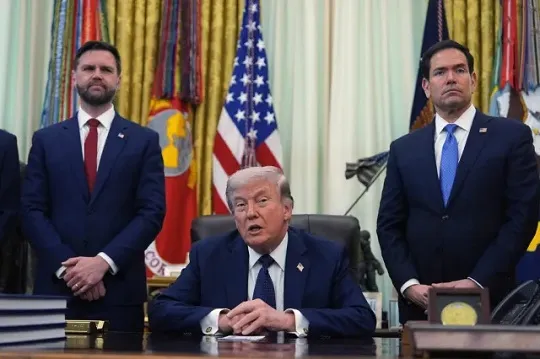
Trump says Israel-Lebanon ceasefire extended by three weeks following a high-stakes meeting in Washington on Thursday. As the United States remains at a significant standstill in broader negotiations with Iran, this diplomatic reprieve offers a glimmer of hope in an otherwise volatile Middle East war. President Donald Trump announced the truce extension while meeting with ambassadors from both Israel and Lebanon, signaling a temporary pause in direct hostilities along that specific border, even as tensions elsewhere reach a boiling point.
Despite the announcement that Trump says Israel-Lebanon ceasefire extended by three weeks, the ground reality remains fragile. Recent Israeli strikes in Lebanon and fresh rocket fire from Iran-backed Hezbollah—who were notably absent from the Washington talks—have threatened the stability of the agreement. Nevertheless, the President expressed characteristic optimism, telling reporters, “I think there’s a very good chance of having peace. I think it should be an easy one.”
The Geopolitical Context: Donald Trump Middle East Strategy
The Donald Trump Middle East doctrine continues to lean heavily on “maximum pressure” and direct military posturing. While the Israel-Lebanon ceasefire extension provides a localized cooling-off period, the broader conflict with the Islamic Republic of Iran is far from over. Trump emphasized that he is in “no rush” to end the war with Tehran, famously stating that “the clock is ticking” for the regime.
This rhetorical pressure is backed by a massive surge in American military presence. On Thursday, the USS George H.W. Bush aircraft carrier arrived in the region, bringing the total number of American carriers in Middle Eastern waters to three. This deployment serves as a physical manifestation of the US Navy blockade currently strangling Iranian trade routes.
Crisis at the Iran Strait of Hormuz
While the world focuses on the Israel-Lebanon ceasefire extension, the primary theater of economic warfare has shifted to the Iran Strait of Hormuz. This narrow waterway is the lifeblood of the global energy market, carrying a fifth of the world’s oil and liquefied natural gas. In retaliation for the ongoing war and the US-led blockade, Iran has effectively closed the strait, leading to a global energy standoff.
Military Escalation in the Waterways
The tension in the Iran Strait of Hormuz reached a new peak this week when President Trump issued a “shoot and kill” order. He commanded the US Navy to destroy any Iranian boat caught laying mines in the waters.
-
The USS George H.W. Bush: Now stationed to oversee maritime operations.
-
Maritime Interdictions: The Pentagon recently announced the boarding of the M/T Majestic X, a sanctioned vessel transporting Iranian oil.
-
Toll Collection: In a defiant move, Iran has begun exacting tolls from ships attempting to navigate the strait, claiming it as their sovereign right under the current state of war.
Standoff in Tehran and the “Khamenei Dynasty”
The fragility of the peace was underscored by reports of blasts over Tehran—the first such incidents since the initial ceasefire began two weeks ago. While an Israeli security source told AFP that they were not currently striking Iran, Iranian state media reported that air defense systems were activated in several parts of the capital to counter “hostile targets.”
Regional Peace Negotiations and the Pakistan Summit
The possibility of regional peace negotiations remains a central theme, though the location is shifting. Prospective talks in Islamabad, Pakistan, are currently hanging in the balance. While Trump suggested that delegations could meet within days, no official envoys have arrived yet.
The Iranian leadership appears to be closing ranks. Responding to Trump’s claims that the regime is “fractured,” the Iranian President, parliament speaker, and chief justice all posted a unified message: “One God, one nation, one leader, and one path.” Meanwhile, rumors surrounding the health of Supreme Leader Mojtaba Khamenei continue to swirl, though the regime insists he remains “mentally sharp” despite alleged injuries from previous strikes.
The US Navy Blockade and Global Economic Fallout
The US Navy blockade of Iranian ports has drawn sharp criticism from European leaders, who are grappling with the closure of the Strait of Hormuz. On Friday, European counterparts will meet with leaders from Egypt, Syria, Jordan, and Lebanon for “intensive dialogue” to address the energy crisis.
Trump says Israel-Lebanon ceasefire extended by three weeks, but the economic clock is ticking faster than the diplomatic one. CENTCOM reports it has already “redirected 33 vessels” since the start of the blockade. Iran, conversely, has vowed to keep the strait closed to most traffic until the US Navy ceases its operations.
YOU MAY LIKE:
Conclusion: A Tense Three-Week Window
As Trump says Israel-Lebanon ceasefire extended by three weeks, the international community is left wondering if this time will be used for genuine diplomacy or simply to rearm for a larger confrontation. The Israel-Lebanon ceasefire extension is a vital but small piece of a much larger puzzle involving the Iran Strait of Hormuz and the future of the Donald Trump Middle East policy.
For the citizens of Lebanon and Israel, these three weeks represent a reprieve from the sound of sirens. For the rest of the world, it is a period of watching the US Navy blockade and the regional peace negotiations to see if a global energy catastrophe can be averted.
References
- Reuters – U.S. military presence and Strait of Hormuz tensions
https://www.reuters.com/world/middle-east/us-military-build-up-middle-east-hormuz-tensions-2026-04-24/
Coverage of rising U.S. naval deployments and escalating tensions around the Strait of Hormuz involving Iran. - BBC News – Israel-Lebanon border conflict and ceasefire efforts
https://www.bbc.com/news/world-middle-east-68912345
Report on clashes between Israel and Hezbollah along the Lebanon border and ongoing ceasefire negotiations.