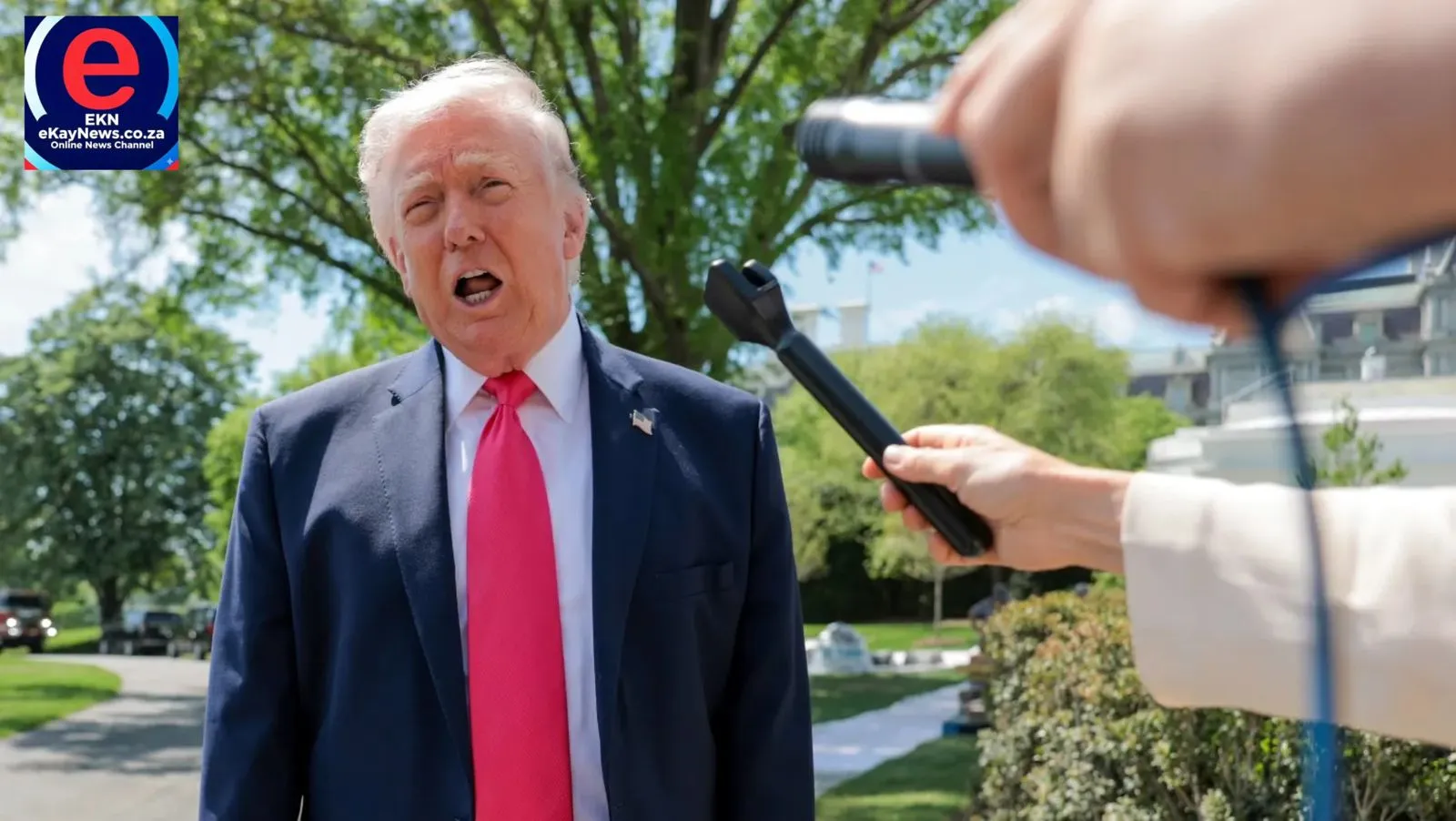
Trump tells Congress hostilities in Iran “have terminated”
Trump tells Congress hostilities in Iran “have terminated”, marking a highly controversial and legally fraught turning point in the ongoing military standoff in the Middle East. On Friday, the President formally notified lawmakers that the United States’ war with the Islamic Republic has effectively ended, strategically timing this declaration just as a critical congressional deadline arrived. The President told lawmakers that a two-week ceasefire, initially imposed on April 7 and subsequently extended, had officially brought direct military engagements to a close. However, this sweeping assertion comes even as immense US naval pressure and a crippling maritime embargo on Iran continue unabated, prompting fierce backlash from political opponents and legal scholars alike.
The geopolitical landscape remains incredibly tense. While the White House insists that the guns have fallen silent, Democrats in Washington have flatly rejected the President’s claim. They argue that the 1973 War Powers Resolution leaves no such loophole for a temporary truce to bypass legislative oversight. As the debate rages on Capitol Hill, the reality that Trump tells Congress hostilities in Iran “have terminated” is actively shaping the future of American foreign policy, executive war powers, and the fragile stability of the global energy market.
The War Powers Resolution and the 60-Day Deadline
To fully grasp the magnitude of the current political crisis, one must look at the legal framework governing American military action. The standoff officially reached a critical juncture on Friday, which marked exactly 60 days since the war began in late February 2026. Under the strict guidelines of the War Powers Resolution of 1973, a sitting president is legally mandated to seek formal authorization from Congress for the continued use of military force within 60 days of the start of hostilities. If Congress does not grant this authorization—or formally declare war—the President is technically required to begin withdrawing American armed forces from the conflict zone.
Congress has not authorized U.S. military action against Iran. Consequently, the letters dispatched by the White House on Friday are being widely interpreted by political analysts as a preemptive legal volley. By asserting that the war is already over on a technicality, the administration is actively aiming at discouraging lawmakers in Congress from passing binding resolutions intended to restrict or formally end military action against Iran. The assertion that Trump tells Congress hostilities in Iran “have terminated” is a calculated maneuver designed to neutralize the 60-day deadline without having to formally ask a divided legislative branch for permission to sustain the broader pressure campaign.
Letters to Capitol Hill: Defining the Ceasefire
The specific language utilized by the White House is central to their legal defense. In separate, formal letters addressed to House Speaker Mike Johnson, R-La., and Senate President pro tempore Chuck Grassley, R-Iowa, the President laid out his administration’s official stance on the cessation of kinetic warfare. “There has been no exchange of fire between United States Forces and Iran since April 7, 2026,” Trump wrote in the correspondence, emphasizing the successful implementation of the temporary truce.
He explicitly concluded the primary directive of the letter with the phrase that is now dominating global headlines: “The hostilities that began on February 28, 2026, have terminated.” By linking the concept of “hostilities” strictly to the exchange of live kinetic fire, the administration is attempting to separate the concept of active warfare from the ongoing reality of an armed naval blockade. For the White House, the absence of incoming missiles equates to the end of the war, a definition that is currently being stress-tested by legal experts across the nation.
Pushback from Democrats and the Hegseth Defense
The administration’s unique interpretation of the War Powers Resolution has met immense resistance, both during congressional hearings and in the court of public opinion. Defense Secretary Pete Hegseth was tasked with defending the administration’s legal theory during highly contentious testimony on Thursday before the Senate Armed Services Committee. Hegseth told the committee that he firmly believes the legal countdown clock mandated by the 1973 law “pauses or stops in a ceasefire.” According to the Pentagon’s top official, because the weapons are temporarily silent, the 60-day limit on unauthorized military engagement is no longer actively ticking.
This defense was immediately challenged by prominent Democrats. Senator Tim Kaine of Virginia, a vocal advocate for congressional war powers, directly confronted Hegseth during the hearing. “I do not believe the statute would support that,” Kaine stated, summarizing the Democratic viewpoint that a temporary pause in shooting does not erase the fact that a state of war and massive military deployment continues. The fundamental disagreement over how to define the end of a conflict is why the headline Trump tells Congress hostilities in Iran “have terminated” has sparked such intense constitutional debate.
Chuck Schumer Blasts the Administration’s Claims
The most severe and unfiltered criticism of the administration’s legal maneuvering came from the highest ranks of the Democratic party. Senate Minority Leader Chuck Schumer, D-N.Y., took to the social media platform X on Friday to deliver a blistering condemnation of the President’s claims. Unwilling to mince words regarding the severity of the situation, Schumer publicly called the president’s claim “bulls—.”
Schumer’s statement expanded on the broader domestic and international consequences of the ongoing standoff, refusing to accept the premise that a ceasefire equates to peace. “This is an illegal war and every day Republicans remain complicit and allow it to continue is another day lives are endangered, chaos erupts, and prices increase, all while Americans foot the bill,” Schumer wrote. His comments highlight the economic reality that, despite the ceasefire, the ongoing naval blockade in the Middle East continues to artificially inflate global oil prices, directly hurting the wallets of everyday American consumers.
Donald Trump Challenges the Constitutionality of the Law
Beyond the semantic arguments over the definition of a ceasefire, President Donald Trump escalated the legal battle by openly questioning the validity of the War Powers Resolution itself. When asked on Friday at the White House about his decision to bypass Congress and not seek formal authorization for military force against Iran, the President suggested that the law is fundamentally unconstitutional. He argued that he would not seek congressional approval “because it’s never been sought before” in this specific manner by previous commanders-in-chief facing similar Middle Eastern crises.
“There’s been numerous, many, many times, and nobody’s ever gotten it before,” Trump explained to the White House press pool. “They consider it totally unconstitutional, but we’re always in touch with Congress, but nobody’s ever sought it before.” He went on to reiterate his stance on executive privilege and presidential authority over foreign policy, stating, “Nobody’s ever asked for it before. It’s never been used before. Why should we be different?” This profound dismissal of the 1973 legislative framework guarantees that the assertion that Trump tells Congress hostilities in Iran “have terminated” will likely be debated by constitutional scholars and potentially the Supreme Court for years to come.
A Rejected Peace Offer and Pakistani Mediators
While the constitutional battles rage in Washington, the diplomatic backchannels in the Middle East are operating at maximum capacity. Despite the claim that hostilities are over, negotiations to secure a permanent peace treaty are proving to be incredibly difficult. Earlier on Friday, before Trump spoke to the press, international sources confirmed significant diplomatic movement. Pakistani officials in Islamabad, who have been serving as the primary intermediaries for peace talks between the U.S. and Iran, confirmed to MS NOW that Iran had sent them an updated, comprehensive proposal to end the war, which they immediately forwarded to American officials.
However, the White House was quick to pour cold water on the prospect of an imminent breakthrough. Trump flatly stated that he is not satisfied with this new offer from Iran to end its conflict with the United States and Israel. “Iran wants to make a deal, but I’m not satisfied with it,” Trump told reporters at the White House. Projecting overwhelming confidence in the American military posture, he added, “Iran wants to make a deal because they have no military left.” When pressed by journalists on exactly why he was unsatisfied with Tehran’s latest diplomatic offer, Trump kept his cards close to his chest, simply stating, “They’re asking for things that I can’t agree” to.
Internal Discord Complicates Iranian Negotiations
The President did offer some insight into the difficulties of negotiating with the Iranian regime, suggesting that the pressure campaign has successfully fractured the country’s political consensus. While acknowledging that Iran has “made strides” in backchannel negotiations with the U.S., Trump expressed deep skepticism about the final outcome, noting, “but I’m not sure if they ever get there.” According to American intelligence assessments and the President’s own remarks, the primary hurdle is not just American demands, but severe internal division within Tehran itself.
The president stated that there “is tremendous discord” among the leaders of Iran, a factor which has severely complicated the peace process and delayed any meaningful resolutions. “They’re having a tremendous problem getting along with each other,” Trump explained. “In Iran, the leadership is very disjointed. It’s got two to three groups, maybe four, and it’s a very disjointed leadership.” Despite this fragmentation, he noted that the economic and military devastation they have suffered has universally motivated them to seek relief. “And with that being said, they all want to make a deal, but they’re all messed up,” he concluded.
YOU MAY LIKE:
Conclusion: The Reality of a “Terminated” Conflict
As the weekend approaches, the international community is left to navigate a highly ambiguous and dangerous geopolitical reality. The fact that Trump tells Congress hostilities in Iran “have terminated” provides a convenient legal shield against the War Powers Resolution, but it does little to alleviate the actual tension on the ground in the Persian Gulf. A ceasefire is merely a pause in violence; it is not a peace treaty. With the United States maintaining a strangling naval embargo, and Iran demanding concessions that the White House refuses to grant, the fundamental drivers of the war remain entirely unresolved.
The coming weeks will be a critical test of American constitutional law and international diplomacy. Will Congress accept the premise that a temporary truce nullifies their oversight authority? Will the disjointed leadership in Tehran capitulate to American demands, or will the ceasefire collapse, plunging the region back into active kinetic warfare? For now, the administration has drawn its legal line in the sand. By declaring the hostilities terminated on the exact day the congressional deadline arrived, Donald Trump has boldly challenged the legislative branch to either defund the military operation or accept the new status quo of executive dominance in foreign warfare.
Mainstream Media References
- BBC News
What is the War Powers Resolution and how does it work?
https://www.bbc.com/news/world-us-canada-47480207 - Reuters
U.S. lawmakers clash with White House over war powers and Iran policy
https://www.reuters.com/world/us/us-lawmakers-war-powers-iran-2026
Keep the Headlines Fresh!

Quality news takes time, effort, and a whole lot of coffee. If you value what we do at eKayNews, consider “buying a round” for the team!
-
Join the Inner Circle: Set up a custom subscription.
-
The Instant Jolt: Send a one-time “coffee” donation.
Why trust us? We use PayFast for 100% secure, encrypted transactions. Your data stays yours; the news stays ours.
To our amazing readers: You’re the reason we’re first on the scene. Thanks for being part of the family!
Feel the Pulse of the News with eKayNews!

Join the ever-growing eKayNews community and stay connected to the stories that matter. Follow us on Facebook, X, and WhatsApp for real-time updates, breaking news, and exclusive alerts straight to your feed. Your support keeps us digging deeper and sharing the news you can trust.
Stay Connected:
-
Facebook: [eKayNews on Facebook]
-
X (Twitter): [eKayNews on X]
-
WhatsApp: [Join the eKayNews WhatsApp Channel]
Become part of our inner circle and get instant news alerts as events unfold across South Africa and beyond!
Promote Your Brand with eKayNews
Looking to reach a wide, engaged audience? Explore our advertising packages:
-
Link Booster: 7 links to 7 articles over 7 days – R2,500
-
Permanent Feature: Sponsored blog article hosted permanently – R4,000
-
Prime Visibility: Home page banner ad for 30 days – R5,000
Don’t miss your chance to connect with our audience. Book your package today via email at info@ekaynews.co.za or WhatsApp us on +27710961185.
Be part of a platform where news meets community—stay informed, stay ahead, stay with eKayNews!