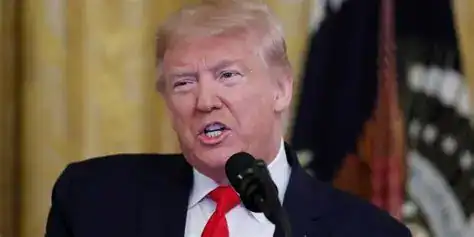
Trump’s Ceasefire Appeal: A Diplomatic Turning Point?
On July 1, US President Donald Trump made a public appeal to Hamas to accept what he termed a “final proposal” for a 60-day Gaza ceasefire. The offer comes amid heightened tensions in the region and increasing international pressure to bring an end to the ongoing violence. Trump, known for his assertive foreign policy stance, has positioned this proposal as a crucial opportunity to shift the trajectory of the conflict between Israel and Hamas.
“This is the best possible deal,” Trump stated in a social media post. “If Hamas cares about the future of Gaza and the broader Middle East peace process, they must accept this now – because it won’t get better.”
Trump’s appeal followed a high-level discussion between his representatives and senior Israeli officials. Although Trump did not name the representatives, it is understood that US Special Envoy Steve Witkoff, Secretary of State Marco Rubio, and Vice-President J.D. Vance were involved in discussions with Ron Dermer, a top adviser to Israeli Prime Minister Benjamin Netanyahu.
Hamas Under Pressure: Will the Ceasefire Be Accepted?
The proposed Gaza ceasefire is seen as a pivotal step in de-escalating hostilities. According to Trump, Israel has already agreed to the conditions laid out in the 60-day ceasefire, which would be overseen and facilitated by international mediators. Now, all eyes are on Hamas.
Trump emphasized that officials from Qatar and Egypt will deliver the proposal to Hamas leadership in Gaza. Both nations have historically played intermediary roles in negotiations between the warring sides. Their involvement increases the credibility and viability of the proposed plan.
“I hope, for the good of the Middle East, that Hamas takes this deal,” Trump wrote. “It will not get better—it will only get worse.”
The international community has expressed hope that a ceasefire will lead to negotiations over the release of hostages and humanitarian aid access, laying the groundwork for long-term Middle East peace.
Political Calculations: Trump, Netanyahu, and Hostage Talks
As part of the ongoing diplomatic developments, President Trump is scheduled to meet Prime Minister Netanyahu at the White House on July 7. The meeting is expected to address final details of the ceasefire and broader issues of regional security and cooperation.
Trump has expressed optimism about a potential ceasefire-for-hostages exchange agreement between Israel and Hamas. The return of hostages has become a key condition for any lasting Gaza ceasefire.
Israeli Foreign Minister Gideon Saar confirmed on July 2 via X (formerly Twitter) that a majority of Israel’s coalition government is prepared to support an agreement aimed at securing the release of remaining hostages held by Hamas in Gaza.
This suggests growing political consensus in Israel to end the war and pivot towards peace-building. With Trump’s pressure and regional mediation, there’s cautious optimism for a breakthrough.
A Strategic Move in a Complex Conflict
The Trump administration’s renewed push for Middle East peace comes at a time when diplomatic efforts have stalled. The Gaza conflict, marked by loss of life and deepening humanitarian crises, has drawn criticism globally. Trump’s proposal places him at the center of potential conflict resolution in the region.
The keyword “Trump Urges Hamas to Accept Gaza Ceasefire Proposal” reflects not only his direct involvement but also the geopolitical strategy behind the move. Trump seeks to revive America’s image as a decisive peace broker in the Middle East, while Hamas is being asked to demonstrate political maturity and a willingness to engage in talks.
Trump’s camp views the deal as a win-win: de-escalation in Gaza, release of hostages, improved regional ties, and a boost to his international leadership credentials.
Challenges to Implementation
Despite the bold initiative, there are numerous obstacles. Trust remains low between both parties. Hamas has previously rejected ceasefire offers it viewed as heavily tilted toward Israel’s interests. Questions also remain about enforcement, verification mechanisms, and humanitarian aid access during the ceasefire period.
Further, Trump’s insistence that this is a “final proposal” could backfire if Hamas demands revisions or guarantees. Experts warn that labeling it final could make renegotiation politically difficult if initial reactions are negative.
Regional analysts also point out that while Qatar and Egypt are trusted mediators, their influence over Hamas is limited. It remains to be seen whether their diplomatic efforts will be sufficient to sway Hamas leadership.
The Global Stakes: Why the World Is Watching
The world is closely watching how this proposal unfolds. The Gaza conflict has wider implications for regional stability, international diplomacy, and global oil markets. A 60-day ceasefire may offer a much-needed window for humanitarian relief, demining operations, and reconstruction efforts.
Moreover, success in this ceasefire could pave the way for a more permanent peace arrangement, further integrating moderate Arab states and reducing the risk of a wider war involving Iran and its proxies.
The Trump administration’s active role shows a shift back to traditional power diplomacy, reminiscent of his first-term Abraham Accords, which normalized relations between Israel and several Arab states.
Conclusion: A Moment of Decision for Hamas
In conclusion, Trump urges Hamas to accept Gaza ceasefire proposal not only as a call for peace but as a decisive move in the ongoing chessboard of Middle Eastern politics. The outcome of this proposal could shape the future of Gaza, the fate of hostages, and the trajectory of Trump’s legacy in international affairs.
Whether Hamas will accept the offer remains uncertain. But one thing is clear—this moment may be the region’s best chance in recent months to take a meaningful step toward peace. As negotiations unfold and the July 7 meeting between Trump and Netanyahu approaches, the world will be watching closely.
Here are five mainstream media references covering the story, with links for your convenience:
- Reuters – Trump urges Hamas to accept ‘final proposal’ for 60‑day Gaza ceasefire
Read more: https://www.reuters.com/world/middle-east/trump-discuss-gaza-iran-with-netanyahu-monday-meeting-2025-07-01/ (reuters.com) - Reuters – Trump says he expects Hamas decision in 24 hours on ‘final’ peace proposal
Read more: https://www.reuters.com/world/middle-east/trump-says-he-expects-hamas-decision-24-hours-final-peace-proposal-2025-07-04/ (reuters.com) - Associated Press – Trump says Israel has agreed on terms for a 60‑day ceasefire in Gaza and urges Hamas to accept deal
Read more: https://apnews.com/article/mideast-wars-gaza-netanyahu-trump-d0cf0cc79fa687d76807dfe40ddf7b21 (apnews.com) - The Guardian – Hamas officials meet to discuss proposed Gaza ceasefire deal
Read more: https://www.theguardian.com/world/2025/jul/04/gaza-ceasefire-talks-hamas-deal-israel (theguardian.com) - Washington Post (Opinion) – The Middle East confronts a ‘be bold’ diplomatic moment
Read more: https://www.washingtonpost.com/opinions/2025/07/03/trumps-gaza-israel-ceasefire-deal-uae-proposal/ (washingtonpost.com)