US-IRAN ceasefire holding despite Lebanon strikes and restricted Strait Hormuz
US-Iran ceasefire tensions test fragile peace
US-IRAN ceasefire holding despite Lebanon strikes and restricted Strait Hormuz highlights the fragile nature of diplomacy in a region long defined by instability. The two-week ceasefire agreement between the United States and Iran was meant to pause a devastating conflict, stabilize oil markets, and pave the way for negotiations. However, ongoing violence and economic disruptions are already exposing cracks in the deal.
While both Washington and Tehran have publicly maintained that the ceasefire is intact, the reality on the ground paints a far more complicated picture. US-Iran ceasefire tensions are rising as regional actors continue military operations that fall outside the direct scope of the agreement.
Lebanon airstrikes escalate Middle East conflict
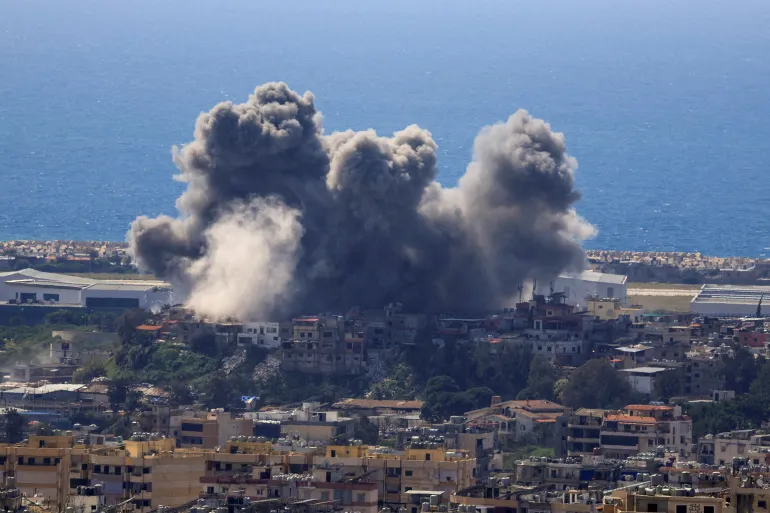
The continuation of Lebanon airstrikes has become one of the biggest threats to the ceasefire’s credibility. Israeli forces have carried out heavy bombardments targeting Hezbollah positions, particularly in and around Beirut. These attacks have resulted in significant civilian casualties and widespread destruction, prompting international concern.
Lebanon airstrikes have intensified fears that the ceasefire may fail to contain the broader Middle East conflict. Iran has condemned the strikes, arguing they violate the spirit of the agreement, even if Israel is not formally part of it. This disagreement highlights a major flaw in the ceasefire framework—its inability to address interconnected regional conflicts.
Civilian impact and humanitarian crisis
The humanitarian consequences of Lebanon airstrikes have been severe. Hundreds of civilians have been killed or injured, and many more displaced. Hospitals are overwhelmed, and infrastructure damage continues to mount. The crisis underscores how geopolitical decisions translate into real-world suffering for ordinary people.
The escalation also prompted calls from global leaders and organizations for restraint, emphasizing the urgent need to protect civilians and maintain the fragile peace.
Hezbollah retaliation fuels instability
Hezbollah retaliation has added another layer of complexity to the situation. In response to Israeli strikes, the Iran-backed group launched rockets into Israeli territory, signaling that it will not remain passive in the face of continued attacks.
This cycle of retaliation demonstrates how quickly localized conflicts can escalate into broader confrontations. Hezbollah retaliation, while predictable, undermines efforts to sustain the ceasefire and risks drawing more actors into the conflict.
Regional implications of retaliation
Hezbollah’s actions are not just a local response—they carry significant regional implications. Iran views the group as a key ally, and any escalation involving Hezbollah could potentially draw Tehran deeper into the conflict. This dynamic increases US-Iran ceasefire tensions and complicates diplomatic efforts.
The situation highlights a fundamental challenge: even if major powers agree to pause hostilities, non-state actors and regional allies may continue to pursue their own agendas.
Strait of Hormuz restrictions disrupt global markets
Another major issue affecting the ceasefire is the Strait of Hormuz restrictions imposed by Iran. This strategic waterway is one of the most important النفط transit routes in the world, with a significant portion of global oil supplies passing through it.
Despite the ceasefire agreement, Iran has maintained tight control over the strait, allowing only limited and conditional passage for vessels. These Strait of Hormuz restrictions have created uncertainty in global markets, leading to rising oil prices and supply concerns.
Economic impact of restricted shipping
Shipping activity through the strait remains below normal levels, with many vessels delayed or rerouted. Energy markets have reacted strongly, with increased volatility and concerns about long-term supply disruptions.
The Strait of Hormuz restrictions demonstrate how economic leverage can be used alongside military strategy. By controlling access to this vital route, Iran is able to exert pressure without directly violating the ceasefire in a conventional sense.
US-Iran ceasefire tensions complicate diplomacy
US-Iran ceasefire tensions are further complicated by disagreements over the terms and scope of the agreement. While the United States insists that the ceasefire applies only to direct conflict between the two nations, Iran argues that actions by its adversaries—particularly in Lebanon—should also be considered violations.
These differing interpretations create confusion and weaken the effectiveness of the agreement. Diplomatic efforts are ongoing, with high-level talks expected to address these issues, but progress remains uncertain.
Role of international mediators
Countries like Pakistan have stepped in as mediators, urging all parties to respect the ceasefire and engage in constructive dialogue. However, deep-rooted disagreements over nuclear policy, sanctions, and regional influence continue to hinder progress.
International organizations have also called for restraint, warning that failure to uphold the ceasefire could lead to a broader escalation of the Middle East conflict.
Middle East conflict remains volatile
The broader Middle East conflict continues to evolve, with multiple actors pursuing competing interests. While the ceasefire has prevented direct large-scale confrontation between the US and Iran, it has not addressed the underlying causes of regional instability.
Lebanon airstrikes, Hezbollah retaliation, and Strait of Hormuz restrictions are all symptoms of deeper issues that remain unresolved. Without a comprehensive approach, the risk of renewed escalation remains high.
Uncertain future for the ceasefire
The coming days will be critical in determining whether the ceasefire can hold. Continued violations, even if indirect, could undermine trust and derail negotiations. At the same time, successful diplomacy could pave the way for a more lasting resolution.
YOU MAY LIKE:
Conclusion
US-IRAN ceasefire holding despite Lebanon strikes and restricted Strait Hormuz reflects a delicate balance between diplomacy and conflict. While the agreement has prevented a direct war between major powers, ongoing violence and economic disruption reveal its limitations.
US-Iran ceasefire tensions, combined with Lebanon airstrikes and Hezbollah retaliation, continue to threaten stability in the region. Meanwhile, Strait of Hormuz restrictions highlight the global economic stakes involved.
Ultimately, the future of the ceasefire will depend on whether all parties can move beyond short-term interests and work toward a comprehensive solution. Until then, the Middle East conflict remains a volatile and unpredictable challenge with far-reaching consequences.
References
- Israeli strikes risk unravelling US‑Iran ceasefire
(Reuters) – Reports that EU officials warned Israeli strikes in Lebanon are putting the US-Iran truce under serious strain. - Israel bombing Lebanon after ceasefire sparks condemnation
(The Guardian) – Covers heavy Israeli airstrikes in Lebanon, rising casualties, and global concerns over the fragile ceasefire.
Keep the Headlines Fresh!

Quality news takes time, effort, and a whole lot of coffee. If you value what we do at eKayNews, consider “buying a round” for the team!
-
Join the Inner Circle: Set up a custom subscription.
-
The Instant Jolt: Send a one-time “coffee” donation.
Why trust us? We use PayFast for 100% secure, encrypted transactions. Your data stays yours; the news stays ours.
To our amazing readers: You’re the reason we’re first on the scene. Thanks for being part of the family!
Feel the Pulse of the News with eKayNews!

Join the ever-growing eKayNews community and stay connected to the stories that matter. Follow us on Facebook, X, and WhatsApp for real-time updates, breaking news, and exclusive alerts straight to your feed. Your support keeps us digging deeper and sharing the news you can trust.
Stay Connected:
-
Facebook: [eKayNews on Facebook]
-
X (Twitter): [eKayNews on X]
-
WhatsApp: [Join the eKayNews WhatsApp Channel]
Become part of our inner circle and get instant news alerts as events unfold across South Africa and beyond!
Promote Your Brand with eKayNews
Looking to reach a wide, engaged audience? Explore our advertising packages:
-
Link Booster: 7 links to 7 articles over 7 days – R2,500
-
Permanent Feature: Sponsored blog article hosted permanently – R4,000
-
Prime Visibility: Home page banner ad for 30 days – R5,000
Don’t miss your chance to connect with our audience. Book your package today via email at info@ekaynews.co.za or WhatsApp us on +27710961185.
Be part of a platform where news meets community—stay informed, stay ahead, stay with eKayNews!