US Warn South Africa not to issue a statement after G20 Sumit
US Warn South Africa not to issue a statement after G20 Sumit — this is the warning that has intensified G20 summit tensions, heightened US–South Africa diplomacy challenges, and sparked global debate over consensus, leadership, and geopolitical influence. The controversy marks one of the most significant diplomatic confrontations of South Africa’s G20 presidency, placing Pretoria at the centre of a global political standoff with Washington.
G20 Sumit Sparks Diplomatic Showdown
The decision by the United States to challenge South Africa’s ambition to issue a joint G20 declaration acts as a defining test for the future of global cooperation. As the first African nation to host the G20 leaders’ summit, Pretoria expected the moment to symbolise unity, inclusion, and Global South leadership. Instead, it has found itself navigating the complexities of superpower politics.
On Wednesday, reports confirmed that the US had delivered a formal diplomatic communication to Pretoria explicitly warning against issuing any G20 statement in America’s absence—an unprecedented break from tradition.
According to documents obtained by Bloomberg, the Trump administration told South Africa that any declaration issued without US participation would not be recognised as a consensus position, effectively undermining South Africa’s efforts as president of the G20.
Inside the Growing G20 Summit Tensions
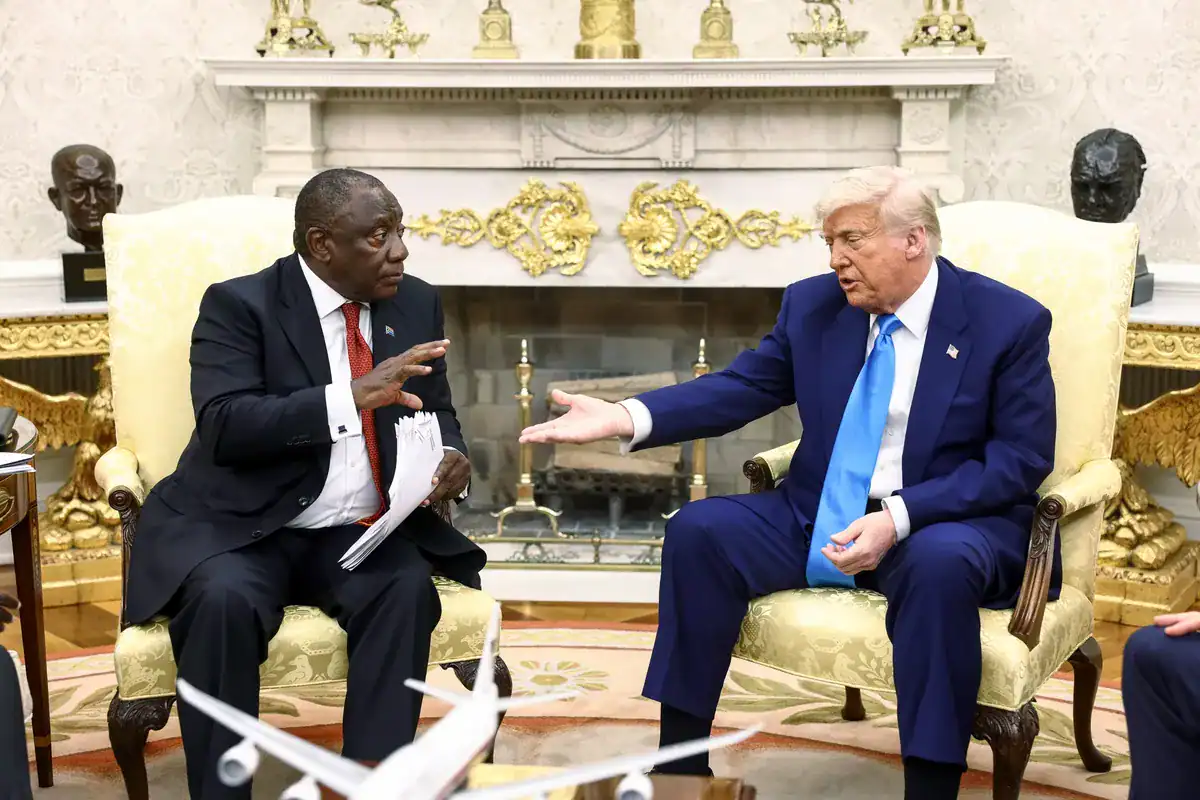
The friction is particularly awkward as South African President Cyril Ramaphosa is set to hand over the G20 leadership baton to US President Donald Trump at the end of the year. The relationship between the two leaders has already been strained after a tense Oval Office meeting earlier this year in which Trump admonished Ramaphosa publicly.
Trump then escalated the situation by refusing to attend the summit and ordering a full US boycott—an aggressive move unseen in G20 history.
Washington argues that South Africa’s agenda of solidarity, equality and sustainability runs counter to US policy and therefore cannot form the basis of a consensus declaration. South Africa strongly rejects this position.
Foreign ministry spokesman Chrispin Phiri responded firmly:
“We cannot allow coercion by absentia to become a viable tactic. It is a recipe for institutional paralysis and the breakdown of collective action.”
This blunt exchange underscores how US–South Africa diplomacy has deteriorated in recent months, partly influenced by domestic US political narratives that include false accusations against South Africa regarding land seizures and alleged genocide.
The Core of the Dispute — Who Controls the G20 Narrative?
In its formal communication, Washington declared:
-
It will not join preparatory meetings
-
It will not participate in the summit
-
It will block any document labelled as a “G20 consensus”
The US insists that any document issued must be labelled a chair’s summary, not a collective declaration.
A White House official argued that issuing a statement without consensus violates longstanding G20 tradition, but South Africa contends that the US is attempting to veto global cooperation from the sidelines.
This disagreement is now shaping the broader joint statement dispute, which has become the main political crisis overshadowing the summit.
South Africa Pushes Ahead — With Global Support
Despite the US warning, Pretoria has made it clear that it intends to push for a joint declaration. South Africa is supported by a powerful bloc of nations, including Brazil, India, Germany, Turkey, and Japan.
Brazil’s ambassador Philip Gough stated:
“The South African presidency’s position is that there should be a declaration, and Brazil strongly supports having one.”
Germany also publicly backed South Africa’s leadership, stating it “fully supports” the presidency and will participate actively in efforts to secure a united message from world leaders.
This backing shifts the summit from a bilateral dispute into a global political standoff, where Washington stands nearly alone against the majority of G20 members.
Global South vs. Global Superpower
South Africa, as host, has been trying to build on the momentum created by previous Global South G20 presidencies, including Indonesia, India, and Brazil.
But Washington insists South Africa’s priorities “run counter to US policy views,” especially in areas such as:
-
multilateralism
-
climate change commitments
-
global equality frameworks
-
sustainable development
At the same time, Argentina—one of America’s closest allies—has pushed back against certain climate-related language, further complicating negotiations.
Other points of contention include:
-
gender-related wording
-
climate funding commitments
-
language referencing global climate accords
These sticking points highlight how difficult global consensus has become in an increasingly fragmented world.
Rising Trade Tensions Add More Fuel to the Fire
The diplomatic conflict is unfolding against the backdrop of new US tariffs. The Trump administration recently imposed 30% tariffs on South African exports, the highest tariffs applied to any African nation. This decision has strained the bilateral relationship even further.
South Africa’s foreign minister Ronald Lamola said at the Bloomberg Africa Business Summit:
“We have always been open — the aggression is on the side of the US.”
This statement reflects Pretoria’s frustration and signals a shift toward more assertive foreign policy messaging.
YOU MAY LIKE:
Ramaphosa on leaders pulling out of G20: ‘Boycott politics never work’
What Happens Next — And What It Means for the World
The stakes are high.
If South Africa succeeds in issuing a joint declaration, it could signal a turning point in global governance, showing the ability of the Global South to move forward despite US objections.
If South Africa fails, it could reinforce US dominance over multilateral systems and weaken the influence of emerging economies.
Either way, US Warn South Africa not to issue a statement after G20 Sumit has transformed the summit from a routine diplomatic gathering into a defining battle over global influence, multilateralism, and the future of international cooperation.
Kindly consider to support eKayNews, further consider buying us a virtual coffee or subscribe to any amount of your choice also in the links below or check at the footer of website

Payment handled by Pay fast the most and eKayNews doesn’t access your payments details at all:
Subscribe with any amount and cancel anytime:
Subscribe any amount of your choice:
Consider Buy us once off virtue coffee of any amount
Your incredible generosity in financially contributing to eKayNews fills our hearts with profound gratitude. Thank you, truly.
Your support is the very lifeline that allows us to remain online, to continue our work, and most importantly, to keep serving you with the news and information you rely on.
No matter the size, makes a tangible difference and empowers us to keep going.
From the entire team at eKayNews, thank you for being such a vital part of our community. We are committed to continuing to serve you even better, thanks to your kindness
We’re grateful for your Love and support of eKayNews

Thank you supporting eKayNews! Follow us for the latest news and updates. We appreciate your readership and engagement.
eKayNews on Facebook
eKayNews on X
Follow the eKayNews What Sapp: News Channel