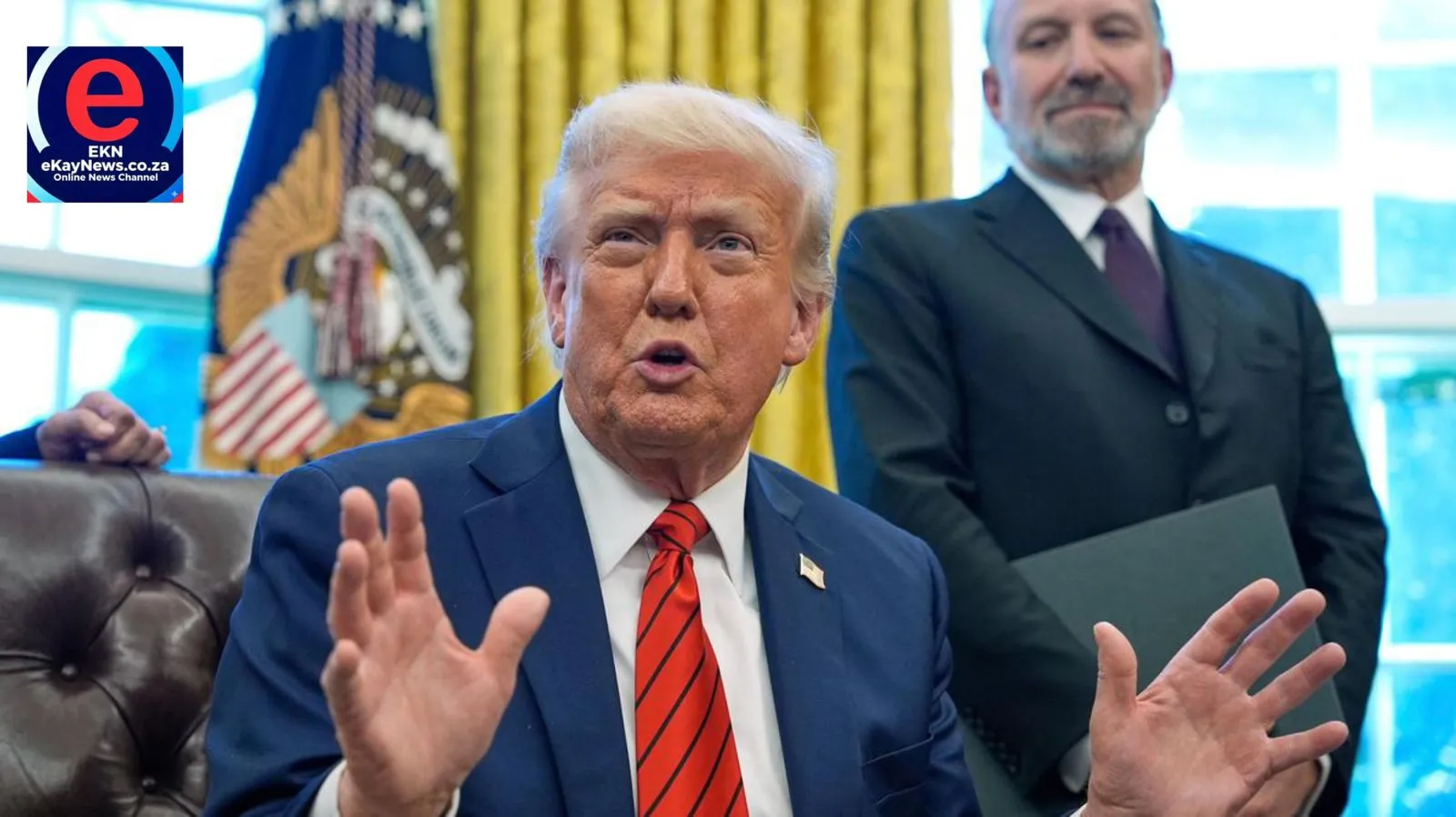
Donald Trump threatens ‘much higher level’ attacks if no deal with Iran
Trump threatens ‘much higher level’ attacks if no deal, sending a chilling and unequivocal warning across the Middle East as the world watches a delicate diplomatic dance unfold. United States President Donald Trump has explicitly stated that the US military is prepared to start bombing Iran “at a much higher level and intensity” than what the region witnessed before the current fragile ceasefire. This stark ultimatum underscores the extreme volatility of the ongoing negotiations. While the guns may have temporarily fallen silent, the threat of an unprecedented escalation hangs heavy over the international community, making it clear that Washington’s patience is strictly conditional.
The gravity of this threat cannot be overstated. For weeks, the globe has been captivated by the escalating military confrontation in the Persian Gulf. Now, as diplomats scramble to finalize the details of a lasting peace, the Commander-in-Chief has drawn a definitive red line in the sand. If Tehran fails to agree to the terms currently being brokered, the ensuing military campaign promises to be more devastating than anything seen in the conflict thus far. As international markets react to the uncertainty, the reality that Trump threatens ‘much higher level’ attacks if no deal remains the defining narrative of this high-stakes geopolitical standoff.
The pause of Project Freedom in the Strait of Hormuz and a fragile ceasefire
The ominous threat of devastating bombings comes just hours after Donald Trump announced a highly publicized pause of the US military’s “Project Freedom.” This massive naval and aerial operation was initially launched with the explicit goal of forcefully opening and securing the Strait of Hormuz, one of the world’s most critical maritime chokepoints. According to statements from the administration, the strategic pause was implemented due to “great progress” being made towards a “complete and final agreement with the representatives of Iran.”
Project Freedom represented a major escalation in the region. The initiative involved the deployment of advanced US naval assets to escort stranded commercial vessels through the heavily contested waterway, effectively challenging Iran’s regional authority and creating a highly combustible maritime environment. By halting this operation, the United States offered a significant, albeit temporary, diplomatic olive branch. Trump indicated that the military operation will be paused for “a short period” to determine whether a lasting diplomatic agreement with Tehran can be successfully finalized and signed.
However, this temporary cessation of hostilities in the Strait of Hormuz is hanging by a thread. The ceasefire is not a declaration of peace, but rather a tactical pause to allow negotiators breathing room. The fact that Trump threatens ‘much higher level’ attacks if no deal serves as a blunt reminder that the suspension of Project Freedom is not a retreat, but a calculated maneuver within a broader strategy of immense military and economic leverage.
Iran responds as Donald Trump demands total compliance
The reaction from Tehran to the looming threat and the ongoing negotiations has been a mixture of defiance and stark warnings about the nature of American diplomacy. Iranian President Masoud Pezeshkian responded to the latest developments by strongly condemning Washington’s approach to the peace process. Pezeshkian stated that the United States is relentlessly pursuing “a policy of maximum pressure,” a negotiation tactic that relies on crippling economic blockades backed by the constant threat of overwhelming military force.
Furthermore, President Pezeshkian argued that Washington “expects Iran to submit to their unilateral demands.” For the Iranian leadership, surrendering to terms dictated entirely by the US without mutual concessions is a non-starter. Pezeshkian categorically described such a scenario as “impossible” for Tehran to accept. This deep-seated resistance highlights the immense difficulty negotiators face in finding a middle ground.
The Iranian government is under immense domestic and international pressure. While the economy has been battered by sustained sanctions and the recent military engagements, national pride and sovereignty remain paramount. Tehran views the heavy-handed tactics of the US administration as an affront to its regional standing. Consequently, as Trump threatens ‘much higher level’ attacks if no deal, Iranian officials are working frantically to present a counter-narrative, painting the United States as an uncompromising aggressor while simultaneously keeping the backchannel lines of communication open in a desperate bid to avert a full-scale war.
Accusations of civilian casualties in the Strait of Hormuz complicate the ceasefire
Amid the high-level diplomatic maneuvering and aggressive rhetoric, the human cost of the conflict threatens to derail the peace process entirely. In a severe escalation of rhetoric, Iran has formally accused US forces of killing five innocent civilians during a recent maritime confrontation. According to Iranian officials, this tragic loss of life occurred during an attack on passenger boats navigating the Strait of Hormuz.
This accusation is highly contentious. The United States military has maintained that its operations in the region, prior to the pause of Project Freedom, were strictly targeted at fast-attack boats operated by the Islamic Revolutionary Guard Corps (IRGC), which were allegedly threatening international shipping lanes. Tehran vehemently disputes this narrative, insisting that the vessels struck were civilian passenger boats, not military assets.
The dispute over these casualties adds a volatile emotional and legal layer to the ongoing ceasefire negotiations. For the Iranian public, the reported deaths of civilians fuel anti-American sentiment and place immense pressure on President Pezeshkian’s government to avoid looking weak at the negotiating table. The tragedy in the Strait of Hormuz serves as a grim reminder of the collateral damage inherent in this standoff, further complicating the path to a “complete and final agreement.”
The one-page memo: A potential pathway to a lasting ceasefire for Iran
Despite the inflammatory rhetoric and tragic accusations, there are tangible signs that a diplomatic breakthrough is closer than it has been in months. Behind closed doors, away from the public threats and military posturing, international mediators are making significant headway. A Pakistani source intimately involved in the complex regional peace efforts has been quoted by international news agencies, including Reuters, stating that the US and Iran are currently closing in on a concise, one-page memorandum to officially end the war.
This development is highly significant. It confirms an earlier, widely circulated report by Axios, which suggested that a framework for peace was being drafted through backchannel intermediaries. Pakistan’s role as a mediator highlights the broader regional desire to see an end to the hostilities, as neighboring nations fear the catastrophic economic and security spillover of an all-out US-Iran war.
The reported one-page memo is believed to outline the foundational steps required to solidify the current ceasefire. It likely involves a mutual agreement to halt aggressive military actions, the permanent cessation of Project Freedom, guarantees for the safe passage of commercial shipping through the Strait of Hormuz, and a roadmap for addressing the crippling economic sanctions that have devastated the Iranian economy. It is specifically because this memo is so close to completion that the current moment is so tense. Trump threatens ‘much higher level’ attacks if no deal precisely to pressure Iranian hardliners into signing this specific document without further delays or amendments.
Regional spillover: Israel, Lebanon, and the impact on the ceasefire
The bilateral negotiations between Washington and Tehran are not occurring in a vacuum. The entire Middle East is currently a tinderbox, with interconnected conflicts threatening to drag the region into a wider conflagration. The success or failure of the US-Iran ceasefire is inextricably linked to the broader security dynamics of the Levant, where the situation continues to rapidly deteriorate.
While diplomats debate the one-page memo regarding the Strait of Hormuz, Israel has continued to launch heavy military strikes across southern Lebanon. The Israeli military campaign has intensified in recent days, accompanied by the issuance of new, sweeping forced evacuation orders. These directives have compelled thousands of Lebanese civilians to flee their towns and villages in advance of impending Israeli bombardments, creating a rapidly growing humanitarian crisis on the border.
The conflict in Lebanon deeply impacts the Iranian negotiating posture. Iran has long been a primary backer of various militant groups and political factions across the region, including in Lebanon. The continued Israeli strikes place pressure on Tehran to respond or risk losing credibility among its regional allies. Consequently, finding a lasting ceasefire with the United States is complicated by Iran’s geopolitical commitments elsewhere. If the situation in Lebanon spirals further out of control, it could easily shatter the fragile peace holding in the Persian Gulf, proving just how interconnected these distinct theaters of war truly are.
What Donald Trump expects from Iran to maintain the ceasefire
To fully grasp the current geopolitical landscape, one must analyze the specific demands driving the American negotiation strategy. Donald Trump has consistently utilized a transactional and highly aggressive approach to foreign policy. The pause of Project Freedom is not a sign of appeasement, but rather a ticking clock. The administration expects complete capitulation on several key security issues to permanently maintain the ceasefire.
First and foremost, the US expects ironclad guarantees that the Strait of Hormuz will remain entirely unimpeded for global commercial shipping. The administration views any interference with oil tankers or cargo vessels as a direct threat to global economic stability and American interests. Secondly, the United States is likely demanding strict limitations on the operational capabilities of the IRGC navy in the Persian Gulf, seeking to neutralize their ability to utilize fast-attack swarm tactics.
If Tehran attempts to renegotiate these core pillars or stall the signing of the one-page memo, the consequences have been clearly articulated. The fact that Trump threatens ‘much higher level’ attacks if no deal is a calculated psychological tactic. It is designed to force the Iranian leadership to weigh the political cost of submission against the physical and economic devastation of a renewed, significantly escalated American bombing campaign. The US military possesses the capability to target vital Iranian infrastructure, military installations, and command centers with devastating precision, a reality that Iranian strategists are acutely aware of.
YOU MAY LIKE:
Iran says strait of Hormuz could reopen after US pauses operation
Conclusion:
The global stakes as Donald Trump threatens ‘much higher level’ attacks if no deal, As the diplomatic clock ticks down, the international community remains on edge. The sudden halt of Project Freedom offered a brief glimmer of hope that diplomacy might finally prevail over destruction. However, the subsequent rhetoric has starkly illuminated the precarious nature of this peace. The negotiations surrounding the one-page memo represent the best, and perhaps only, viable off-ramp from a catastrophic regional war.
The variables at play are incredibly complex. From the accusations of civilian deaths in the Strait of Hormuz to the escalating violence in southern Lebanon involving Israel, the path to a comprehensive agreement is fraught with potential tripwires. Iranian President Masoud Pezeshkian’s firm stance against “unilateral demands” indicates that Tehran will not easily bend the knee, setting the stage for a dramatic diplomatic showdown.
Ultimately, the coming days will dictate the future security and economic stability of the Middle East and the world at large. A successful deal will reopen vital maritime trade routes, stabilize global energy markets, and pull the region back from the brink of the abyss. However, the alternative is almost too grim to contemplate. As the world waits for a final decision from Tehran, the chilling reality remains the central focus of global attention: Trump threatens ‘much higher level’ attacks if no deal, ensuring that the specter of an unprecedented military escalation continues to loom large over the Persian Gulf.
Reference.
- Reuters – US-Iran tensions and Hormuz developments
https://www.reuters.com/world/middle-east/ - BBC News – Analysis on US-Iran conflict and military threats
https://www.bbc.com/news/world-middle-east
Kindly consider to support eKayNews, Buy Us a Coffee & Keep the News Flowing!

Love what we do? You can now support eKayNews directly! Your contributions empower us to deliver the breaking news, sports, and local updates you trust.
Ways to Support:
-
Subscribe: Choose any amount (cancel anytime).
-
Virtual Coffee: A quick, once-off donation to say thanks.
Note: Payments are 100% secure via PayFast. We never see your banking details.
To our amazing readers: Your support fills us with gratitude. You are the reason we can keep doing this every day. Thank you for being a vital part of the eKayNews family!
We’re feeling the love at eKayNews!

Facebook: [eKayNews on Facebook] X (Twitter): [eKayNews on X] WhatsApp: [Follow the eKayNews WhatsApp Channel] Join our inner circle for real-time news alerts!
📢 Advertising Packages on www.eKayNews.co.za
Package 1. Link Booster: We add 7 links to 7 articles over 7 days – R2,500
Package 2. Permanent Feature: Sponsored Blog Article (hosted permanently) – R4,000
Package 3. Prime Visibility: Home Page Banner Ad (30 days) – R5,000
Book now: Email info@ekaynews.co.za or WhatsApp us on +27710961185