Donald Trump halts Project Freedom in the Strait of Hormuz
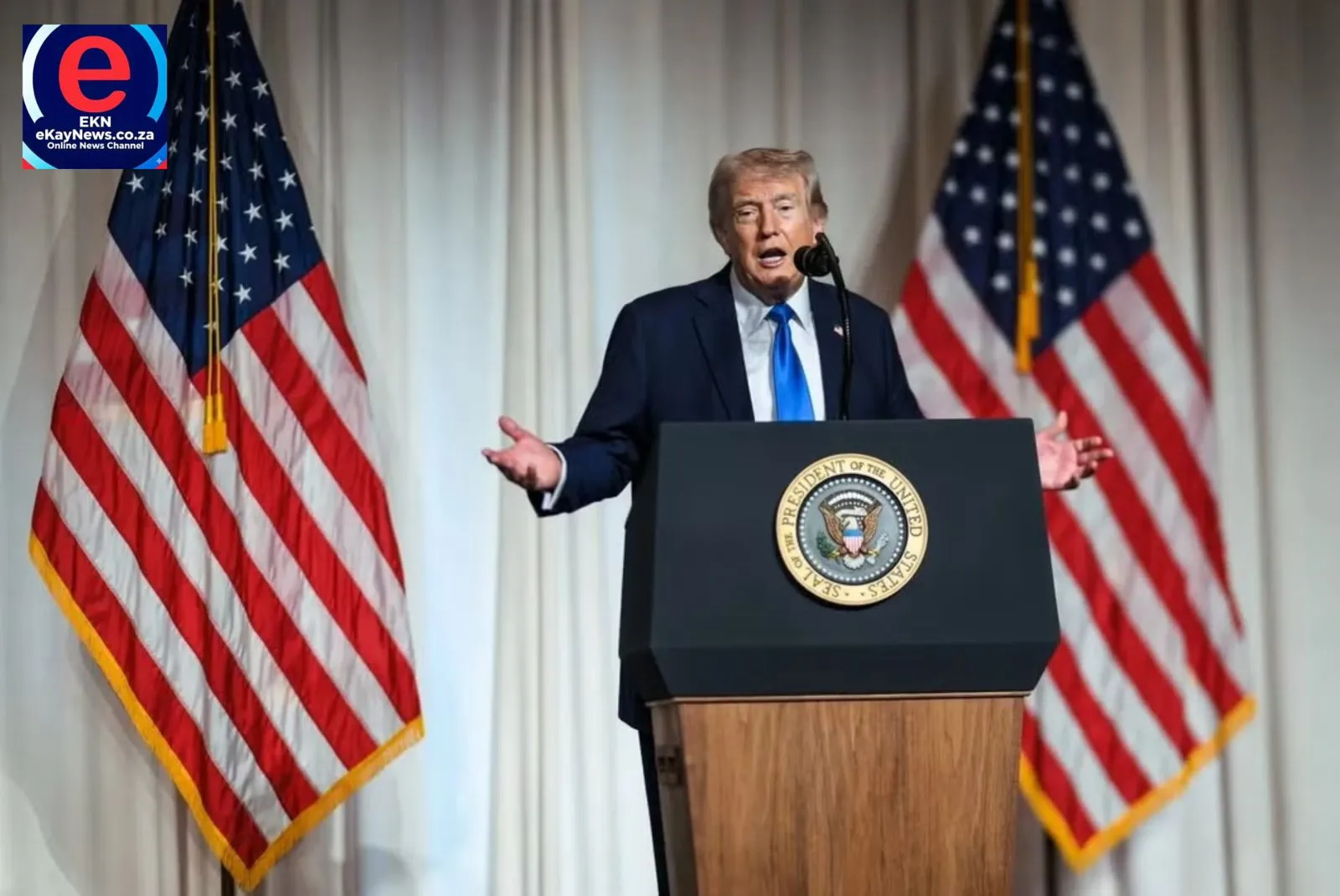
Trump says Hormuz operation paused amid US, Tehran talks, bringing a sudden and highly anticipated shift to the escalating tensions in the Middle East. US President Donald Trump has officially paused the United States military’s “Project Freedom” operation, an initiative originally designed to forcefully open and secure the Strait of Hormuz.
According to the administration, this strategic pause is due to “great progress” being made towards a “complete and final agreement” with the representatives of Iran. Trump indicated that the military operation will be placed on hold for a “short period” to determine whether a lasting diplomatic agreement with Tehran can be successfully finalized and signed.
The sudden halt of this major military initiative underscores the delicate and rapidly changing nature of Middle Eastern geopolitics. For weeks, the international community has watched with bated breath as naval forces converged on one of the world’s most critical maritime chokepoints. Now, diplomacy appears to be taking center stage, heavily influenced by international mediation, including significant requests from Pakistan and other allied nations looking to de-escalate the broader conflict.
The strategic importance of the Strait of Hormuz
To understand the magnitude of this announcement, one must look at the geography and economics of the region. The Strait of Hormuz is a vital maritime artery connecting the Persian Gulf to the Gulf of Oman and the Arabian Sea. A massive percentage of the world’s daily oil consumption passes through this narrow waterway.
Any disruption in the Strait of Hormuz sends immediate shockwaves through global energy markets, leading to skyrocketing fuel prices and severe economic instability for nations reliant on imported crude oil.
When tensions flare between Washington and Tehran, this waterway frequently becomes the primary theater of confrontation. Consequently, Trump says Hormuz operation paused amid US, Tehran talks is a headline that brings immediate, albeit cautious, relief to global shipping conglomerates and energy markets. The safe passage of commercial vessels through this corridor is paramount, which is exactly why the United States initially launched its military escort operation.
Defining the mission: What is Project Freedom?
“Project Freedom” was prominently announced by Donald Trump as a formidable US-led military initiative to assist and escort commercial vessels that had become stranded in the Strait of Hormuz amid the rising hostilities. Launched just a day prior to its suspension, the plan aimed to guide ships belonging to countries not directly involved in the conflict safely out of the hazardous region.
Under Project Freedom, US naval and air assets were tasked with creating a heavily fortified protective corridor. Trump had previously described the massive deployment as a ‘humanitarian gesture’ intended to help civilian ships and crews facing dire shortages of food, fresh water, and essential supplies. Furthermore, it was framed as a necessity to ensure that global trade flows and supply chains were not severely disrupted by the regional conflict.
Rising tensions and military skirmishes at sea
However, the aggressive nature of the operation quickly led to heightened tensions and dangerous skirmishes. The US military claimed it had successfully sunk several Iranian boats that were accused of actively threatening international shipping lanes.
Conversely, reports emerged from the region alleging attacks on civilian vessels. Iran vehemently accused US forces of killing five innocent civilians in an attack on passenger boats in the Strait of Hormuz, maintaining that these were not the fast-attack boats typically operated by the Islamic Revolutionary Guard Corps (IRGC).
The ongoing blockade against Iran
Despite the diplomatic optimism, the military pressure has not been entirely lifted. While Project Freedom has been halted, the United States will forcefully continue its naval blockade of Iranian ports. This ongoing blockade is a critical component of Washington’s broader strategy to economically pressure Tehran into accepting a comprehensive deal.
In his statement on Truth Social, Donald Trump clarified this dual approach: “Based on the request of Pakistan and other Countries, the tremendous Military Success that we have had during the Campaign against the Country of Iran and additionally, the fact that Great Progress has been made toward a Complete and Final Agreement with Representatives of Iran, we have mutually agreed that, while the Blockade will remain in full force and effect, Project Freedom… will be paused for a short period of time.”
The continuation of the blockade ensures that while the immediate risk of a naval shootout in the Strait of Hormuz is temporarily lowered, the economic stranglehold on Iran remains a powerful bargaining chip as negotiations enter their most critical phase.
Iran responds to the diplomacy of Donald Trump
The reaction from Tehran has been a mixture of defiance and cautious engagement. Iranian President Masoud Pezeshkian responded to the latest developments by stating that the United States is relentlessly pursuing “a policy of maximum pressure.” Pezeshkian argued that Washington “expects Iran to submit to their unilateral demands”, a scenario he categorically described as “impossible” for Tehran to accept.
Backchannel negotiations and the one-page memo
Despite the strong public rhetoric, backchannel diplomacy is clearly yielding results. A Pakistani source intimately involved in the regional peace efforts has been quoted by international news agencies, including Reuters, stating that the US and Iran are currently closing in on a concise, one-page memorandum to officially end the hostilities.
This development confirms earlier reports by Axios, suggesting that a framework for peace is closer than previously assumed. It is in this environment of high-stakes negotiation that the pause of the Hormuz operation is giving diplomats the breathing room needed to finalize the text.
The broader regional conflict and the path forward
The bilateral negotiations between the US and Iran are taking place against the backdrop of a much wider, devastating regional war that began escalating significantly following US-Israeli strikes on February 28. The interconnected nature of Middle Eastern alliances means that peace between Washington and Tehran could have vital ripple effects.
For instance, the conflict continues to rage fiercely in the Levant, where Israel has continued to strike southern Lebanon, while also issuing new forced evacuation orders for civilians to flee their towns and villages in advance of further military action. A resolution in the Persian Gulf could potentially pave the way for broader de-escalation efforts across the entire Middle East. The international community is now waiting to see if the proposed one-page memo can successfully navigate the deep-seated mistrust between the two nations.
YOU MAY LIKE:
Conclusion: A critical juncture for global security
Ultimately, the coming days are absolutely critical for global security and stability in the Middle East. The pause of Project Freedom represents a significant olive branch and a genuine opportunity for peace, but the persistent enforcement of the US naval blockade serves as a stark reminder of the fragile state of these talks. As the world watches closely, the fact that Trump says Hormuz operation paused amid US, Tehran talks remains the defining narrative, offering a much-needed glimmer of hope that robust diplomacy might finally prevail over the looming threat of an all-out regional war.
References
- Reuters
US pauses naval operation in Strait of Hormuz amid Iran talks
https://www.reuters.com/world/middle-east/
- BBC News
Strait of Hormuz tensions ease as US signals pause in military plans
https://www.bbc.com/news/world-middle-east
Kindly consider to support eKayNews, Buy Us a Coffee & Keep the News Flowing!

Love what we do? You can now support eKayNews directly! Your contributions empower us to deliver the breaking news, sports, and local updates you trust.
Ways to Support:
-
Subscribe: Choose any amount (cancel anytime).
-
Virtual Coffee: A quick, once-off donation to say thanks.
Note: Payments are 100% secure via PayFast. We never see your banking details.
To our amazing readers: Your support fills us with gratitude. You are the reason we can keep doing this every day. Thank you for being a vital part of the eKayNews family!
We’re feeling the love at eKayNews!

Facebook: [eKayNews on Facebook] X (Twitter): [eKayNews on X] WhatsApp: [Follow the eKayNews WhatsApp Channel] Join our inner circle for real-time news alerts!
📢 Advertising Packages on www.eKayNews.co.za
Package 1. Link Booster: We add 7 links to 7 articles over 7 days – R2,500
Package 2. Permanent Feature: Sponsored Blog Article (hosted permanently) – R4,000
Package 3. Prime Visibility: Home Page Banner Ad (30 days) – R5,000
Book now: Email info@ekaynews.co.za or WhatsApp us on +27710961185