Iranian military makes new threats to Strait Hormuz
Iranian military makes new threats to Strait Hormuz as the Islamic Revolutionary Guard Corps (IRGC) pivots toward a startling new strategy: targeting the literal “internet pipes” of the world. As of mid-May 2026, the geopolitical tension in the region has reached a fever pitch, blending traditional naval posturing with a high-stakes digital “tollbooth” model. While the world watches the water for the next seized tanker, Tehran is now looking beneath the waves at submarine cables to gain unprecedented leverage over the West and global tech giants.
The Digital Tollbooth: Taxing the World’s Data
In a proposal that has sent shockwaves through Silicon Valley and the Pentagon alike, IRGC-affiliated media outlets, specifically the Tasnim news agency, have called on the Iranian regime to impose transit fees on international submarine cables running through the Strait of Hormuz.
This isn’t just about maritime territory; it’s about control over the global digital economy. The Strait of Hormuz is home to some of the world’s most critical fiber-optic arteries, connecting Europe to Asia. By demanding fees from the international groups that own and operate these cables—entities that include Google, Meta, Microsoft, and Amazon—Iran is attempting to turn a geographical chokepoint into a multi-billion dollar revenue stream.
Why Submarine Cables?
-
Leverage: Controlling the physical infrastructure of the internet gives Iran a “kill switch” or “slow-down switch” over Western data flows.
-
Revenue: Tasnim suggests these fees could generate billions of dollars, bypassing traditional oil sanctions.
-
Legality: By declaring the waterway as sovereign property, Iran is testing the limits of international maritime law.
Donald Trump and the PR of Enriched Uranium
While the IRGC focuses on cables, Donald Trump has injected his own brand of “public relations” into the nuclear standoff. Speaking on Fox News’ Hannity program, the U.S. President made it clear that he isn’t just looking for a deal; he’s looking for the optics of a victory.
Trump stated that he wants to seize Iran’s hidden stockpile of enriched uranium, not necessarily because of immediate tactical necessity, but for “public relations purposes.”
“I don’t think it’s necessary except from a public relations standpoint,” Trump told Sean Hannity. “I just feel better if I got it, actually. But it’s, I think, it’s more for public relations than it is for anything else.”
The President is currently departing Beijing after a series of high-level meetings with Chinese President Xi Jinping. According to the White House, the two leaders have reached a consensus that Iran must not be allowed to possess a nuclear weapon, further isolating Tehran on the global stage even as it ramps up its maritime aggression.
Operational Expansion: From Transit Point to Operational Zone
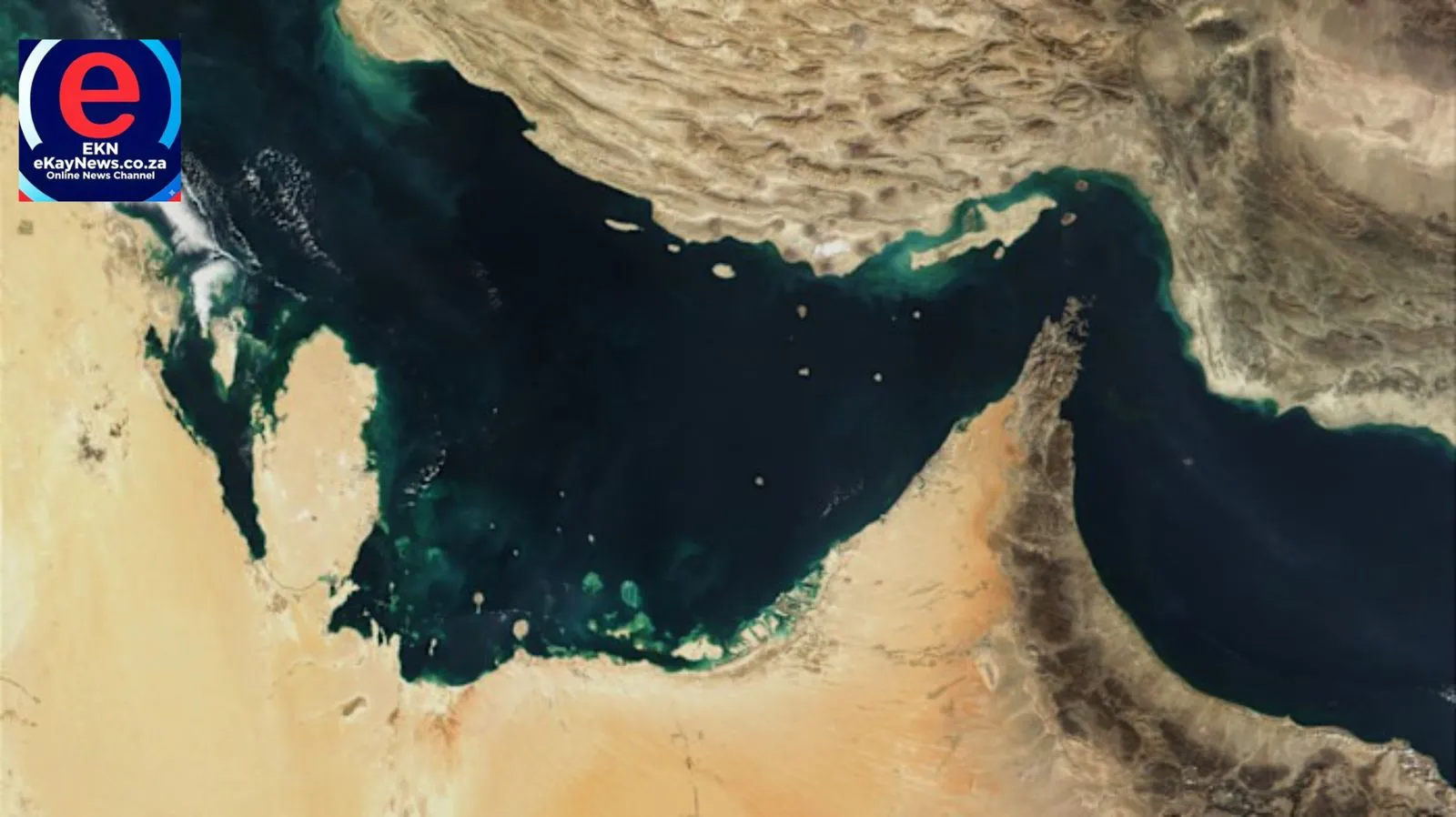
As of May 2026, the Iranian military makes new threats to Strait Hormuz by fundamentally redefining the area’s geography. The IRGC navy has expanded its claimed maritime operational zone, stretching from Jask in the east all the way to Sirri Island in the west.
This is no longer treated as a simple transit chokepoint. Instead, the Iranian military is enforcing a “Tehran Tollbooth” model on commercial shipping. They are demanding detailed cargo information and potential passage fees from merchant vessels under the implicit (and often explicit) threat of violence.
Key Tactical Developments:
-
GPS Jamming: Commercial vessels have reported significant GPS interference, making navigation through the narrow strait increasingly hazardous.
-
Naval Mines: Brigadier General Esmail Kowsari has reiterated threats to block the waterway entirely using naval mines and precision missiles, particularly in retaliation for recent Israeli strikes.
-
Port Blockades: Tensions have flared as U.S. forces have reportedly engaged Iranian vessels attempting to disable tankers or enforce illegal blockades.
The Pentagon Perspective: Loud Voices vs. Depleted Power
On Capitol Hill, a fascinating dichotomy is emerging. Admiral Brad Cooper, leading operations in the region, provided his first public testimony since the start of the current conflict. He conceded that while the Iranian military makes new threats to Strait Hormuz, their actual physical capability has been significantly degraded by American military assaults.
“The Iranian capability to stop commerce has been dramatically depleted through the strait, but their voice is very loud,” Cooper told the Senate Armed Services Committee.
However, the threat remains psychological. The “loud voice” of Tehran is enough to scare off commercial shipping and drive insurance premiums through the roof. This leverage is what Tehran hopes to use in any upcoming peace negotiations with the United States.
The Missile Stockpile Dispute
There is a sharp divide between intelligence reports and the Pentagon’s public stance:
-
The 70% Claim: Some reports suggest Iran retains about 70% of its mobile launchers and pre-war missile stockpile.
-
The Pentagon Rebuttal: Adm. Cooper called these numbers “inaccurate,” stating it would take years for Iran to replenish its missile levels and potentially a “generation” to restore its naval forces to their former strength.
Despite this, Senator Elissa Slotkin (D-Mich.) warned that even a diminished power could send oil prices worldwide spiraling if they successfully execute drone strikes against regional oil infrastructure.
Project Freedom and the Peace Process
One of the most controversial elements of the current U.S. strategy is the status of Project Freedom—a mission designed to clear the Strait of Hormuz for civilian vessels. The mission was abruptly paused by Donald Trump less than 48 hours after it began.
The President claimed the pause was a response to a request from mediators working on a delicate peace deal. This “stop-start” approach has frustrated military leaders and regional partners who believe that as the Iranian military makes new threats to Strait Hormuz, any sign of American hesitation is viewed by Tehran as a green light for further escalation.
The Economic Stranglehold: Oil and Connectivity
About one-fifth of the world’s oil passes through this critical strait. Any disruption, whether through naval mines or the proposed “tollbooth” fees on submarine cables, has an immediate and painful impact on the global economy.
If Iran succeeds in charging Big Tech for data transit, it sets a dangerous precedent. Imagine a world where every strategic waterway—the Suez Canal, the Strait of Malacca—becomes a digital taxing zone. This is the “new frontier” of the Iranian threat: a blend of 20th-century naval blockades and 21st-century data extortion.
The Stakeholders of the Strait:
-
The Tech Giants: Google, Meta, and Amazon, who rely on these cables for global connectivity.
-
The Merchant Industry: Shipping companies facing increased risks and insurance costs.
-
The Global Consumer: Who ultimately pays the price for oil spikes and potential “digital transit” surcharges.
YOU MAY LIKE:
Ship reported seized and another attacked near Strait of Hormuz
Trump arrives in Beijing for talks with China’s Xi on Iran war
Conclusion: A War of Attrition and PR
As Donald Trump seeks the “public relations” win of securing enriched uranium, and the IRGC seeks the financial win of taxing submarine cables, the Strait of Hormuz remains the most dangerous piece of water on the planet.
Tehran knows that it cannot win a direct naval confrontation with the United States. However, it also knows that it doesn’t have to. By being “loud,” by threatening the internet, and by turning the strait into a tollbooth, Iran maintains its seat at the table. The Iranian military makes new threats to Strait Hormuz because, in the world of 2026, the threat of disruption is often just as powerful as the disruption itself.
Whether Project Freedom resumes or a peace deal is struck, the “digital chokepoint” strategy has changed the game forever. The West must now decide if it is willing to pay the toll or if it will find a way to bypass the “Tehran Tollbooth” once and for all.
References
- IRGC and Submarine Cable Fees
Amwaj Media: IRGC media float plan to levy fees for subsea Internet cables - Donald Trump on Enriched Uranium and “Public Relations”
Hindustan Times: ‘More for PR than anything else’: Trump on hunting down Iran’s enriched uranium stockpile
Kindly consider to support eKayNews, Buy Us a Coffee & Keep the News Flowing!

Love what we do? You can now support eKayNews directly! Your contributions empower us to deliver the breaking news, sports, and local updates you trust.
Ways to Support:
-
Subscribe: Choose any amount (cancel anytime).
-
Virtual Coffee: A quick, once-off donation to say thanks.
Note: Payments are 100% secure via PayFast. We never see your banking details.
To our amazing readers: Your support fills us with gratitude. You are the reason we can keep doing this every day. Thank you for being a vital part of the eKayNews family!
We’re feeling the love at eKayNews!

Facebook: [eKayNews on Facebook] X (Twitter): [eKayNews on X] WhatsApp: [Follow the eKayNews WhatsApp Channel] Join our inner circle for real-time news alerts!
📢 Advertising Packages on www.eKayNews.co.za
Package 1. Link Booster: We add 7 links to 7 articles over 7 days – R2,500
Package 2. Permanent Feature: Sponsored Blog Article (hosted permanently) – R4,000
Package 3. Prime Visibility: Home Page Banner Ad (30 days) – R5,000
Book now: Email info@ekaynews.co.za or WhatsApp us on +27710961185