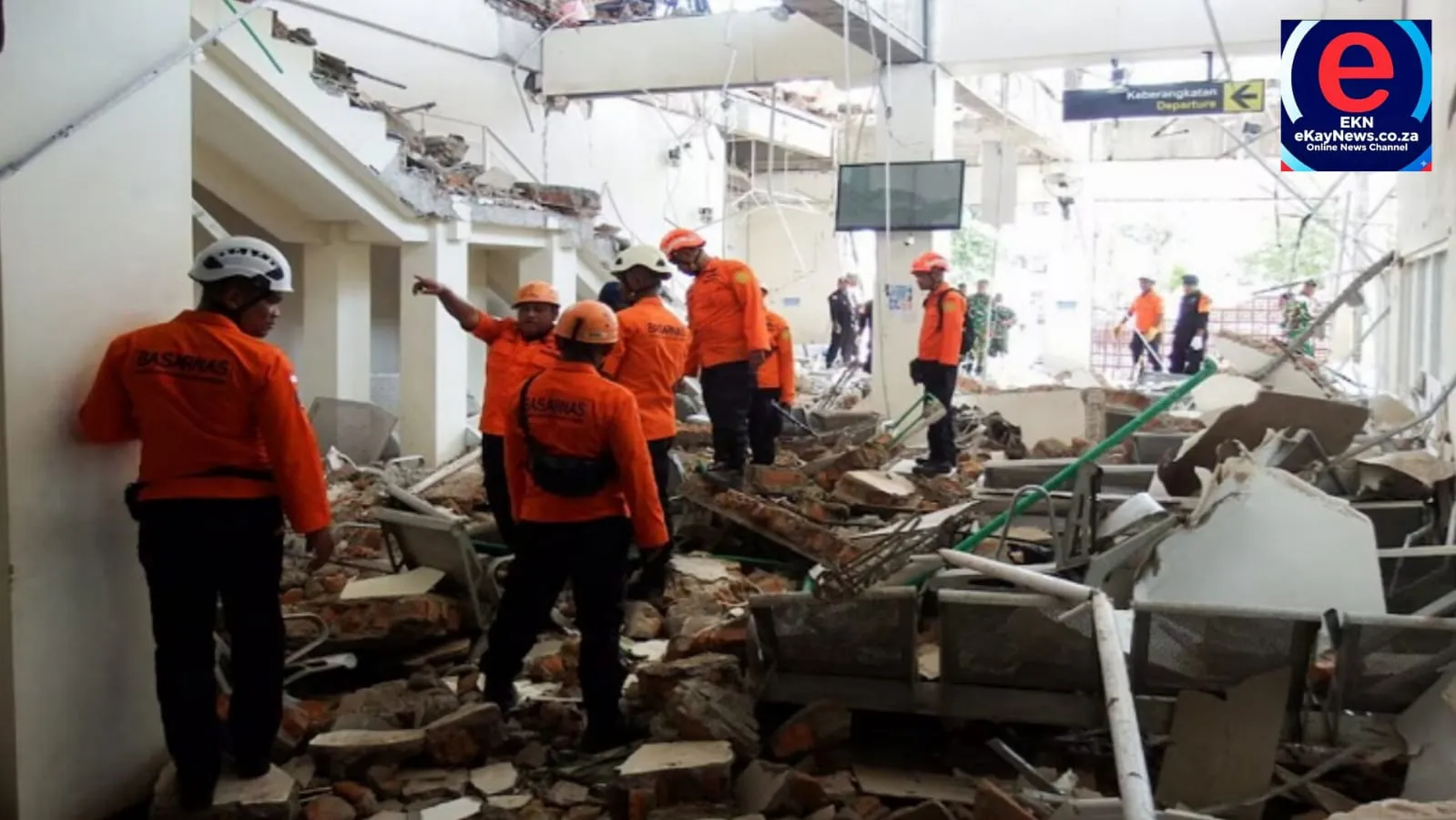
At least 47 dead in eastern Indonesia after 7.7 quake
At least 47 dead in eastern Indonesia after magnitude 7.7 quake after a powerful earthquake struck off eastern Indonesia on Saturday, killing dozens of people and triggering a major emergency response.
The magnitude 7.7 earthquake was followed by dozens of aftershocks, damaging buildings and infrastructure across affected areas of East Nusa Tenggara.
Indonesia’s National Disaster Mitigation Agency (BNPB) said at least 47 people had died in the disaster, while rescue teams continued searching damaged buildings and inaccessible communities.
The full scale of the destruction remained unclear because some of the areas closest to the epicentre were difficult to reach.
Indonesia earthquake triggers major rescue operation
The Indonesia earthquake struck during the early morning, sending residents rushing from buildings as strong shaking was felt across affected parts of the region.
Survivors described the shaking as extremely powerful.
Nona, a 51-year-old resident of Talibura in East Nusa Tenggara, said 13 people were inside her house when the earthquake struck.
She said everyone ran outside to escape the building.
The earthquake caused widespread concern because of the number of aftershocks that followed the initial tremor.
Authorities immediately began assessing damage and sending emergency teams into affected communities.
However, the response was complicated by landslides that blocked roads and disrupted communications.
The conditions made it difficult for rescuers to reach some of the communities closest to the epicentre.
Magnitude 7.7 quake leaves communities cut off
The magnitude 7.7 quake caused significant disruption in Nagekeo, an area located close to the epicentre.
Rescue teams had not yet been able to reach some communities because landslides had blocked roads.
Mobile communication services were also affected, making it difficult for officials to establish the full extent of the damage.
Officials said attempts to reach Nagekeo by road were unsuccessful because of blocked routes.
Another rescue team was reportedly attempting to reach the area by ferry.
The BNPB said about 2,000 residents in Nagekeo had been evacuated.
Damage was reported to homes, warehouses and government buildings, while power outages and severe traffic congestion were also recorded.
The disruption created additional challenges for residents who needed medical assistance, food, water and shelter.
Buildings collapse in affected areas
East Nusa Tenggara Governor Emanuel Melkiades Laka Lena said at least five people were killed when buildings collapsed while people were sleeping.
The deaths added to the growing toll as emergency workers reached different communities.
Officials warned that the number of casualties could increase as rescue teams gained access to locations that had been cut off.
Buildings damaged or destroyed by the earthquake may also present continuing risks for emergency workers and residents returning to their homes.
Authorities are expected to assess structures before people are allowed to return to severely affected areas.
Earthquake deaths reported in Maumere
Some of the most serious losses were reported in the port town of Maumere on Flores Island.
Rescue officials said teams recovered 20 bodies, while six people were injured and two others remained trapped beneath rubble.
Maumere is the main town in Sikka Regency and became one of the focal points of the emergency response.
Rescue workers searched collapsed structures for survivors as local authorities coordinated efforts to provide medical treatment to the injured.
The deaths in Maumere contributed significantly to the overall earthquake deaths reported across the region.
Emergency agencies are continuing to search buildings and assess damage as more information becomes available.
The presence of trapped people under rubble has increased pressure on rescuers to work quickly while dealing with unstable structures and damaged roads.
Tsunami warning lifted after coastal waves
The earthquake also triggered a temporary tsunami warning.
Tsunami waves measuring less than one metre were recorded in several parts of Indonesia following the earthquake.
Authorities issued the warning as a precaution and monitored coastal areas for potentially dangerous changes in sea levels.
The warning was lifted approximately three hours after the earthquake after officials assessed the situation.
Although the waves were relatively small, the warning prompted evacuations and added another layer of urgency to the disaster response.
Residents in coastal communities were advised to follow instructions from emergency authorities and move away from potentially dangerous areas while the warning remained active.
The lifting of the warning allowed some communities to begin returning to normal, although the earthquake damage meant the emergency itself was far from over.
East Nusa Tenggara faces widespread disruption
East Nusa Tenggara is now dealing with the combined effects of deaths, injuries, damaged infrastructure and disrupted communications.
The province includes numerous islands and remote communities, making emergency access especially difficult after a major earthquake.
Landslides are among the biggest obstacles facing rescue teams.
Blocked roads have slowed the transportation of emergency supplies and prevented some rescue workers from reaching affected communities.
The disruption to mobile networks has also made it harder for authorities to communicate with residents and gather accurate information.
In Nagekeo, the evacuation of around 2,000 people demonstrates the scale of the immediate response.
Temporary shelters and emergency assistance will be needed for residents whose homes have been damaged or destroyed.
Power outages add to emergency challenges
Authorities also reported electricity failures in parts of the affected region.
Power outages can complicate rescue operations, particularly at night and in buildings where emergency teams are searching for survivors.
Hospitals and medical facilities may also face additional pressure if electricity supplies remain unreliable.
Emergency agencies will therefore need to coordinate electricity restoration alongside search-and-rescue and humanitarian operations.
Aftershocks keep residents on alert
Dozens of aftershocks followed the main earthquake, keeping communities on edge.
Aftershocks can further weaken damaged buildings and create additional hazards for people returning to their homes.
Emergency authorities are therefore likely to continue warning residents to remain cautious, particularly around visibly damaged structures.
People may also face difficulties obtaining essential supplies if roads remain blocked.
The situation could change rapidly as rescue teams reach areas that have not yet been assessed.
Rescue effort continues after Indonesia earthquake
The ongoing search for survivors remains the main priority following the Indonesia earthquake.
Rescue teams are working across affected areas while local authorities coordinate evacuations and emergency support.
In communities closest to the epicentre, the scale of the damage remains difficult to determine because of blocked roads and communication problems.
The BNPB is expected to continue updating the public as additional teams reach isolated areas.
The discovery of more survivors could still be possible as rescuers gain access to damaged buildings.
At the same time, authorities are likely to continue recovering bodies and documenting the number of people missing, injured and displaced.
YOU MAY LIKE:
Ramaphosa says SA is ‘ashamed’ of attacks on foreign nationals
Indonesia faces long recovery
The effects of the magnitude 7.7 quake are expected to extend beyond the immediate rescue operation.
Communities will need to repair damaged homes, businesses and public buildings.
Roads and communication infrastructure will also require repairs, particularly in areas affected by landslides.
Thousands of people may need temporary accommodation if their homes are found to be unsafe.
The economic impact could also be significant for local businesses, particularly in communities where transportation has been disrupted.
The earthquake has demonstrated the vulnerability of remote communities to major natural disasters, especially where difficult terrain limits access for emergency responders.
For now, authorities are concentrating on saving lives, treating the injured and reaching people who remain cut off.
The earthquake deaths have already made Saturday’s disaster one of the most serious emergencies to hit the region in recent years.
With rescue teams still attempting to reach Nagekeo and other affected communities, officials have warned that the casualty figures could change as assessments continue.
The temporary tsunami warning has been lifted, but residents remain on alert as aftershocks continue.
As Indonesia begins the long process of recovery, the immediate focus remains on finding survivors, assisting displaced families and restoring essential services across East Nusa Tenggara.
Mainstream media references
- Reuters – At least 47 dead in eastern Indonesia after magnitude 7.7 quake
Read the Reuters report - Associated Press – Magnitude 7.7 earthquake strikes off Indonesia’s coast
Read the AP report - The Guardian – Powerful earthquake kills dozens in eastern Indonesia
Read The Guardian report - Al Jazeera – At least 38 dead as magnitude 7.7 quake hits Indonesia
Read the Al Jazeera report
Support Independent Journalism with eKayNews! 📰✨

At eKayNews, we are dedicated to bringing you honest, independent, and reliable news. But we can’t do it alone—independent journalism relies on the strength and generosity of its community.
If you value our work, please consider supporting us today! You can help keep us going by choosing a subscription or simply buying us a one-off virtual coffee:
👉 Support us here: ekaynews.co.za/subscribe-form/
You can also support our mission by visiting our main site at www.ekaynews.co.za and following @eKayNews on all social media platforms.
Thank you so much for your incredible generosity and for being part of our journey! 🙏💙