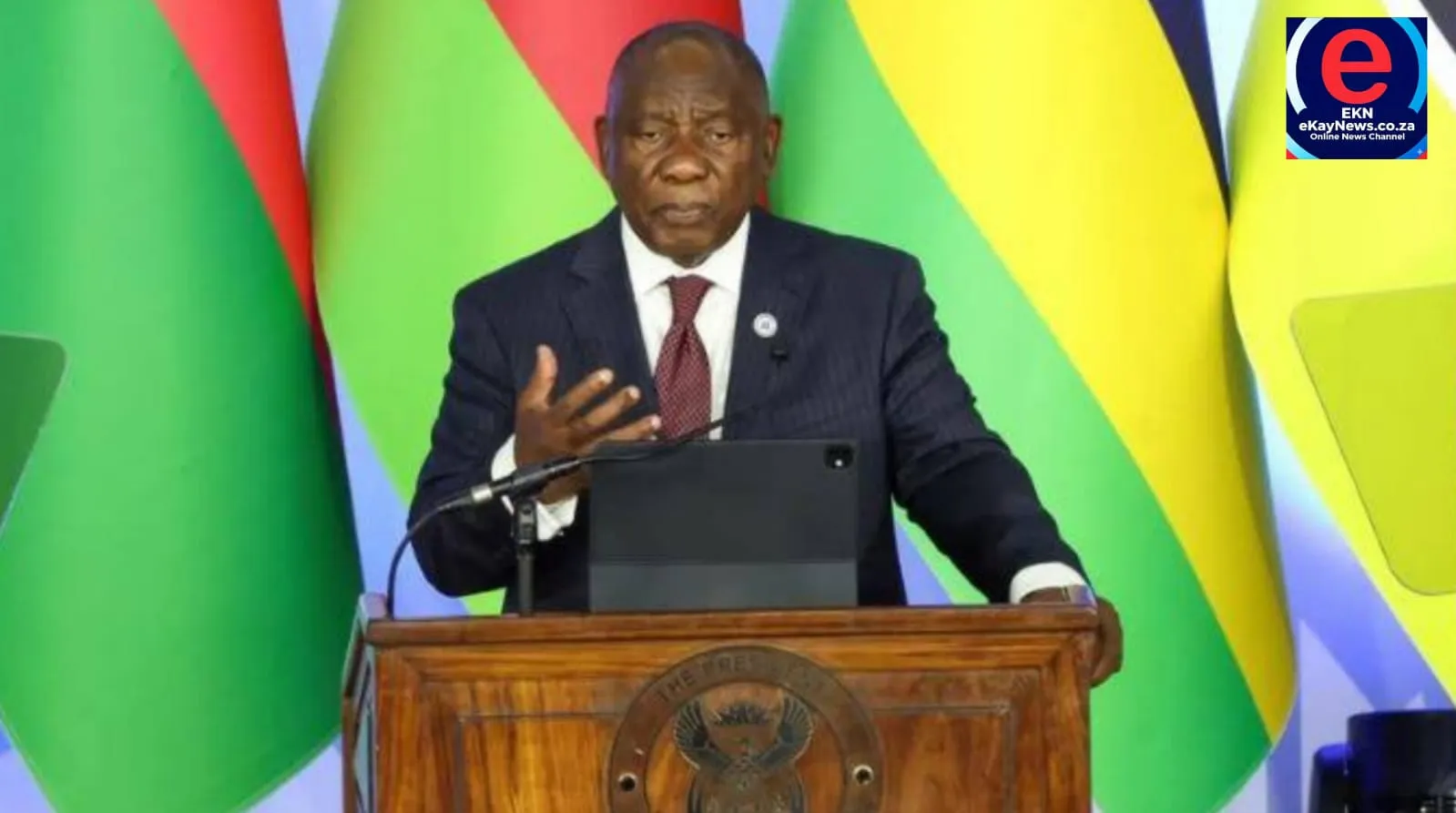
Ramaphosa says South Africa is ‘ashamed’ of attacks on foreign nationals
Ramaphosa says SA is ‘ashamed’ of attacks on foreign nationals as President Cyril Ramaphosa condemned discrimination, intimidation and violence against migrants during a public lecture in Durban.
Speaking at the University of KwaZulu-Natal on Friday, Ramaphosa said South Africa could not genuinely promote closer regional cooperation while people from neighbouring African countries were being subjected to hostility and mistreatment.
The president’s remarks came as the country continues to debate undocumented migration, border control, employment opportunities and the pressure migration places on communities and public institutions.
Cyril Ramaphosa condemns attacks on migrants
Cyril Ramaphosa said South Africans should be concerned about the treatment of foreign nationals and acknowledge the damage caused by acts of intimidation and violence.
He argued that South Africa’s aspirations for stronger regional integration could not be separated from how people from other African countries are treated within the country.
Ramaphosa said an integrated Southern Africa must be built around equal rights and respect for all people.
He warned against allowing intimidation and harassment of people simply because they are perceived to have come from another country.
The president’s remarks amount to a direct condemnation of attacks targeting foreign nationals, while also acknowledging that concerns surrounding migration remain politically significant.
Recent protests and enforcement operations have placed migration at the centre of public debate, with government stepping up measures to identify and deport people who do not have legal status.
Ramaphosa’s comments therefore attempt to draw a distinction between legitimate concerns about immigration management and unlawful attacks against migrants.
South Africa ‘deeply concerned and ashamed’
The president said South Africans were “deeply concerned and ashamed” about the way nationals from other countries had been treated in recent months.
He also condemned criminal conduct, arguing that the actions of individuals who attack fellow Africans undermine the principles of regional solidarity on which Southern Africa’s cooperation is based.
Ramaphosa’s comments come as South Africa prepares to play a leading role in regional discussions through its SADC chairship.
The issue of migration is expected to be among the major challenges discussed by regional leaders as countries attempt to balance border security with economic integration and the movement of people.
Anti-foreigner sentiment South Africa faces scrutiny
The issue of anti-foreigner sentiment South Africa has become increasingly prominent amid a series of demonstrations and campaigns calling for tougher action against undocumented migrants.
South Africa has experienced repeated tensions over migration, with some communities blaming foreign nationals for unemployment, crime, pressure on public services and competition for economic opportunities.
Government officials have acknowledged that these concerns cannot simply be dismissed, but have also warned that violence, discrimination and vigilantism are unacceptable.
Ramaphosa’s comments reinforce that position.
The president’s argument is that concerns over irregular migration should be dealt with through government institutions, immigration laws and regional cooperation rather than through actions by individuals or groups.
This distinction has become increasingly important as civil society groups and political movements have mobilised around migration.
Undocumented migration remains major political issue
Undocumented migration remains one of the most politically sensitive issues facing the South African government.
The Department of Home Affairs has increased immigration enforcement, including the identification, detention, deportation and repatriation of people found to be in the country unlawfully.
The government has also been working to strengthen border management and introduce digital immigration systems.
At the same time, South Africa has been seeking greater regional cooperation on migration, including discussions around orderly movement of people within SADC.
The government has argued that migration must be addressed through both enforcement and development.
Economic inequality, unemployment, poverty and instability in some countries in the region remain important factors influencing movement across borders.
This means that deportation alone is unlikely to resolve all of the pressures associated with migration.
Legal migration pathways under discussion
South Africa has also been pushing for more orderly migration arrangements within the region.
As part of its SADC priorities, the government wants member states to consider a protocol on the free movement of people.
The objective would be to make legitimate regional travel and migration easier while establishing clearer systems for documentation and employment.
The approach reflects the government’s argument that migration should not be treated exclusively as a security problem.
For Ramaphosa, stronger regional integration requires countries to acknowledge their shared economic and social interests.
Foreign nationals South Africa debate intensifies
The debate involving foreign nationals South Africa has become more complicated as both immigration enforcement and anti-migrant activism have increased.
Thousands of foreign nationals have recently left or been removed from parts of the country amid heightened tensions.
The government has undertaken large-scale repatriation and deportation operations while also engaging neighbouring countries about migration management.
At the same time, anti-foreigner protests have called for undocumented migrants to leave the country and demanded tougher government action.
Ramaphosa’s warning is that these concerns cannot justify harassment or violence.
The president said the criminal actions of a few people should not be allowed to undermine the solidarity and interconnectedness of Southern Africa.
This position is particularly important as South Africa seeks greater regional cooperation on trade, infrastructure, investment and migration.
March and March protests drive migration debate
The March and March protests have become a prominent part of the latest debate.
The civic movement, led by Jacinta Ngobese-Zuma, has called for undocumented foreign nationals to leave South Africa and has demanded stronger government action on illegal migration.
The movement organised nationwide demonstrations on 30 June, with protests taking place in several provinces.
It has subsequently indicated that it intends to continue protesting on Thursdays until its demands are addressed.
The protests have contributed to increased public attention around migration and placed pressure on the government to demonstrate that it is taking border management and immigration enforcement seriously.
However, Ramaphosa’s comments suggest that the government does not accept vigilantism as a legitimate solution.
The president’s position is that immigration concerns must remain within the framework of South African law and respect for human rights.
Balancing public concerns and human rights
The challenge for government is finding a balance between enforcing immigration laws and protecting people from violence.
South Africa has a constitutional obligation to protect human dignity and uphold the rule of law.
At the same time, government has responsibilities to manage its borders, enforce immigration legislation and respond to concerns about the impact of irregular migration.
These responsibilities can coexist, but they require effective institutions and consistent enforcement.
Ramaphosa’s comments point towards an approach in which illegal migration is addressed through formal government processes rather than community-led enforcement.
Regional integration faces a major test
The president’s remarks also have implications for South Africa’s broader regional agenda.
As SADC seeks deeper economic integration, the movement of workers, businesses and families across borders will remain an important issue.
Trade and investment depend partly on predictable movement between neighbouring countries.
South Africa has significant economic ties with other SADC states, while millions of people across the region have family, employment and commercial connections that cross national borders.
This interconnectedness means migration cannot easily be separated from economic development.
Ramaphosa’s call for greater respect for foreign nationals is therefore connected to his wider vision for regional integration.
A region seeking closer cooperation must also address the tensions that migration can create.
YOU MAY LIKE:
What happens next?
The government’s migration policies are likely to remain under intense scrutiny as enforcement operations continue and public pressure grows.
Home Affairs is expected to continue strengthening immigration controls, while South Africa’s SADC chairship provides an opportunity to pursue regional solutions.
The government will also face pressure to ensure that legitimate migrants, refugees and other foreign nationals are protected from discrimination while immigration laws are enforced.
For now, Ramaphosa’s statement provides a clear political message: concerns about undocumented migration may be legitimate subjects for democratic debate, but violence and intimidation against people because they are foreign cannot be accepted.
Ramaphosa says SA is ‘ashamed’ of attacks on foreign nationals, reinforcing the president’s call for a South Africa that protects human dignity while addressing migration through lawful and orderly means.
The challenge will be turning that message into effective policy and ensuring that both immigration enforcement and protection from xenophobic violence are implemented consistently across the country.
Mainstream media references
- IOL – Ramaphosa says South Africa is ‘ashamed’ of attacks on foreign nationals
Read the IOL report - News24 – SA ‘deeply ashamed’ of attacks on foreigners, Ramaphosa tells SADC leaders
Read the News24 report - IOL – South Africa to push SADC free movement deal amid rising migration tensions
Read the IOL report - News24 – March and March to picket at SADC summit in Durban
Read News24’s latest coverage - IOL – South Africa migration and anti-foreigner sentiment coverage
Read IOL’s migration coverage
Support Independent Journalism with eKayNews! 📰✨

At eKayNews, we are dedicated to bringing you honest, independent, and reliable news. But we can’t do it alone—independent journalism relies on the strength and generosity of its community.
If you value our work, please consider supporting us today! You can help keep us going by choosing a subscription or simply buying us a one-off virtual coffee:
👉 Support us here: ekaynews.co.za/subscribe-form/
You can also support our mission by visiting our main site at www.ekaynews.co.za and following @eKayNews on all social media platforms.
Thank you so much for your incredible generosity and for being part of our journey! 🙏💙