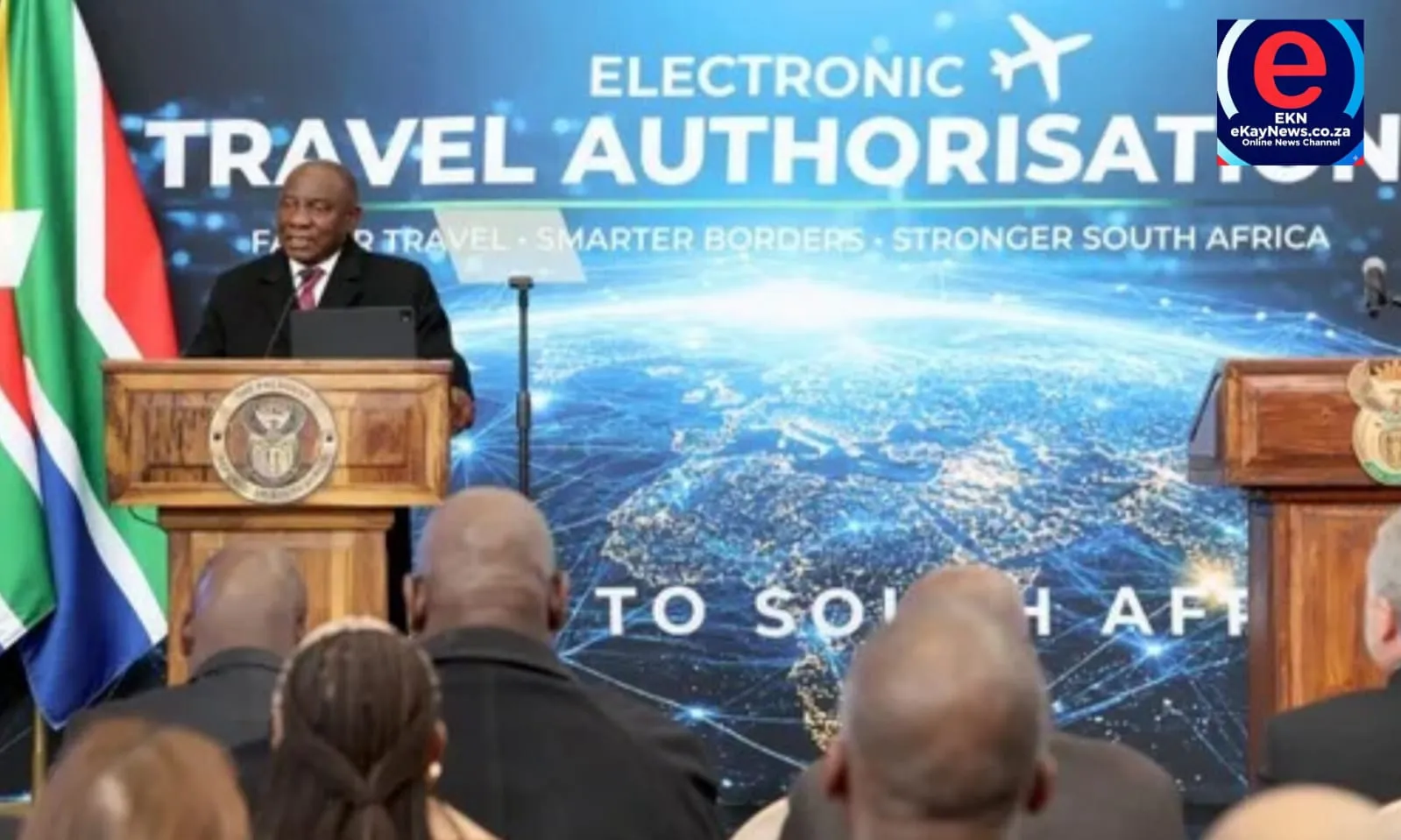
Home Affairs to launch Electronic Travel Authorisation system
Home Affairs to launch Electronic Travel Authorisation system as part of a major digital transformation programme aimed at strengthening South Africa’s immigration controls and improving the monitoring of travellers entering the country.
The new Electronic Travel Authorisation (ETA) system is expected to give authorities greater visibility over visitors entering South Africa, particularly tourists and short-stay travellers arriving through airports.
The system will use biometric information and facial recognition technology to help authorities identify travellers and keep track of their movements while they are in the country.
The launch comes as the government faces continued pressure to address undocumented immigration and strengthen the country’s borders.
The Border Management Authority (BMA) has warned that deportations and repatriations alone have not been enough to discourage people from attempting to return to South Africa through illegal routes.
Home Affairs Minister Leon Schreiber has also identified weaknesses along the country’s northern border as a major challenge in the fight against illegal immigration.
South Africa immigration control enters digital phase
The introduction of the ETA system represents an important shift towards technology-driven South Africa immigration control.
Rather than relying entirely on physical inspections and paperwork, the system will allow immigration authorities to use digital information and biometric data when monitoring people entering the country.
According to Schreiber, the ETA is part of a wider digital transformation strategy being implemented by the Department of Home Affairs.
The initial focus will be on tourists and short-stay visitors arriving at airports.
The system is expected to be expanded over time to cover additional visa categories, including study visas.
This could become particularly important in areas where the government has previously identified challenges involving visa compliance.
The system will also provide travellers with warnings when they are approaching the end of their authorised stay.
This means visitors could receive an alert before their visa or permitted period in the country expires, potentially reducing the number of people who unintentionally overstay.
Biometric border system to track visitors
One of the most significant features of the new system will be its use of biometrics and facial recognition.
The biometric border system is designed to allow authorities to establish when a traveller enters the country and associate that entry with the person’s information.
Instead of relying solely on documents, officials will be able to use biometric information to help verify an individual’s identity.
The system is expected to provide authorities with a clearer record of who has entered South Africa and how long they have remained in the country.
This could make it easier to identify individuals who remain beyond their authorised period.
The use of facial recognition also forms part of the government’s broader efforts to modernise border management.
For travellers, the change could mean that immigration procedures increasingly involve digital verification rather than traditional document-based processes alone.
However, the effectiveness of the system will depend on the quality of the technology, implementation and cooperation between different government agencies.
Border Management Authority faces major challenge
The launch comes against the backdrop of significant challenges facing the Border Management Authority.
The BMA has indicated that recent deportations and repatriations have not necessarily stopped undocumented foreign nationals from attempting to return to South Africa through illegal routes.
This presents a major challenge for government because successful immigration management requires more than simply removing people who are in the country unlawfully.
Authorities also need to prevent illegal entry in the first place.
Schreiber has pointed to the absence of a proper northern border fence as one of the biggest obstacles to controlling illegal immigration.
The northern border is particularly important because of the extensive land boundary and the difficulty of monitoring every potential crossing point.
A stronger technological system at formal ports of entry therefore needs to operate alongside effective physical border controls.
Around 90,000 undocumented migrants repatriated
The government’s efforts to address undocumented immigration have already resulted in large numbers of people being repatriated to their countries of origin.
Around 90,000 undocumented foreign nationals have recently been repatriated, according to the information provided to Parliament.
The scale of these operations has prompted questions from Parliament’s Home Affairs Committee about whether deportations are providing a sustainable long-term solution.
The BMA’s concerns that some people return through illegal routes underline the difficulty of relying solely on repatriation.
The government therefore wants to combine enforcement operations with improved systems for managing people who enter South Africa legally.
This is where the Home Affairs Electronic Travel Authorisation system is expected to play a role.
By creating a stronger digital record of travellers, authorities could potentially identify patterns involving overstays and other immigration violations.
Illegal immigration South Africa remains major concern
The ongoing debate around illegal immigration South Africa reflects the government’s wider challenge of balancing border security, immigration enforcement and legitimate international travel.
South Africa remains an important destination for tourists, business travellers, students and other visitors.
Authorities therefore need systems that can distinguish between people travelling legally and those attempting to bypass immigration controls.
The ETA is intended to strengthen the screening and monitoring process without necessarily making legitimate travel impossible.
Its initial implementation for tourists and short-stay visitors will provide an opportunity for Home Affairs to assess how effectively the technology works before expanding it to other categories.
The government has indicated that study visas and other visa categories could eventually be incorporated into the digital system.
This could provide authorities with more comprehensive information about people entering the country for different purposes.
Funding remains a concern for border security
While the new technology could strengthen immigration management, funding remains a major issue.
Schreiber said the underfunding of the BMA is receiving serious attention from Cabinet.
The authority needs sufficient resources to expand both its human capacity and technological capabilities.
Technology alone cannot secure South Africa’s borders.
Officials are still needed to operate border posts, investigate immigration violations, conduct enforcement operations and respond to illegal crossings.
Schreiber has called on Parliament to consider possible budget trade-offs to help provide additional funding for the BMA.
This highlights the financial challenge facing the government as it attempts to modernise immigration systems while simultaneously strengthening physical border security.
YOU MAY LIKE:
What the ETA system could mean for travellers
For international visitors, the introduction of the ETA is expected to bring greater digital oversight of travel into South Africa.
Travellers will increasingly have their identity and entry information connected to biometric records.
The system’s ability to warn visitors when they are approaching the end of their authorised stay could also help reduce accidental overstays.
For government, the bigger objective is to create a more reliable picture of who enters the country, when they enter and how long they remain.
The Home Affairs to launch Electronic Travel Authorisation system announcement therefore represents more than simply the introduction of a new online travel process.
It forms part of a broader attempt to modernise South Africa’s immigration infrastructure.
As the system expands beyond tourists and short-stay visitors, its impact could become more significant across the country’s visa and immigration system.
For now, the focus will be on implementation, monitoring and ensuring that the technology works effectively at South Africa’s ports of entry.
The success of the programme will ultimately depend on whether digital tools can be combined with stronger border infrastructure, adequate funding and effective enforcement.
With illegal crossings continuing to challenge authorities, the ETA could become an important component of South Africa’s long-term strategy to improve border management and immigration control.
References from mainstream media
- EWN – Home Affairs to launch Electronic Travel Authorisation system — Covers the ETA launch, biometric entry system, facial recognition and government efforts to strengthen immigration control.
- ITWeb – Digital travel system takes off at four SA airports — Reports that the ETA initially operates at OR Tambo, Cape Town, King Shaka and Lanseria airports, with further expansion planned.
- Engineering News – DHA launches Electronic Travel Authorisation platform — Examines the launch of the ETA platform and its role in modernising South Africa’s visa and immigration system.
- SAnews – ETA system a ‘quantum leap forward’ for immigration system — Reports on Home Affairs Minister Leon Schreiber’s description of the ETA and its use of biometric verification and automated risk analysis.
- The Presidency – President Ramaphosa to officially launch South Africa’s Electronic Travel Authorisation — Provides official information on President Cyril Ramaphosa’s launch of the ETA at OR Tambo International Airport.
Support Independent Journalism with eKayNews! 📰✨

At eKayNews, we are dedicated to bringing you honest, independent, and reliable news. But we can’t do it alone—independent journalism relies on the strength and generosity of its community.
If you value our work, please consider supporting us today! You can help keep us going by choosing a subscription or simply buying us a one-off virtual coffee:
👉 Support us here: ekaynews.co.za/subscribe-form/
You can also support our mission by visiting our main site at www.ekaynews.co.za and following @eKayNews on all social media platforms.
Thank you so much for your incredible generosity and for being part of our journey! 🙏💙