Iran Responds to Trump’s 15-Point Peace Plan with Its Own Demands for the United States
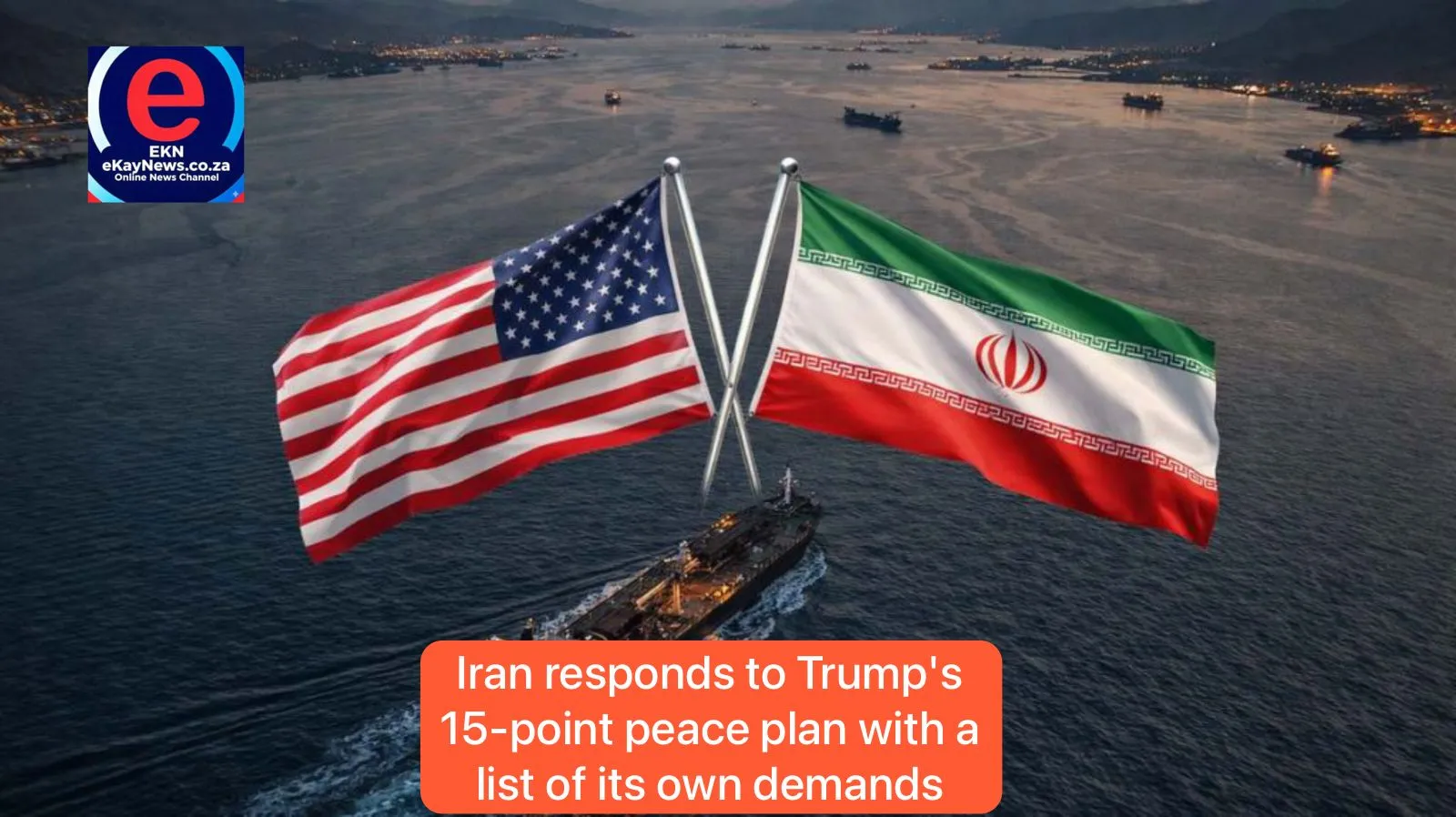
Iran responds to Trump’s 15-point peace plan with a list of its own demands, dramatically escalating tensions and exposing the deep divide between Washington and Tehran. Rather than moving closer to a ceasefire, both sides appear further entrenched, issuing competing ultimatums that make a diplomatic breakthrough increasingly unlikely.
The United States, under President Donald Trump, has pushed forward a sweeping proposal aimed at ending the escalating Middle East conflict. However, Iran’s response has been firm and uncompromising, calling for the dismantling of U.S. military influence in the region and proposing sweeping changes to global energy trade routes.
As the war continues to disrupt global markets and intensify regional instability, this eKayNews special report explores the details of both proposals and the broader implications for the world.
The U.S. 15-Point Peace Plan Explained
At the center of the diplomatic push is a comprehensive proposal reportedly delivered to Tehran through intermediaries in Pakistan. According to reports from The Wall Street Journal and The New York Times, the plan outlines a strict framework designed to halt Iran’s nuclear ambitions and reduce regional tensions.
Key elements of the U.S. proposal include:
- Dismantling Nuclear Facilities: Sites in Natanz, Isfahan, and Fordow must be decommissioned
- International Oversight: Full monitoring by the International Atomic Energy Agency
- Ending Proxy Support: Immediate halt to backing groups like Hezbollah
- Surrendering Enriched Materials: Transfer of nuclear materials to international authorities
- Freedom of Navigation: Ensuring open access through the Strait of Hormuz
- Missile Restrictions: Limiting ballistic missile capabilities
In exchange, Washington has reportedly offered significant incentives, including sanctions relief and support for a civilian nuclear energy program in Bushehr.
The proposal reflects a broader strategy aimed at permanently neutralizing Iran’s nuclear capabilities while stabilizing the region.
Iran Responds with Its Own Demands
Despite the incentives, Iran responds to Trump’s 15-point peace plan with a list of its own demands that sharply contrast with Washington’s expectations.
Iranian officials have dismissed the U.S. proposal as unrealistic, with a military spokesperson stating that the United States is “negotiating with itself.” This response underscores Tehran’s refusal to engage under what it perceives as unequal conditions.
Iran’s counter-demands include:
- Closure of U.S. Military Bases: Complete withdrawal from the Persian Gulf
- War Reparations: Compensation for damages caused by recent attacks
- Control of Maritime Routes: Authority to impose transit fees in the Strait of Hormuz
- End to Israeli Military Actions: Immediate cessation of attacks on Hezbollah
- Sanctions Relief: Immediate lifting of all economic sanctions
- Missile Sovereignty: Retention of its ballistic missile program without restrictions
These demands have been widely viewed by U.S. officials as non-starters, further complicating the path to negotiations.
The Strategic Importance of the Strait of Hormuz
A central point of contention is the Strait of Hormuz, one of the most critical waterways in the global economy.
Roughly one-fifth of the world’s oil supply passes through this narrow corridor. Iran’s proposal to impose tolls on international shipping would fundamentally alter global trade dynamics, effectively giving Tehran significant leverage over energy markets.
This proposal has drawn comparisons to the Suez Canal, where transit fees generate billions in revenue annually. However, applying a similar model to the Strait of Hormuz would likely face strong resistance from global powers.
Global Economic Fallout Intensifies
While diplomatic tensions rise, the economic consequences are already being felt worldwide. The disruption of oil flows through the Strait of Hormuz has sent energy prices soaring, with Brent crude nearing $120 per barrel.
Major financial leaders are warning of severe consequences. Larry Fink has cautioned that sustained high oil prices could trigger a global recession, while energy executives warn of potential fuel shortages across Europe and Asia.
The ripple effects include:
- Rising inflation
- Increased transportation costs
- Supply chain disruptions
- Slower economic growth
The situation mirrors the global energy crisis that followed the Russian invasion of Ukraine, highlighting the interconnected nature of global markets.
Military Escalation Continues
Despite ongoing diplomatic exchanges, military operations show no signs of slowing. The Israel Defense Forces continues to carry out strikes targeting Iranian infrastructure, while Iran has launched retaliatory attacks against Israeli and U.S. positions.
The conflict has expanded beyond direct confrontation, involving regional actors and proxy groups such as Hezbollah. Strikes in Lebanon and other مناطق have further intensified the crisis.
The ongoing violence underscores the gap between diplomatic rhetoric and reality on the ground.
A Deepening Diplomatic Deadlock
Iran responds to Trump’s 15-point peace plan with a list of its own demands, creating a diplomatic stalemate that appears increasingly difficult to resolve.
Both sides have set conditions that the other finds unacceptable, leaving little room for compromise. While the United States seeks to limit Iran’s military capabilities, Tehran is demanding a complete restructuring of regional power dynamics.
This deadlock raises serious concerns about the possibility of prolonged conflict, with potentially devastating consequences for the region and the world.
YOU MAY LIKE:
Conclusion: A World on Edge
As Iran responds to Trump’s 15-point peace plan with a list of its own demands, the prospects for peace remain uncertain. The combination of escalating military actions, economic disruption, and diplomatic gridlock has created a volatile situation with global implications.
The coming weeks will be critical in determining whether diplomacy can prevail or whether the conflict will continue to spiral. For now, the world watches closely as two powerful nations navigate one of the most dangerous geopolitical crises in recent history.
References
- The Wall Street Journal – U.S.-Iran negotiations and Middle East conflict
https://www.wsj.com/world/middle-east - The New York Times – U.S. peace proposals and Iran response
https://www.nytimes.com/section/world/middleeast
Keep the Headlines Fresh!

Quality news takes time, effort, and a whole lot of coffee. If you value what we do at eKayNews, consider “buying a round” for the team!
-
Join the Inner Circle: Set up a custom subscription.
-
The Instant Jolt: Send a one-time “coffee” donation.
Why trust us? We use PayFast for 100% secure, encrypted transactions. Your data stays yours; the news stays ours.
To our amazing readers: You’re the reason we’re first on the scene. Thanks for being part of the family!
Feel the Pulse of the News with eKayNews!

Join the ever-growing eKayNews community and stay connected to the stories that matter. Follow us on Facebook, X, and WhatsApp for real-time updates, breaking news, and exclusive alerts straight to your feed. Your support keeps us digging deeper and sharing the news you can trust.
Stay Connected:
-
Facebook: [eKayNews on Facebook]
-
X (Twitter): [eKayNews on X]
-
WhatsApp: [Join the eKayNews WhatsApp Channel]
Become part of our inner circle and get instant news alerts as events unfold across South Africa and beyond!
Promote Your Brand with eKayNews
Looking to reach a wide, engaged audience? Explore our advertising packages:
-
Link Booster: 7 links to 7 articles over 7 days – R2,500
-
Permanent Feature: Sponsored blog article hosted permanently – R4,000
-
Prime Visibility: Home page banner ad for 30 days – R5,000
Don’t miss your chance to connect with our audience. Book your package today via email at info@ekaynews.co.za or WhatsApp us on +27710961185.
Be part of a platform where news meets community—stay informed, stay ahead, stay with eKayNews!