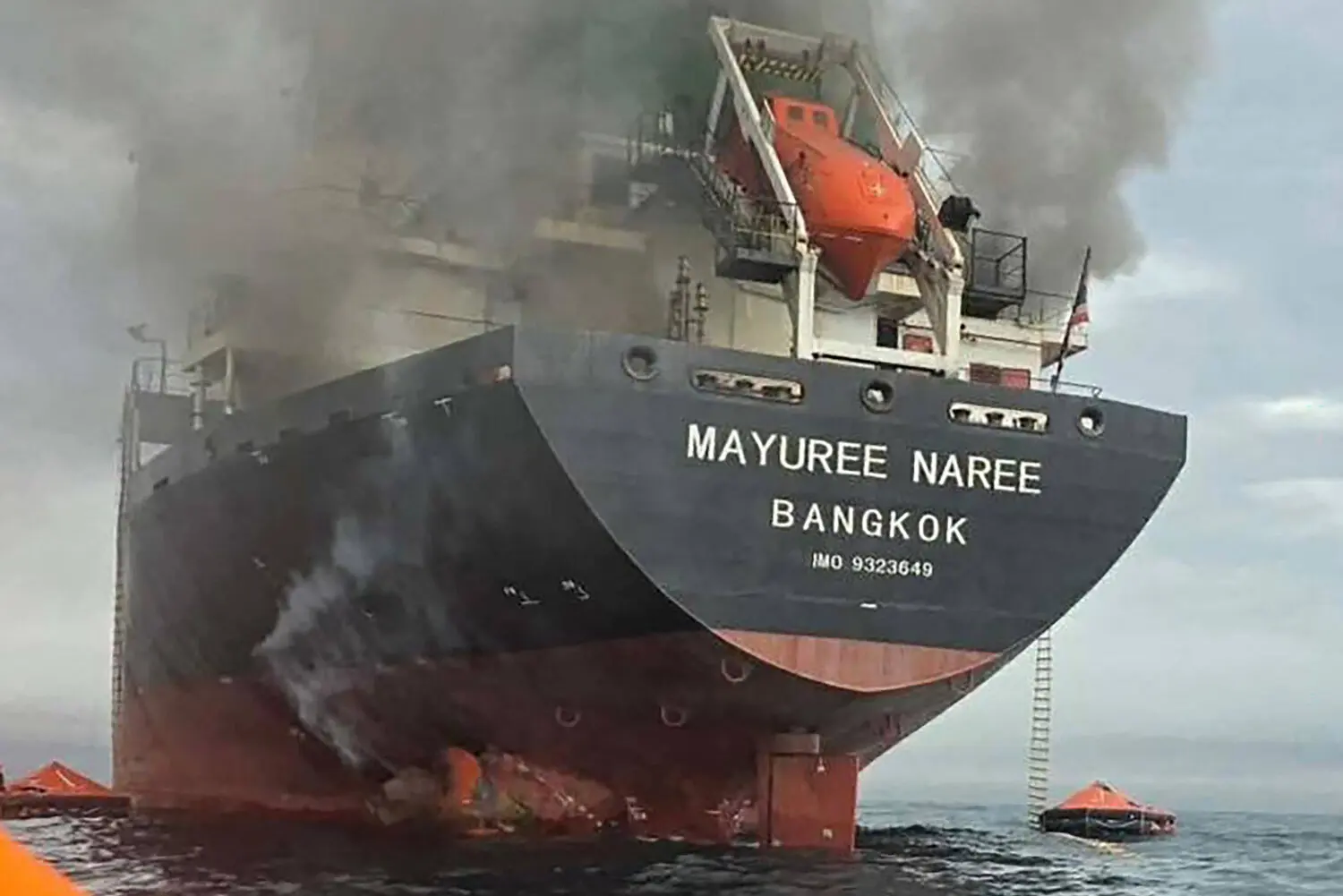
Iran hits at least two cargo ships in Hormuz as Tehran continues its strikes
Iran hits at least two cargo ships in Hormuz as Tehran continues its strikes, marking a severe escalation on Day 12 of the ongoing regional conflict. Consequently, the world watches in alarm as the Iran war rapidly expands beyond military targets and directly threatens international civilian maritime commerce. This unprecedented aggression disrupts vital global oil routes and rattles international energy markets to their core. Welcome to our comprehensive coverage of this rapidly developing crisis, where US-Israeli strikes intensify while Tehran actively maintains its dangerous barrages against neighboring countries.
The situation in the Middle East deteriorated significantly early Wednesday morning. Reports confirmed that a projectile struck a commercial vessel, instantly setting it on fire. Subsequently, officials confirmed a second vessel suffered a similar fate. Therefore, the reality that Iran hits at least two cargo ships in Hormuz as Tehran continues its strikes forces global shipping conglomerates to drastically rethink their immediate transit strategies.
Why Iran hits at least two cargo ships in Hormuz as Tehran continues its strikes
To understand this maritime assault, we must examine the broader military context. These attacks on cargo ships occurred precisely as Iran launched another massive wave of attacks across the Middle East. Tehran explicitly stated these actions are a direct response to Operation Epic Fury, the coordinated military campaign led by allied forces. By targeting commercial vessels, the Iranian regime aims to exert maximum economic pressure on the international community.
Furthermore, the Strait of Hormuz represents the ultimate geopolitical flashpoint. It serves as a key waterway for international energy supplies. Roughly a fifth of all global oil exports flow directly through this narrow geographical bottleneck. Recently, senior Iranian lawmakers openly threatened to completely block the waterway. They aggressively declared they would not allow “even a litre” of crude oil to pass through. Thus, as Iran hits at least two cargo ships in Hormuz as Tehran continues its strikes, those political threats are unfortunately becoming a dangerous physical reality.
The Military Response in the Strait of Hormuz
The international military response to secure the waterway was swift and decisive. In a major tactical victory, Washington announced it successfully located and destroyed 16 Iranian mine-laying vessels operating dangerously near the Strait of Hormuz. These covert vessels pose a catastrophic threat to massive, slow-moving oil tankers and commercial cargo ships.
By neutralizing these mine-layers, coalition forces temporarily prevented a total blockade of the channel. However, the threat from land-based anti-ship missiles and aerial drones remains extremely high. Consequently, naval commanders are operating on maximum alert. They are actively escorting critical shipments, but protecting every single vessel remains a logistical impossibility.
Operation Epic Fury and the surge of US-Israeli strikes
The maritime chaos directly parallels the escalating kinetic warfare on land. The allied response, heavily categorized under Operation Epic Fury, has entered a new, highly aggressive phase. As Iran hits at least two cargo ships in Hormuz as Tehran continues its strikes, the Israel Defense Forces (IDF) simultaneously initiated a wide-scale wave of retaliatory bombardments.
On Wednesday, the IDF aggressively targeted the Iranian terror regime’s foundational infrastructure directly across Iranian territory. These sustained US-Israeli strikes aim to permanently dismantle the regime’s capability to launch long-range ballistic missiles and arm its regional proxies. The sheer scale of the bombardment indicates a clear shift from proportional retaliation to total capability degradation.
Hezbollah Enters the Fray Amid the Iran War
The Iran war involves multiple fronts, with Lebanon becoming increasingly volatile. Earlier this week, Hezbollah and Iran reportedly unleashed highly coordinated cluster bomb strikes directly on Israel. This specific action represented a major, unacceptable escalation for Israeli security cabinets.
Consequently, Israel quickly confirmed it carried out intense preemptive and retaliatory attacks early on Wednesday. These specific US-Israeli strikes targeted deeply entrenched, Iran-backed Hezbollah targets in neighboring Lebanon. Furthermore, the IDF explicitly stated that Israeli forces have now begun striking vital Hezbollah infrastructure directly within Beirut. This development plunges the Lebanese capital directly into the heart of the expanding conflict.
Regional Fallout as Iran hits at least two cargo ships in Hormuz as Tehran continues its strikes
The aggressive actions by Tehran are not limited to Israel and international shipping lanes. The regime is actively expanding its target list to include former diplomatic allies and neutral neighbors. Currently, Iran is launching fresh attacks targeting several sovereign countries, including Qatar and the United Arab Emirates.
Meanwhile, several prominent Gulf states quickly activated their advanced missile defense protocols. On Wednesday, military officials in Qatar, Saudi Arabia, and Kuwait officially reported multiple successful interceptions of incoming Iranian projectiles. The fact that Tehran is indiscriminately firing at its immediate neighbors illustrates a dangerous “scorched earth” military doctrine. The regime appears willing to destabilize the entire Arabian Peninsula as Operation Epic Fury degrades its domestic military assets.
The Economic Shockwave of the Iran War
The global economic ramifications of this conflict are already materializing with terrifying speed. Because Iran hits at least two cargo ships in Hormuz as Tehran continues its strikes, the international energy market is experiencing unprecedented volatility.
-
Surging Oil Prices: Brent crude futures skyrocketed immediately following the attacks on the commercial vessels. Traders heavily fear a prolonged closure of the Strait of Hormuz.
-
Skyrocketing Insurance Premiums: Maritime insurance providers instantly raised their war-risk premiums for any cargo ships entering the Persian Gulf.
-
Supply Chain Disruptions: Major shipping fleets are currently pausing their journeys. They are waiting for secure naval escorts or are considering the vastly longer, more expensive route around the Horn of Africa.
Ultimately, these economic shocks will undoubtedly trickle down to everyday consumers globally. Increased shipping costs inevitably lead to higher prices for fuel, manufactured goods, and basic food supplies worldwide.
YOU MAY LIKE:
Tuesday marks ‘most intense’ US strikes in Iran, says Hegseth
Conclusion: A Region on the Brink
As Day 12 of the Iran war unfolds, the situation grows increasingly perilous by the hour. The fact that Iran hits at least two cargo ships in Hormuz as Tehran continues its strikes proves that no civilian sector is safe from the fallout. The international community faces a monumental challenge. They must maintain the fragile flow of global commerce while simultaneously addressing the root causes of the military escalation.
While US-Israeli strikes continue to dismantle regime infrastructure, the immediate safety of the Middle East remains deeply uncertain. We will continue to monitor the active interceptions across the Gulf, the status of the burning vessels in the strait, and the ongoing operations in Beirut and Tehran. Stay tuned to our live blog for continuous, up-to-the-minute updates on this historic global crisis.
Mainstream media references.
-
Reuters News / The Guardian live updates – Three vessels struck in Strait of Hormuz as Iran calls US and allied ships ‘legitimate targets’
https://www.theguardian.com/world/live/2026/mar/11/iran-war-live-updates-trump-oil-hormuz-protestors-us-israel-beirut-middle-east-latest-news?filterKeyEvents=false&page=with%3Ablock-69b17a4e8f083f5f5c5f1d8b ([turn0search29])
Keep the Headlines Fresh!

Quality news takes time, effort, and a whole lot of coffee. If you value what we do at eKayNews, consider “buying a round” for the team!
-
Join the Inner Circle: Set up a custom subscription.
-
The Instant Jolt: Send a one-time “coffee” donation.
Why trust us? We use PayFast for 100% secure, encrypted transactions. Your data stays yours; the news stays ours.
To our amazing readers: You’re the reason we’re first on the scene. Thanks for being part of the family!
Feel the Pulse of the News with eKayNews!

Join the ever-growing eKayNews community and stay connected to the stories that matter. Follow us on Facebook, X, and WhatsApp for real-time updates, breaking news, and exclusive alerts straight to your feed. Your support keeps us digging deeper and sharing the news you can trust.
Stay Connected:
-
Facebook: [eKayNews on Facebook]
-
X (Twitter): [eKayNews on X]
-
WhatsApp: [Join the eKayNews WhatsApp Channel]
Become part of our inner circle and get instant news alerts as events unfold across South Africa and beyond!
Promote Your Brand with eKayNews
Looking to reach a wide, engaged audience? Explore our advertising packages:
-
Link Booster: 7 links to 7 articles over 7 days – R2,500
-
Permanent Feature: Sponsored blog article hosted permanently – R4,000
-
Prime Visibility: Home page banner ad for 30 days – R5,000
Don’t miss your chance to connect with our audience. Book your package today via email at info@ekaynews.co.za or WhatsApp us on +27710961185.
Be part of a platform where news meets community—stay informed, stay ahead, stay with eKayNews!