Iran sets giant oil tanker ablaze off Dubai after Trump warnings
Iran sets giant oil tanker ablaze off Dubai after Trump warnings, marking a terrifying and potentially irreversible escalation in the already volatile Middle East conflict. On Tuesday, Tehran forces launched a brazen, highly coordinated drone strike against a fully loaded crude oil vessel just off the coast of the United Arab Emirates. This aggressive maneuver was executed in direct, violent defiance of severe threats recently issued by U.S. President Donald Trump, who vowed that the United States military would completely obliterate Iran’s critical energy infrastructure if the nation refused to agree to a comprehensive peace deal and immediately reopen the highly contested Strait of Hormuz.
This dramatic escalation has sent absolute shockwaves through the international community, reviving dark memories of the “Tanker Wars” of the 1980s. The month-old conflict, which has already claimed thousands of lives across multiple nations, is now actively disrupting vital, everyday energy supplies and threatening to send the global economy into a devastating tailspin right before the peak summer travel season.
Details of the Dubai oil tanker attack
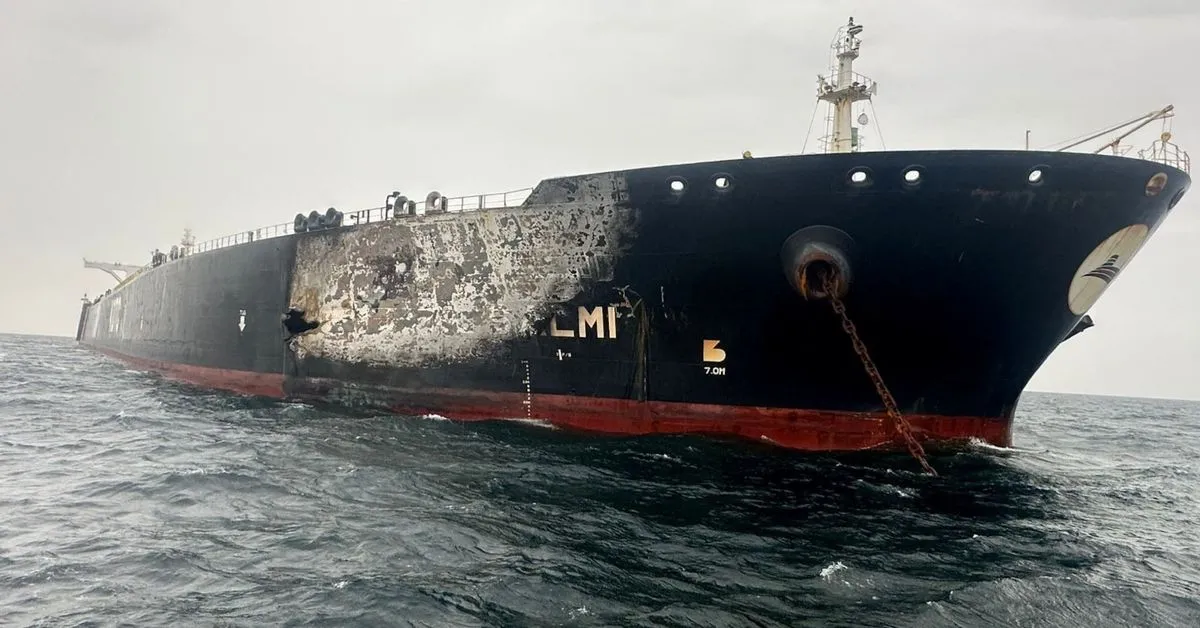
The immediate focus of the crisis centers on the Kuwait-flagged Al-Salmi, an immense vessel responsible for moving massive quantities of energy across the globe. Authorities in Dubai confirmed that the massive vessel was struck in a targeted, sophisticated drone attack that penetrated localized maritime defense nets. Thankfully, emergency response teams, utilizing specialized fire-fighting tugs and heavy foam deployments, were able to bring the resulting inferno under control swiftly.
Official reports indicate that there were no casualties or severe injuries among the multi-national crew and, miraculously, no catastrophic crude oil leaks into the surrounding, ecologically fragile Gulf waters. However, Kuwait Petroleum Corp, the official owner of the ship, confirmed that the vessel’s hull sustained significant, multi-million-dollar structural damage during the drone assault.
Shipping and financial data from LSEG and TankerTrackers.com revealed the sheer economic scale of the targeted asset. The Al-Salmi was heavily loaded to near capacity, carrying approximately 1.2 million barrels of Saudi crude oil alongside 800,000 barrels of Kuwaiti crude. Its final destination was intended to be the major industrial port of Qingdao in China, highlighting how intertwined Middle Eastern security is with Asian economic stability.
Collateral Damage and Mistaken Identity
Interestingly, maritime intelligence and defense analysts suggest that the Al-Salmi may have actually been the victim of mistaken identity or tragic collateral damage. Iran’s Islamic Revolutionary Guard Corps (IRGC) publicly stated on state television that they had successfully targeted a container ship in the Gulf due to its alleged financial and logistical ties with Israel.
However, cross-referencing shipping data indicates they were highly likely referring to the Singapore-flagged Haiphong Express. This vessel, which has historical ties to Western shipping conglomerates, was anchored immediately adjacent to the Al-Salmi at the exact time of the drone strike. Regardless of the intended target, the fact that Iran sets giant oil tanker ablaze off Dubai after Trump warnings demonstrates a reckless, desperate willingness to jeopardize neutral international shipping lanes and risk massive civilian casualties to project strength.
Environmental and Maritime Security Implications
The near-miss of a massive oil spill has highlighted the severe environmental fragility of the Persian Gulf. Had the Al-Salmi breached completely, the resulting slick would have devastated the UAE’s desalination plants, marine life, and coastal tourism industry.
Consequently, the global shipping industry is in a state of panic. Maritime insurance markets, particularly Lloyd’s of London syndicates, have skyrocketed their “war risk” premiums by over 400% for any vessel transiting the Gulf. Several major international shipping lines are currently debating whether to completely suspend operations in the region until a ceasefire is brokered, a move that would effectively choke off the world’s energy supply at the source.
Donald Trump Issues Severe Ultimatums
The geopolitical backdrop to this attack is fraught with failed, back-channel diplomacy and aggressive, highly public ultimatums. Donald Trump has taken an uncompromising hardline stance against Tehran, demanding immediate, unconditional capitulation to U.S. peace terms. Iran claims to have received these U.S. peace proposals via international intermediaries, including Swiss and Omani diplomats. However, on Monday, the Iranian foreign ministry spokesperson publicly and vehemently dismissed the terms as “unrealistic, illogical, and entirely excessive.”
Following this outright public rejection, Trump altered his rhetoric, stating during a press briefing that the U.S. was now engaging in backdoor talks with a “more reasonable regime”—a pointed, psychological reference to emerging Iranian political and military leaders stepping in to replace those high-ranking officials who have already been assassinated in the ongoing war. Yet, alongside this complex diplomatic maneuvering, Trump issued a terrifying new ultimatum regarding the world’s most vital maritime chokepoint.
The Fight Over the Strait of Hormuz
Trump explicitly warned that the U.S. military is fully prepared and authorized to obliterate Iranian power plants, critical oil wells, and the vital Kharg Island export hub if a peace deal is not rapidly secured and the strait remains blockaded. Kharg Island is the absolute beating heart of Iran’s petroleum export economy; destroying it would effectively bankrupt the state overnight.
The White House has drawn a hard, non-negotiable line in the sand, establishing an April 6 deadline for Iran to fully open the Strait of Hormuz—a narrow, 21-mile-wide passage that serves as the only sea passage from the Persian Gulf to the open ocean. While reports from the Wall Street Journal suggest Trump might privately be willing to halt the broader kinetic military campaign even if the strait remains temporarily closed—leaving the complex, mine-clearing operation to reopen it for a later date—his cabinet presents a unified, highly aggressive front. Secretary of State Marco Rubio firmly told Al Jazeera that the strategic waterway would be opened “one way or another” following the conclusion of the U.S. military operation, heavily implying the use of overwhelming naval and air superiority.
Surging Global Oil Prices and Economic Fallout
The immediate economic consequence of the news that Iran sets giant oil tanker ablaze off Dubai after Trump warnings has been a violent, panic-driven reaction in the global commodities markets. The targeted vessel alone was carrying roughly 2 million barrels of oil, valued at over $200 million at current market rates.
Global oil prices briefly spiked yet again in the panicked hours following the attack. The failure to secure a lasting peace deal has prompted the European Union’s energy chief to issue a dire, unprecedented warning, urging all member states to implement emergency rationing protocols and brace for a “prolonged disruption” to energy markets heading into the summer.
The artificial tightening of global supplies has pushed benchmark Brent crude up by a staggering 56% this month alone—the largest single-month rise on historical record—sending prices soaring well above $113 per barrel. This is heavily impacting Western economies, fueling a new wave of inflation that central banks are struggling to contain. Higher oil and fuel prices have started to severely weigh on U.S. household finances, translating to higher costs for groceries, logistics, and consumer goods. This economic pain is a massive political headache for Donald Trump and the Republican Party as they approach the highly contested November midterm elections. On Monday, data from the price-tracking service GasBuddy showed the U.S. national average retail price of gasoline crossing the painful $4 a gallon threshold for the first time in over three years.
Regional Spillover: Iran and its Proxies
The conflict stubbornly refuses to remain contained within Iran’s borders. The war has rapidly and violently metastasized, drawing in neighboring states and heavily armed proxy militias, creating a multi-front regional war.
-
Yemen and Turkey: Iran-aligned Houthis in Yemen have officially entered the fray, utilizing their arsenal of anti-ship ballistic missiles to fire at Israeli targets and allied commercial shipping. Furthermore, Turkey reported on Monday that a sophisticated ballistic missile launched from Iran had dangerously breached Turkish airspace before being successfully intercepted and shot down by NATO-aligned missile defense batteries.
-
Lebanon: The war has simultaneously revived the dormant, bloody conflict between Israel and the heavily armed, Iran-backed Lebanese group Hezbollah. Cross-border artillery fire has intensified. Israel’s military recently confirmed that four of its soldiers were killed in tactical engagements in southern Lebanon. Tragically, three United Nations peacekeepers from Indonesia have also lost their lives in two separate incidents, caught in the brutal crossfire.
-
Gulf States: Iran, which currently suffers the highest civilian and military casualty toll of the conflict, has actively fired at targets situated within Gulf Arab states that host critical U.S. military bases. Iran’s military spokesman boldly claimed on state radio that their latest barrages intentionally targeted “hideouts” of U.S. military personnel across five regional bases and within Israeli territory.
The physical and psychological toll of these widespread attacks is highly visible. Blasts recently echoed through the glittering financial hub of Dubai, sending tourists and expats scrambling for shelter. Saudi Arabia’s civil defense reported that falling, flaming debris from an intercepted suicide drone caused limited structural damage in the Kharj province. Inside Iran, the domestic situation is deteriorating rapidly. Residents in Tehran’s eastern Pirouzi district reported massive, sustained power outages following loud explosions overhead. Furthermore, a separate, devastating strike on a Shi’ite Muslim congregation hall in the northwestern Iranian city of Zanjan tragically killed three people, further inflaming domestic outrage.
The Strategic Role of China and Global Mediation
As the region burns, the global diplomatic focus has shifted eastward. China finds itself walking an incredibly delicate tightrope. As one of Iran’s closest geopolitical allies and the absolute biggest buyer of its heavily sanctioned oil, Beijing has a massive vested interest in regional stability. China’s Belt and Road Initiative heavily relies on the uninterrupted flow of energy from the Middle East.
On Tuesday, the Chinese Foreign Ministry issued a new, urgent appeal to all warring sides to immediately halt military operations and return to the negotiating table without preconditions. Underscoring their diplomatic leverage, Beijing conspicuously noted that three Chinese commercial ships had recently been permitted by the IRGC to sail safely through the Strait of Hormuz. Because this waterway normally carries about a fifth of global oil and liquefied natural gas supplies, China is emphasizing to both Washington and Tehran the absolute, non-negotiable necessity of keeping these global arteries open for international trade.
Simultaneously, Pakistan is desperately seeking to mediate an end to the war, terrified of the conflict spilling over its porous borders. Pakistani Foreign Minister Ishaq Dar was due to discuss the conflict during a high-stakes visit to China on Tuesday, acting as an intermediary after hosting urgent, closed-door talks with leadership from Turkey, Egypt, and Saudi Arabia.
YOU MAY LIKE:
U.S. Troop Deployments and Diplomatic Desperation
As the reality sinks in that Iran sets giant oil tanker ablaze off Dubai after Trump warnings, the U.S. military apparatus is rapidly mobilizing its assets for a potential worst-case scenario. Thousands of highly trained combat soldiers from the U.S. Army’s elite 82nd Airborne Division have started arriving in the Middle East, two U.S. defense officials told reporters on Monday.
The White House maintains that Trump ultimately wants a diplomatic deal before the April 6 deadline, avoiding the political and human cost of a ground war. However, with U.S. troops massing, oil prices surging, and the wreckage of the Al-Salmi still smoking off the coast of Dubai, the window for diplomacy is violently slamming shut, leaving the entire world bracing for the impact of a full-scale Middle Eastern conflict.
References & Further Reading
-
Reuters – Middle East Coverage: Continuous tracking of geopolitical tensions, maritime security in the Gulf, and US-Iran diplomatic relations. https://www.reuters.com/world/middle-east/
-
Bloomberg Energy Markets: Real-time data and expert analysis on the fluctuations of Brent crude, global oil supply chains, and market disruptions. https://www.bloomberg.com/energy
Keep the Headlines Fresh!

Quality news takes time, effort, and a whole lot of coffee. If you value what we do at eKayNews, consider “buying a round” for the team!
-
Join the Inner Circle: Set up a custom subscription.
-
The Instant Jolt: Send a one-time “coffee” donation.
Why trust us? We use PayFast for 100% secure, encrypted transactions. Your data stays yours; the news stays ours.
To our amazing readers: You’re the reason we’re first on the scene. Thanks for being part of the family!
Feel the Pulse of the News with eKayNews!

Join the ever-growing eKayNews community and stay connected to the stories that matter. Follow us on Facebook, X, and WhatsApp for real-time updates, breaking news, and exclusive alerts straight to your feed. Your support keeps us digging deeper and sharing the news you can trust.
Stay Connected:
-
Facebook: [eKayNews on Facebook]
-
X (Twitter): [eKayNews on X]
-
WhatsApp: [Join the eKayNews WhatsApp Channel]
Become part of our inner circle and get instant news alerts as events unfold across South Africa and beyond!
Promote Your Brand with eKayNews
Looking to reach a wide, engaged audience? Explore our advertising packages:
-
Link Booster: 7 links to 7 articles over 7 days – R2,500
-
Permanent Feature: Sponsored blog article hosted permanently – R4,000
-
Prime Visibility: Home page banner ad for 30 days – R5,000
Don’t miss your chance to connect with our audience. Book your package today via email at info@ekaynews.co.za or WhatsApp us on +27710961185.
Be part of a platform where news meets community—stay informed, stay ahead, stay with eKayNews!