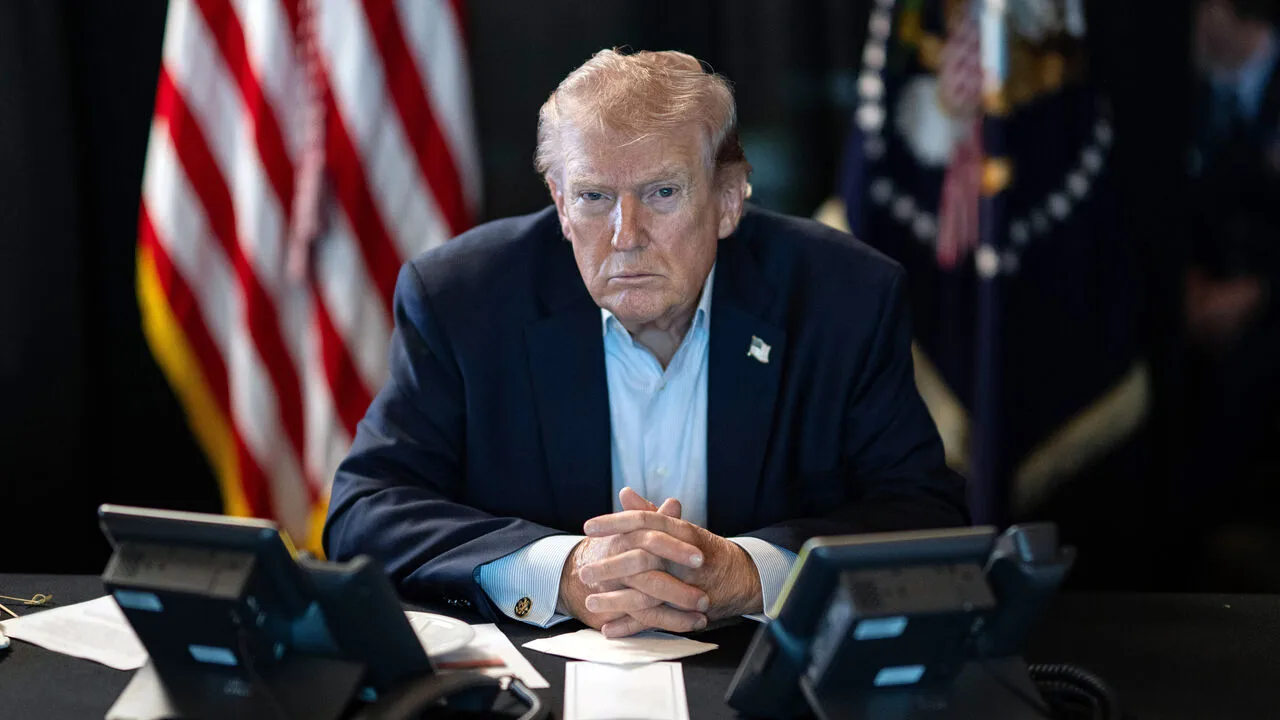
Senate GOP gives Trump free hand in Iran as war powers vote fails
The Senate GOP gives Trump free hand in Iran as war powers vote fails after Republican senators blocked a resolution aimed at limiting President Trump’s ability to take unilateral military action in Iran. The 47–53 vote signaled that, for now, GOP lawmakers are unwilling to constrain executive authority, even as the U.S.-Iran conflict escalates and questions arise about congressional oversight.
Supporters of the resolution argued that Congress holds the constitutional authority to authorize military action. Opponents maintained that the president must retain broad powers in matters of national security. The measure failed largely along party lines, with only Sen. Rand Paul (R‑Ky.) joining almost all Democrats — including Sen. John Fetterman (D‑Pa.) — in supporting it.
Senate GOP Iran vote exposes divisions
The Senate vote revealed sharp partisan divides over U.S. engagement in foreign conflicts. Senate Republicans largely opposed a War Powers resolution directing the removal of U.S. forces unless Congress approved continued action. Critics argue bypassing Congress undermines the constitutional balance of power under Article I, which grants Congress the authority to declare war.
Sen. Paul lamented that Congress is “without ambition,” failing to defend its constitutional prerogatives. Only he and Sen. Fetterman crossed party lines to support the measure, highlighting how rare bipartisan cooperation is on War Powers issues today.
Trump military authority in the conflict
The failed vote effectively reinforces Trump’s military authority in the current Iran conflict, which intensified after a joint U.S.–Israeli strike killed Tehran’s Supreme Leader, Ayatollah Ali Khamenei. Iran retaliated, raising concerns of broader hostilities.
Supporters argue rapid, unilateral action is necessary to protect U.S. interests and allies, especially Israel. Sen. Joni Ernst (R‑Iowa) emphasized, “The commander in chief has the authority to do these strikes,” reflecting the GOP view that decisive executive power is essential for national security.
Opponents counter that unchecked presidential authority risks indefinite engagement, a “forever war,” with limited accountability and democratic oversight.
War Powers resolution and constitutional questions
The War Powers resolution aimed to assert congressional authority over military decisions. Sen. Tim Kaine (D‑Va.), the lead sponsor, noted the political realities: even if passed by both chambers, the president would likely veto it. Nevertheless, the resolution sparked debate about Congress’s role in war and peace, emphasizing the ongoing tension between branches.
Broader U.S.-Iran conflict concerns
The conflict remains central to the debate. After Khamenei’s death, retaliatory strikes and escalating engagement raised alarm among lawmakers. Many Republicans support Trump’s robust response, arguing decisive action protects Americans and regional stability. Sen. Todd Young (R‑Ind.) wrote limiting Trump at a “critical moment” would endanger U.S. interests and embolden adversaries.
Critics warn that engaging U.S. forces without clear legislative authorization could have serious unintended consequences and complicate diplomacy.
Congressional oversight tensions
The vote highlighted tensions over oversight of military action. Supporters of the resolution argued Congress must be more involved in decisions committing U.S. troops abroad, even for “limited” operations. Alternative approaches include pursuing an Authorization for Use of Military Force (AUMF) to define U.S. engagement parameters clearly.
Sen. Thom Tillis (R‑N.C.) noted that if the conflict is prolonged, Congress may need to formalize oversight mechanisms to ensure accountability.
House war powers action and future votes
Following the Senate vote, the House prepared its own war powers legislation. Led by Reps. Ro Khanna (D‑Calif.) and Thomas Massie (R‑Ky.), the measure similarly aimed to remove U.S. forces from unauthorized hostilities in Iran.
The vote was expected to be closely contested, with lawmakers crossing party lines based on constitutional and security concerns. Some Republicans indicated support for war powers reform, while some Democrats sought to restrict military action without legislative approval.
House Democrats who served in combat stressed that Americans deserve to know “where representatives stand on sending our blood and treasure overseas,” reflecting broader public unease about extended military engagement without clear objectives.
Addressing escalation and “forever war”
Lawmakers on both sides voiced concerns about escalation and the risk of a “forever war.” Definitions of “war” versus “limited operations” remain contested. House Speaker Mike Johnson (R‑La.) argued current U.S. engagement in Iran is not formally a war, but critics maintain that any prolonged military action demands legislative oversight and accountability.
Funding and future legislative oversight
Funding for military operations is also a point of contention. Future defense appropriations may require hearings and transparency. Sen. Chris Coons (D‑Del.) emphasized the need for open hearings before supporting further funding, reflecting congressional insistence on oversight even if the War Powers resolution failed.
Some senators are also discussing ongoing oversight and policymaking, including authorizing resources and evaluating expanded executive powers. These discussions show the debate over congressional checks on the presidency is far from settled.
YOU MAY LIKE:
Trump says he must be involved in picking Iran’s next leader
Conclusion
Senate GOP gives Trump free hand in Iran as war powers vote fails, leaving the president’s authority largely unchecked for now. While a win for executive power, the vote underscores unresolved tensions over war powers, congressional responsibility, and U.S. national security. As the U.S.-Iran conflict continues, debates over oversight, accountability, and America’s global role will continue to evolve.
Mainstream media references.
-
Senate blocks bid to curb Trump’s Iran war powers (Business Standard) – Details the U.S. Senate’s 47‑53 vote rejecting a war powers resolution that would have required presidential military actions in Iran to have congressional approval.
Kindly consider to support eKayNews, Buy Us a Coffee & Keep the News Flowing!

Love what we do? You can now support eKayNews directly! Your contributions empower us to deliver the breaking news, sports, and local updates you trust.
Ways to Support:
-
Subscribe: Choose any amount (cancel anytime).
-
Virtual Coffee: A quick, once-off donation to say thanks.
Note: Payments are 100% secure via PayFast. We never see your banking details.
To our amazing readers: Your support fills us with gratitude. You are the reason we can keep doing this every day. Thank you for being a vital part of the eKayNews family!
We’re feeling the love at eKayNews!

Facebook: [eKayNews on Facebook] X (Twitter): [eKayNews on X] WhatsApp: [Follow the eKayNews WhatsApp Channel] Join our inner circle for real-time news alerts!
📢 Advertising Packages on www.eKayNews.co.za
Package 1. Link Booster: We add 7 links to 7 articles over 7 days – R2,500
Package 2. Permanent Feature: Sponsored Blog Article (hosted permanently) – R4,000
Package 3. Prime Visibility: Home Page Banner Ad (30 days) – R5,000
Book now: Email info@ekaynews.co.za or WhatsApp us on +27710961185