South Africa Calls for Affordable and Balanced Energy Transition
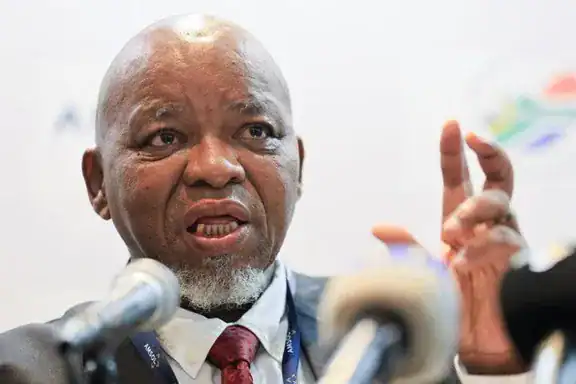
South Africa calls for affordable and balanced energy transition as leaders emphasize the urgent need to balance economic growth with environmental protection. At the Africa CEO Forum in Abidjan, key government figures, including Mineral and Energy Resources Minister Gwede Mantashe, highlighted the growing tension between global climate expectations and Africa’s developmental needs.
Gwede Mantashe: “We Cannot Kill the Economy to Preserve Ecology”
Minister Gwede Mantashe delivered a strong message that South Africa’s economic stability cannot be compromised in the name of environmental protection. “We must be allowed to integrate the two,” he said. “We cannot kill the economy to preserve ecology.”
He criticized what he called an imbalance in global climate responsibility, noting that Africa contributes the least greenhouse gas emissions yet bears the heaviest financial and developmental burdens. Mantashe expressed frustration with the carbon tax system, arguing that it punishes African economies trading with regions like the European Union.
“We have a carbon tax, but the U.S., China, and Russia don’t have it. It’s a tax on us because we’re trading with the EU,” he said.
His remarks resonated across the Africa CEO Forum, where business and government leaders gathered to discuss strategies for economic development, investment, and sustainability.
Balancing Development and Climate Responsibility
The theme of climate responsibility versus economic development remains central to South Africa’s policy discussions. The government’s stance, echoed by Mantashe, is that the energy transition must be fair, affordable, and inclusive.
South Africa currently chairs the G20 Presidency, and has used the platform to advocate for “Solidarity, Equality, and Sustainability” — principles that encourage a global partnership model that doesn’t leave developing countries behind.
“Africa must not be forced to choose between keeping the lights on and saving the planet,” Mantashe emphasized.
He further stressed that climate justice means developed nations — who historically contributed most to global emissions — should take greater responsibility and offer financial and technological support to developing economies.
Ramokgopa: “We Transition, But Not in Darkness”
Supporting Mantashe’s call, Minister in the Presidency Kgosientsho Ramokgopa reiterated that Africa’s energy transition must begin with ensuring universal electricity access. Citing data from the International Energy Agency, Ramokgopa reminded the forum that over 600 million Africans still live without reliable electricity.
“You don’t transition in darkness,” he stated. “When the lights are on, when industries and manufacturing pick up, when we lift people out of hunger and into jobs — then the conversation becomes real for Africa, not just an elite debate.”
This statement captures South Africa’s vision for a practical, people-centered energy transition, where growth and sustainability coexist. The government believes that before shifting fully to renewable energy, Africa must strengthen its energy security, improve infrastructure, and expand its industrial base.
The Role of the Africa CEO Forum
The Africa CEO Forum served as a critical platform for these discussions, bringing together leaders, investors, and policymakers from across the continent. Delegates debated strategies to accelerate sustainable development while safeguarding the environment.
Sessions covered topics like renewable energy investment, green technology financing, and carbon-neutral business models — all under the theme of achieving a balanced energy transition.
Mantashe’s remarks stirred debate, particularly around the idea that African countries face unfair climate pressures compared to major polluters. Several leaders agreed that while Africa supports global environmental goals, the pathway must reflect regional realities and socioeconomic priorities.
A Call for Global Fairness in Climate Policy
The South African government continues to push for fairness and shared responsibility in international climate negotiations. It insists that wealthier nations must contribute more funding to the Just Energy Transition Partnerships (JETPs) — frameworks meant to help developing countries decarbonize without sacrificing growth.
Mantashe and Ramokgopa both stressed that climate finance should not come with conditions that limit economic sovereignty. Instead, Africa needs affordable green investments and long-term infrastructure support to build resilience.
South Africa has already launched renewable energy projects, including solar and wind farms, but also maintains that coal and other traditional energy sources will remain part of the mix during the transition phase.
Energy Transition: An African Perspective
While global leaders often promote immediate decarbonization, African nations argue that context matters. South Africa’s stance — that the transition must be gradual, affordable, and equitable — reflects a broader African consensus.
Many experts note that rushing the transition could worsen unemployment, slow industrial growth, and deepen inequality. The challenge, therefore, lies in designing a hybrid model that gradually reduces emissions while keeping the economy alive.
Ramokgopa summarized it aptly:
“The transition is not just about energy — it’s about dignity, development, and opportunity.”
Looking Ahead: Toward a Sustainable Future
As South Africa calls for affordable and balanced energy transition, it positions itself as a voice of reason in the global sustainability debate. The country advocates for an approach that balances climate goals with social justice, ensuring that no one is left behind in the green revolution.
With the Africa CEO Forum highlighting investment opportunities in renewable energy, South Africa remains open to partnerships — provided they align with the continent’s developmental vision.
Ultimately, the message from South Africa’s leadership is clear: the energy transition must empower, not punish, Africa. The future of the continent depends on sustainable growth, inclusive progress, and a fair climate system that acknowledges historical inequalities.
🌟 Thanks for reading! 🌟
We truly appreciate you taking the time to stay informed with eKayNews.co.za — your trusted source for the latest breaking news, politics, lifestyle, and entertainment, etc across South Africa. 🇿🇦 Don’t miss out on the stories shaping our nation every day! 💡

👉 Subscribe now at www.eKayNews.co.za and join a growing community that values truth, insight, and real South African voices. 📲 Stay ahead — be the first to know, the first to share, and the first to make a difference! 🚀
You May Like:
Shoprite ‘building an empire’ as it powers into new businesses