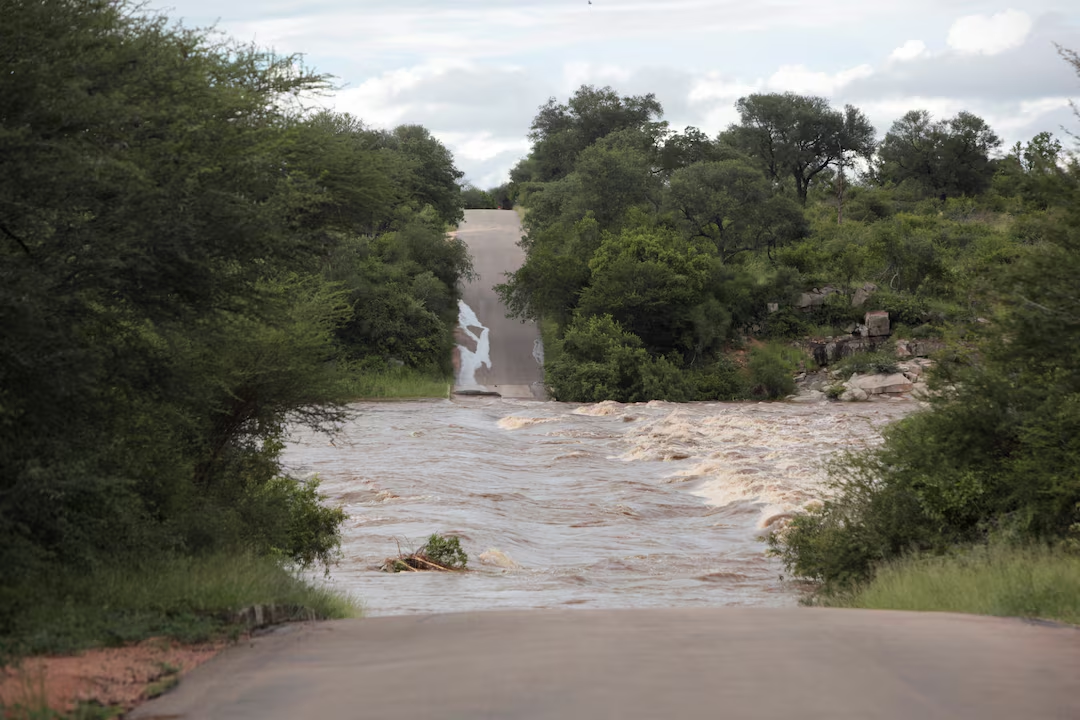
South Africa’s Kruger National Park shuts after severe floods
South Africa’s Kruger National Park shuts after severe floods, marking one of the most significant weather-related disruptions to the iconic conservation area in recent years. Authorities confirmed that the world-famous park was closed to day visitors after days of relentless rainfall caused several major rivers to burst their banks, flooding roads, camps, and low-lying areas across the reserve.
The closure highlights growing concerns about South Africa weather extremes and the increasing impact of climate-driven events on tourism, conservation, and local communities. While tourists already staying inside certain lodges were allowed to remain, emergency measures were quickly implemented to protect lives and infrastructure.
Kruger National Park closures after flash floods
Kruger National Park, which stretches across northeastern South Africa along the border with Mozambique, is no stranger to seasonal rains. However, this event was different in scale and intensity. Prolonged downpours caused rivers such as the Letaba and others to overflow, leading to widespread flash floods that submerged roads and cut off access routes.
South African National Parks (SANParks) announced that the park would be closed to day visitors for at least 24 hours while officials monitored conditions. Key access points, including the Phalaborwa Gate near Kruger Mpumalanga International Airport, were temporarily shut as a precaution.
Reuters footage from inside the park showed vast expanses of land underwater. Only treetops were visible in some areas, while wildlife such as hippos swam between submerged vegetation. Warning signs indicated multiple road closures, underscoring the severity of the flooding.
SANParks evacuations and safety measures
Evacuations near the Letaba River
One of the most affected areas was around the Letaba River. Due to rising water levels and strong currents, SANParks evacuations were carried out for lodges and camps in vulnerable zones. Guests were safely relocated to higher ground, while park officials restricted movement to prevent accidents.
SANParks spokesperson Reynold Thakhuli explained that the decision to close parts of the park was made purely for safety reasons. With water moving rapidly across normally dry crossings, even experienced drivers would have been at risk.
Protecting tourists and staff
Although the park was closed to day visitors, tourists already staying in unaffected lodges were allowed to remain. Staff were deployed around the clock to monitor water levels, communicate with guests, and ensure emergency protocols were followed.
According to SANParks, the welfare of people takes priority in extreme weather events. Infrastructure assessments were also underway to determine whether bridges, roads, and camps sustained long-term damage.
Impact on wildlife in Kruger National Park
Despite the dramatic scenes, authorities emphasized that wildlife in Kruger National Park is generally resilient to flooding. Animals instinctively move to higher ground when rivers overflow, reducing the risk of large-scale losses.
“We’re not really worried about the animals,” Thakhuli said, noting that such events are part of natural cycles, even if they are becoming more intense.
For many species, floods can actually rejuvenate ecosystems by replenishing water tables and redistributing nutrients. However, conservationists remain concerned that increasingly severe flash floods could disrupt breeding patterns and habitats over time.
South Africa weather and climate change concerns
Increasing frequency of extreme rainfall
Flooding across southeastern Africa has become more frequent and destructive in recent years. Scientists link this trend to climate change, which is warming the Indian Ocean and fueling stronger, more moisture-laden storms.
South Africa weather patterns are shifting, with longer dry spells punctuated by intense rainfall events. When rain does fall, it often arrives in short, violent bursts, overwhelming river systems and drainage infrastructure.
Regional impacts beyond Kruger
The floods affecting Kruger National Park are part of a broader regional pattern. Neighboring countries have also reported damage to homes, roads, and agricultural land. Tourism hubs, especially nature-based destinations, are increasingly vulnerable to sudden closures and costly repairs.
Tourist reactions inside the flooded park
Not all visitors were distressed by the dramatic conditions. Some tourists described the experience as surreal but memorable. South African tourist Gerhard Ackerman was seen sitting on the veranda of his lodge, overlooking floodwaters with calm acceptance.
“It’s God’s way of putting water back into the earth,” he said, adding that he and others were still enjoying their stay despite the unusual scenery.
Such reactions highlight the complex relationship between tourism and nature. While floods disrupt travel plans, they also remind visitors of the raw power of natural systems that parks like Kruger are designed to protect.
Economic and tourism implications
Short-term losses, long-term resilience
Kruger National Park is a cornerstone of South Africa’s tourism economy, attracting millions of visitors each year. Temporary closures can lead to lost revenue for SANParks, private lodges, tour operators, and nearby communities.
However, experts note that proactive safety measures, including timely SANParks evacuations, help preserve the park’s reputation as a responsible and well-managed destination. Long-term resilience planning, such as flood-resistant infrastructure and improved early-warning systems, is increasingly seen as essential.
Adapting to extreme weather
As South Africa weather becomes more unpredictable, tourism authorities are under pressure to adapt. This includes revising seasonal risk assessments, improving communication with visitors, and investing in climate-resilient infrastructure within Kruger National Park and other reserves.
What happens next for Kruger National Park?
Monitoring and reopening plans
SANParks confirmed that closures would be reviewed after 24 hours, depending on river levels and weather forecasts. Engineers and rangers are assessing damage to roads and bridges before reopening gates to day visitors.
Safety remains the primary concern, and authorities have urged the public to respect closure notices and avoid flooded areas.
A warning for the future
The fact that South Africa’s Kruger National Park shuts after severe floods serves as a warning of what may become more common in the years ahead. Climate scientists caution that without significant global action, extreme rainfall and flooding events will likely intensify.
YOU MAY LIKE:
WEATHER: Gauteng braces for storms on Friday. Cape Town to be dry, breezy
Conclusion: lessons from the floods
The shutdown of Kruger National Park following severe flooding underscores the growing intersection between conservation, climate change, and public safety. While wildlife has shown resilience and tourists have largely cooperated, the event highlights the urgent need for adaptive strategies.
As flash floods reshape landscapes and challenge traditional tourism seasons, proactive planning by SANParks and broader climate action will be critical. For now, South Africa’s most famous park stands as both a symbol of natural beauty and a reminder of nature’s increasing unpredictability.
references from mainstream media
1. Reuters — South Africa’s Kruger National Park shuts after severe floods
• https://www.reuters.com/sustainability/climate-energy/south-africas-kruger-national-park-shuts-after-severe-floods-2026-01-15/
Kindly consider to support eKayNews, Buy Us a Coffee & Keep the News Flowing!

Love what we do? You can now support eKayNews directly! Your contributions empower us to deliver the breaking news, sports, and local updates you trust.
Ways to Support:
-
Subscribe: Choose any amount (cancel anytime).
-
Virtual Coffee: A quick, once-off donation to say thanks.
Note: Payments are 100% secure via PayFast. We never see your banking details.
To our amazing readers: Your support fills us with gratitude. You are the reason we can keep doing this every day. Thank you for being a vital part of the eKayNews family!
We’re feeling the love at eKayNews!

Facebook: [eKayNews on Facebook] X (Twitter): [eKayNews on X] WhatsApp: [Follow the eKayNews WhatsApp Channel] Join our inner circle for real-time news alerts!
📢 Advertising Packages on www.eKayNews.co.za
Package 1. Link Booster: We add 7 links to 7 articles over 7 days – R2,500
Package 2. Permanent Feature: Sponsored Blog Article (hosted permanently) – R4,000
Package 3. Prime Visibility: Home Page Banner Ad (30 days) – R5,000
Book now: Email info@ekaynews.co.za or WhatsApp us on +27710961185