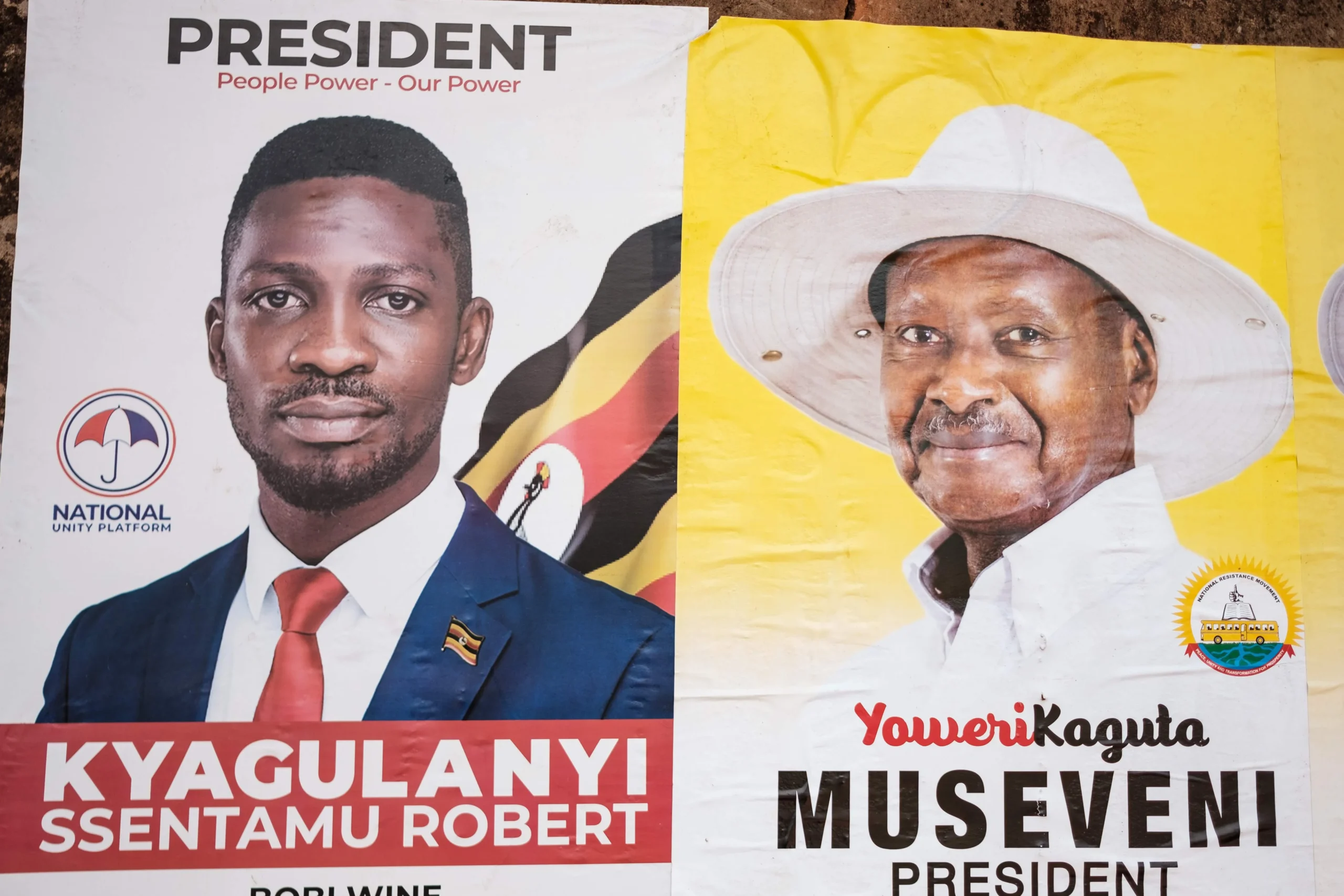
Uganda Presidential Election Crisis: Museveni vs Bobi Wine
Uganda Presidential Election Crisis: Museveni vs Bobi Wine is the defining headline of January 15, 2026, as millions of citizens head to the polls under a cloud of digital darkness and military surveillance. This high-stakes showdown pits the continent’s longest-serving leader against a pop-star revolutionary, marking a pivotal moment in East African politics.
The 2026 Uganda Election: A Nation at a Crossroads
Today, Uganda Presidential Election Crisis: Museveni vs Bobi Wine reaches its boiling point as voters decide whether to extend the 40-year rule of the incumbent or embrace a radical shift toward the youth-led opposition. The 2026 Uganda election is not merely a vote; it is a test of the country’s democratic resilience in the face of mounting authoritarianism.
Yoweri Museveni: Seeking a Seventh Term
At 81 years old, Yoweri Museveni remains the central figure of the ruling National Resistance Movement (NRM). Having held power since 1986, Museveni’s campaign has focused on “protecting the gains” of peace and stability. However, critics argue that his four-decade grip on power has stifled political pluralism and created a system where the “dictator” narrative is increasingly difficult to ignore.
Bobi Wine: The Ghetto President’s Challenge
Opposing the veteran leader is Bobi Wine (Robert Kyagulanyi), the 43-year-old musician-turned-politician who has become the face of the Uganda Presidential Election Crisis: Museveni vs Bobi Wine. Representing a population where 70% of citizens are under 30, Bobi Wine’s National Unity Platform (NUP) taps into the frustrations of a generation that has only ever known one president.
The Digital Darkness: Internet Shutdown and Censorship
A major flashpoint in the Uganda Presidential Election Crisis: Museveni vs Bobi Wine is the government’s decision to impose a nationwide internet shutdown. On January 13, 2026, just 48 hours before the polls opened, the Uganda Communications Commission (UCC) ordered all service providers to suspend public internet access.
“The internet shutdown is an oppressive tactic designed to hide potential electoral fraud and silence dissenting voices.” — Human Rights Watch
Why the Internet Shutdown Matters
The blackout has had a devastating impact on the transparency of the 2026 Uganda election:
-
Media Restrictions: Journalists are unable to transmit live video or data, relying on traditional phone calls to report from polling stations.
-
Observer Limitations: International observers and local watchdogs cannot share real-time updates on irregularities.
-
Economic Toll: Small businesses and informal traders who rely on mobile money and digital platforms are facing significant financial losses.
While the government claims the shutdown is a “precautionary measure” to prevent misinformation and violence, the international community, including the United Nations, has expressed deep concern over this violation of digital rights.
Violence and Allegations of Rigging
The road to the 2026 Uganda election has been marred by extreme tension and state-led harassment. Bobi Wine has spent much of the campaign period wearing a bulletproof vest and helmet, a stark symbol of the risks faced by the opposition.
Claims of Electoral Fraud
As the Uganda Presidential Election Crisis: Museveni vs Bobi Wine unfolds today, reports of irregularities have already surfaced:
-
Biometric Failures: Many polling stations reported that voter identification machines were non-functional.
-
Polling Delays: In Kampala, some stations opened four hours late, leading to frustrated crowds and fears of disenfranchisement.
-
Ballot Stuffing: The opposition has alleged that “all signs point to rigging,” urging supporters to remain at stations to “protect the vote.”
Security Force Crackdown
The presence of the military and police is felt heavily across the country. In the final days of the campaign, security forces used tear gas and live ammunition to disperse opposition rallies. With hundreds of activists detained and at least one person confirmed dead in recent clashes, the atmosphere remains incredibly volatile.
Key Statistics of the 2026 Uganda Election
To understand the scale of the Uganda Presidential Election Crisis: Museveni vs Bobi Wine, here are the essential figures for this election cycle:
| Category | Detail |
| Incumbent | Yoweri Museveni (In power since 1986) |
| Main Challenger | Robert Kyagulanyi (Bobi Wine) |
| Total Registered Voters | ~21.6 Million |
| Presidential Term | 5 Years |
| Internet Status | Nationwide Shutdown (Started Jan 13) |
| Total Candidates | 8 Presidential Candidates |
YOU MAY LIKE:
International Reaction and Regional Impact
The Uganda Presidential Election Crisis: Museveni vs Bobi Wine is being watched closely across the globe. In Nairobi, Kenyan rights organizations have gathered to warn against the repression of the Ugandan opposition. The UN Human Rights Office has stressed that “open access to communication and information is key to free and genuine elections.”
The Museveni administration, however, maintains that these measures are vital for national security. They argue that restrictions are necessary to prevent the electoral process from being hijacked by “illicit networks.”
What Happens Next?
As the polls close, the focus shifts to the counting process. By law, results must be announced within 48 hours. However, with the internet shutdown still in place and the opposition calling for citizens to defend their victory, the potential for post-election unrest is high.
The 2026 Uganda election will ultimately determine whether Yoweri Museveni can extend his rule to 45 years or if the “Ghetto President” Bobi Wine can successfully lead a democratic transition. Regardless of the official outcome, the Uganda Presidential Election Crisis: Museveni vs Bobi Wine has already exposed deep fractures in the nation’s political landscape.
For many Ugandans, today is not just about a ballot—it is about the future of their voice in a changing Africa.
Mainstream Media References
-
Al Jazeera –View Article
Kindly consider to support eKayNews, Buy Us a Coffee & Keep the News Flowing!

Love what we do? You can now support eKayNews directly! Your contributions empower us to deliver the breaking news, sports, and local updates you trust.
Ways to Support:
-
Subscribe: Choose any amount (cancel anytime).
-
Virtual Coffee: A quick, once-off donation to say thanks.
Note: Payments are 100% secure via PayFast. We never see your banking details.
To our amazing readers: Your support fills us with gratitude. You are the reason we can keep doing this every day. Thank you for being a vital part of the eKayNews family!
We’re feeling the love at eKayNews!

Facebook: [eKayNews on Facebook] X (Twitter): [eKayNews on X] WhatsApp: [Follow the eKayNews WhatsApp Channel] Join our inner circle for real-time news alerts!
📢 Advertising Packages on www.eKayNews.co.za
Package 1. Link Booster: We add 7 links to 7 articles over 7 days – R2,500
Package 2. Permanent Feature: Sponsored Blog Article (hosted permanently) – R4,000
Package 3. Prime Visibility: Home Page Banner Ad (30 days) – R5,000
Book now: Email info@ekaynews.co.za or WhatsApp us on +27710961185