Starlink plane Wi-Fi takeover: The rise of in-flight Internet
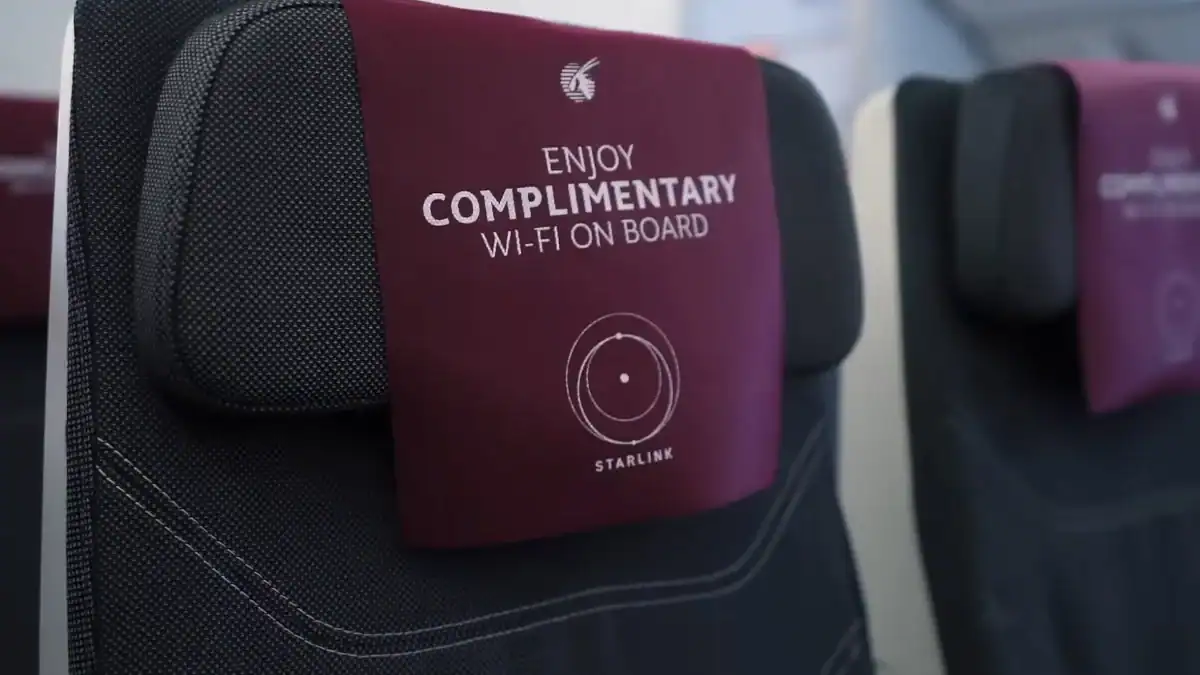
The Starlink plane Wi-Fi takeover is changing how airlines offer connectivity to passengers. For the past three years, Elon Musk’s SpaceX has steadily gained ground in the global airline connectivity market, signing deals with carriers including Air France, Qatar Airways, and United Airlines.
Recent announcements reveal that Alaska Air Group will install Starlink next year, while Virgin Atlantic has already reached an agreement. Even British Airways could soon join, potentially allowing Musk to secure another flagship airline on lucrative trans-Atlantic routes.
SpaceX airline deals: Expanding to the Middle East
Musk has set his sights on the Middle East, a hub for trend-setting airlines and long-haul travel. SpaceX airline deals are in advanced discussions with Emirates, Gulf Air, FlyDubai, and Saudia. Partnering with Emirates, known for luxury service, could be a turning point in Starlink’s competition against legacy satellite operators like Viasat, EchoStar, and SES.
Legacy rivals are responding aggressively, revising business plans, and pursuing strategic deals to retain market share in the $100 billion satellite communications industry.
Starlink in-flight Wi-Fi: How it works
The Starlink in-flight Wi-Fi system delivers fast Internet through a network of roughly 8,000 satellites. Airlines pay a subscription to install Starlink terminals, with monthly fees per seat. A Boeing 737 installation costs around $300,000, while a 787 Dreamliner is approximately $500,000.
Pricing per seat varies depending on contract length, with some carriers paying $120 per month per seat, plus an additional $120 for live TV. This model allows passengers to stream, work, or communicate efficiently during long flights—a major upgrade from traditional, slower in-flight Wi-Fi.
Sensitivity around Musk and political implications
Some airlines are cautious due to Elon Musk’s polarising public image. Associations with Musk could affect regulatory approvals in certain countries, especially those aligned with former US President Donald Trump. These sensitivities may slow adoption of Starlink technology despite its superior connectivity.
Advantages of Starlink terminals
Compared to competitors, Starlink in-flight Wi-Fi terminals are cheaper and quicker to install. The system connects aircraft to low-Earth orbit (LEO) satellites roughly 560 km above Earth. In contrast, legacy providers use a smaller number of geostationary satellites at 65 times higher altitude, causing higher latency and slower speeds.
The global airline connectivity landscape is evolving, with airlines demanding faster, more reliable connections for passengers who stream, work, or communicate mid-flight.
Competition and multi-orbit strategies
Legacy operators like Viasat and SES are adapting by offering multi-orbit solutions, combining geostationary and LEO satellites to improve speed, coverage, and resiliency. Recent deals include:
-
Viasat powering American Airlines and Riyadh Air in-flight Wi-Fi.
-
SES/Intelsat partnerships with Thai Airways and Embraer.
Despite Starlink’s advantages, some major carriers such as Delta and JetBlue remain cautious, waiting to see performance results from early adopters.
Operational challenges and negotiations
Airlines and SpaceX have debated whether Wi-Fi should be free for all passengers or restricted to loyalty programs. Starlink also requires airlines to commit to fleet-wide installation before announcing deals—a risky approach for carriers with large fleets.
United Airlines experienced temporary outages due to static interference but has since installed Starlink on 60 regional Embraer planes. Other outages, such as the July 24 and August 18 events, highlight ongoing network challenges.
Starlink also faces legal restrictions in certain countries, requiring airlines to disable service before landing. Meanwhile, competitors like Telesat’s Lightspeed and Amazon’s Project Kuiper are preparing to enter the market, intensifying the competition.
Emirates Wi-Fi partnership: A landmark deal
The potential Emirates Wi-Fi partnership represents a major milestone. Winning a deal with Emirates, Gulf Air, FlyDubai, or Saudia would strengthen Starlink’s presence in the Middle East and demonstrate the system’s global reliability and appeal.
Executives note that passenger satisfaction has been high, with many impressed by streaming capabilities, video calls, and fast Internet on flights. JSX, which offers Starlink-enabled Wi-Fi on 30-seat planes, reports overwhelmingly positive customer responses.
The impact on the airline industry
The Starlink plane Wi-Fi takeover is redefining the passenger experience. Reliable, high-speed connectivity enhances customer satisfaction, supports business travelers, and can become a key marketing point for airlines.
Carriers now see Starlink as a competitive advantage, providing speeds and coverage unmatched by legacy operators. The adoption of Starlink also pressures competitors to innovate and improve offerings, benefiting the industry as a whole.
Looking ahead: The future of connected skies
The race for in-flight connectivity is far from over. With SpaceX pushing Starlink’s adoption globally, airlines are assessing strategies to offer faster, reliable Wi-Fi while balancing costs, customer expectations, and political sensitivities.
Starlink’s low-latency, high-speed network positions it as a strong contender to dominate the market, particularly in luxury and long-haul carriers like Emirates. However, competitors will continue to innovate, creating an intense battle in the satellite communications sector for years to come.
Conclusion
The Starlink plane Wi-Fi takeover highlights Elon Musk’s ambition to revolutionize the in-flight experience. With high-speed Internet, strategic airline partnerships, and global expansion plans, Starlink is set to reshape global airline connectivity while challenging traditional providers.
Passengers, airlines, and the industry at large are witnessing a transformative period where streaming, productivity, and communication in the skies become seamless and reliable.
Here are five reference mainstream media outlets from South Africa, each with a link to their respective websites:
-
News24 – A leading digital news platform offering comprehensive coverage of South African and international news.
https://www.news24.com/ -
Mail & Guardian – Renowned for its investigative journalism and in-depth analysis of political and social issues.
https://mg.co.za/ -
Daily Maverick – An independent news website providing insightful commentary and investigative reporting.
https://www.dailymaverick.co.za/ -
SowetanLIVE – Offers news with a focus on the South African community, including politics, entertainment, and sports.
https://www.sowetanlive.co.za/ -
eNCA – A 24-hour news channel delivering breaking news and analysis across South Africa and the world.
https://www.enca.com/