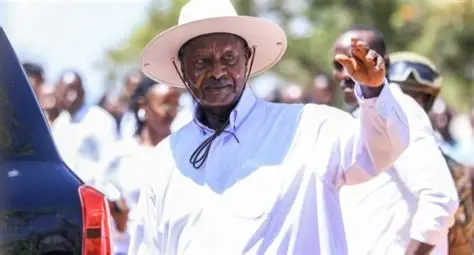
Uganda’s Museveni wins seventh term, extending four-decade rule
Uganda’s Museveni wins seventh term, extending four-decade rule as the country’s Electoral Commission officially declared President Yoweri Kaguta Museveni the winner of the 2026 presidential election, confirming his continued grip on power after nearly 40 years at the helm of the East African nation.
The announcement, made on January 17, 2026, confirmed that Museveni secured 7.9 million votes, representing 71.6% of the total ballots cast, defeating opposition leader Bobi Wine, who garnered approximately 2.7 million votes. The result grants Museveni his seventh consecutive term and cements his position as one of Africa’s longest-serving leaders.
However, the Uganda presidential election 2026 has been overshadowed by controversy, with an internet shutdown, allegations of irregularities, and renewed debate about democracy and political renewal on the continent.
Election Results Confirm Museveni’s Seventh Term
The Yoweri Museveni seventh term victory was announced following days of heightened tension and restricted communication across Uganda. According to the Electoral Commission, the vote was conducted peacefully and reflected the will of the people.
President Museveni, now 81 years old, has ruled Uganda since 1986, initially coming to power after a guerrilla war that ended years of instability. His supporters credit him with maintaining relative security, expanding infrastructure, and steering economic growth in parts of the country.
Following the announcement, Museveni thanked Ugandans for what he described as a renewed mandate to continue his development agenda, focusing on industrialisation, job creation, and regional stability.
Uganda Internet Shutdown Raises Transparency Concerns
One of the most controversial aspects of the Uganda presidential election 2026 was the nationwide internet shutdown imposed days before the vote. Authorities restricted access to social media platforms and internet services, severely limiting communication and independent reporting.
The government defended the Uganda internet shutdown, stating it was a necessary step to curb misinformation, prevent electoral violence, and maintain national security during a sensitive period.
However, civil society groups, journalists, and international observers criticised the move, arguing that it undermined transparency and prevented citizens from verifying results in real time. The United Nations Human Rights Office described the blackout as “deeply worrying,” warning that it infringed on freedom of expression and access to information.
Bobi Wine Rejects Results, Calls Election ‘Fake’
The Bobi Wine election dispute escalated shortly after the results were announced. The opposition leader, a former musician turned politician, rejected the outcome and labelled the election a “sham” and a “fake report.”
Bobi Wine accused the Electoral Commission of lacking independence and alleged widespread irregularities, including voter intimidation, ballot manipulation, and restricted access for opposition agents. He argued that the internet blackout was deliberately imposed to conceal abuses and suppress dissent.
Wine called for the immediate restoration of internet services and urged Ugandans and the international community to reject the declared outcome, insisting that the election failed to meet basic democratic standards.
National and International Reactions
Reactions to Uganda’s Museveni wins seventh term, extending four-decade rule have been mixed. Domestically, security forces were deployed in major cities amid fears of unrest, while government officials urged calm and national unity.
Internationally, election observers and human rights organisations expressed concern about the conduct of the vote. Several Western governments called on Ugandan authorities to respect civil liberties and address allegations of irregularities transparently.
The African Union and regional bodies acknowledged the announced results but emphasised the importance of dialogue and peaceful resolution of disputes, highlighting Uganda’s role in regional stability.
The ‘Big Man’ Phenomenon in African Politics
Museveni’s re-election has reignited debate about long-serving leaders and democratic stagnation in Africa. Analysts often describe this trend as the “big man” phenomenon, where presidents remain in power for decades through constitutional changes, political dominance, and control over state institutions.
Countries such as Cameroon, Equatorial Guinea, and others across the continent reflect similar patterns. Critics argue that extended rule discourages political competition, weakens institutions, and frustrates younger populations seeking economic opportunity and representation.
In Uganda, where youth make up a significant portion of the population, calls for generational change were central to the 2026 campaign, particularly among urban voters and first-time voters.
Economic and Governance Challenges Ahead
Despite the controversy, Museveni now faces pressing challenges during his new term. Uganda continues to grapple with unemployment, rising living costs, and inequality, particularly among young people.
The government has promised to focus on infrastructure expansion, oil production development, and agricultural modernisation. Supporters argue that political continuity ensures stability and investor confidence.
Critics, however, warn that without political reform and stronger democratic institutions, economic progress may remain uneven and social tensions could intensify.
What Comes Next for Uganda
As Uganda’s Museveni wins seventh term, extending four-decade rule, attention now shifts to how the government will address domestic and international concerns. The restoration of internet services, engagement with opposition leaders, and protection of civil liberties will be closely monitored.
The National Electoral Commission has urged aggrieved parties to pursue legal challenges through the courts, while opposition groups remain sceptical of judicial independence.
Uganda stands at a crossroads, balancing stability and continuity against demands for transparency, accountability, and political renewal.
YOU MAY LIKE:
Conclusion
Uganda’s Museveni wins seventh term, extending four-decade rule marks another historic chapter in the country’s political journey. While supporters see experience and stability, critics view the outcome as a setback for democracy.
With unresolved disputes, an emboldened opposition, and growing youth dissatisfaction, the coming months will be crucial in shaping Uganda’s political and social future. Whether Museveni’s new mandate leads to reform or deepens divisions remains a defining question for the nation and the wider African region.
mainstream media references
-
France 24 – Uganda’s Museveni wins seventh term as rival Bobi Wine rejects ‘fake results’
Link: https://www.france24.com/en/africa/20260117-uganda-president-yoweri-museveni-wins-seventh-term-rival-bobi-wine-rejects-fake-results
Kindly consider to support eKayNews, Buy Us a Coffee & Keep the News Flowing!

Love what we do? You can now support eKayNews directly! Your contributions empower us to deliver the breaking news, sports, and local updates you trust.
Ways to Support:
-
Subscribe: Choose any amount (cancel anytime).
-
Virtual Coffee: A quick, once-off donation to say thanks.
Note: Payments are 100% secure via PayFast. We never see your banking details.
To our amazing readers: Your support fills us with gratitude. You are the reason we can keep doing this every day. Thank you for being a vital part of the eKayNews family!
We’re feeling the love at eKayNews!

Facebook: [eKayNews on Facebook] X (Twitter): [eKayNews on X] WhatsApp: [Follow the eKayNews WhatsApp Channel] Join our inner circle for real-time news alerts!
📢 Advertising Packages on www.eKayNews.co.za
Package 1. Link Booster: We add 7 links to 7 articles over 7 days – R2,500
Package 2. Permanent Feature: Sponsored Blog Article (hosted permanently) – R4,000
Package 3. Prime Visibility: Home Page Banner Ad (30 days) – R5,000
Book now: Email info@ekaynews.co.za or WhatsApp us on +27710961185