Iran says strait of Hormuz could reopen after US pauses operation
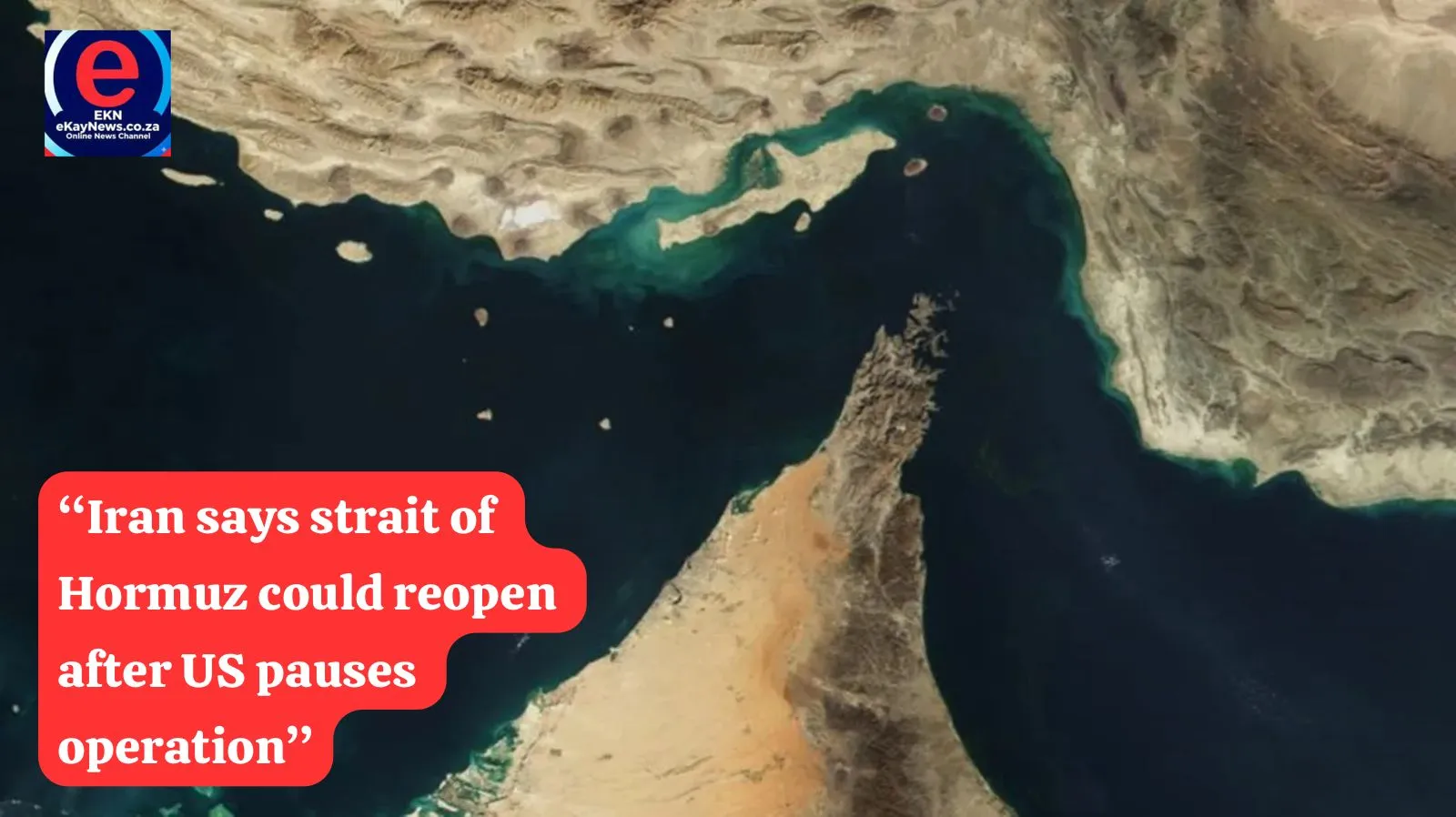
Iran says strait of Hormuz could reopen after US pauses operation, marking a sudden and potentially historic de-escalation in one of the world’s most heavily militarized maritime zones. Following a period of intense global anxiety and military brinkmanship, Iran’s Islamic Revolutionary Guard Corps (IRGC) navy has officially announced that safe transit through the key waterway could soon be restored. The announcement, cited by state media and international outlets like Reuters, comes hot on the heels of major geopolitical shifts in Washington, signaling that a fragile peace may finally be within reach.
The IRGC navy statement indicated that the safe and stable transit of commercial vessels and oil tankers through the critical waterway will be possible following the end of what they termed “threats from aggressors.” This development directly follows US President Donald Trump’s remarks yesterday, where he confirmed the halting of his heavily armed naval initiative. The abrupt shift in tone from both sides suggests that behind-the-scenes diplomatic backchannels are currently working overtime to prevent an all-out regional war. As the news breaks that Iran says strait of Hormuz could reopen after US pauses operation, global markets are already reacting to the possibility of stabilized energy supply chains.
IRGC Outlines Conditions for the Strait of Hormuz
The Islamic Revolutionary Guard Corps remains the dominant military force in the Persian Gulf, wielding immense influence over Iran’s maritime strategy. Their recent statement, while optimistic, was laced with characteristic caution and demands for respect regarding their territorial waters. The IRGC navy emphasized that while the waterway could reopen, all international vessels must continue to respect Iranian maritime regulations.
Restoring Global Confidence Through Respect for Maritime Law
Interestingly, the official statement did not specify exactly what the new maritime procedures entailed. However, it explicitly thanked the owners and captains of international ships who have historically respected Iranian regulations when navigating the narrow and congested waterway. This subtle nod to international shipping companies is widely seen as an attempt by Iran to reassure global markets that it is a responsible actor in the region, capable of guaranteeing the security of global energy flows provided its sovereignty is not challenged.
The fact that Iran says strait of Hormuz could reopen after US pauses operation is a testament to the immense pressure that both military posturing and economic blockades have placed on all parties involved. For Iran, the reopening of the strait is not just a military concession; it is a vital economic necessity. The country’s economy has been under severe strain, and the resumption of regular shipping is a crucial step toward stabilizing its domestic financial situation.
The Global Economic Impact of the Strait of Hormuz
To fully grasp why it is so critical that Iran says strait of Hormuz could reopen after US pauses operation, one must understand the sheer economic gravity of this geographical chokepoint. The Strait of Hormuz is arguably the world’s most important oil transit route. It is a narrow stretch of water separating Iran to the north and the United Arab Emirates and Oman to the south. At its narrowest point, the strait is only 21 miles wide, with the shipping lanes in either direction being just two miles wide, separated by a two-mile buffer zone.
Averting a Global Energy Crisis
Through this incredibly tight corridor flows approximately 20% of the world’s global oil consumption. Millions of barrels of crude oil, alongside massive quantities of liquefied natural gas (LNG), pass through the Strait of Hormuz every single day. When the threat of military conflict looms over this waterway, the price of crude oil immediately spikes, sending inflationary shockwaves through the global economy.
Therefore, the recent military standoff had the entire world on edge. The prospect of a prolonged closure threatened to plunge the global economy into a deep recession. The news that the waterway could soon see a return to normal operations is a massive relief for energy-dependent nations and multinational shipping conglomerates alike.
Donald Trump and the Suspension of Project Freedom
The catalyst for this sudden de-escalation was a strategic decision made in Washington. Donald Trump announced that he had paused “Project Freedom”—a massive, US-led military initiative originally designed to forcibly open the Strait of Hormuz and escort commercial vessels through the hazardous zone. Trump cited “great progress” being made towards a “complete and final agreement” with Iran as the primary reason for halting the operation.
Project Freedom was a highly aggressive military posture. It involved the deployment of advanced naval and air assets to create a protective corridor, an action that Tehran viewed as a direct provocation and a violation of its regional authority. By deciding to put Project Freedom on hold, Donald Trump has offered a significant diplomatic olive branch, allowing Tehran the political space to dial back its own military readiness without losing face domestically.
Balancing Diplomacy and the Economic Blockade
However, the US President’s approach remains rooted in his signature “maximum pressure” negotiation style. While the military escorts of Project Freedom have been paused, the broader economic blockade on Iranian ports remains in full effect. The message from the White House is clear: military operations have been suspended to give diplomacy a chance, but the economic squeeze will continue until a final signature is on a comprehensive agreement.
“If They Don’t Agree, the Bombing Starts”
While the pause of Project Freedom has created a window for peace, Donald Trump has not shied away from using stark threats to maintain leverage over Tehran. In a recent interview with the New York Post, Trump made it abundantly clear that the suspension of military action is strictly conditional. As the US waits for an official response to its latest peace proposal, the threat of devastating military force remains firmly on the table.
Trump posted earlier on social media that the war with Iran could soon end, paving the way for oil and natural gas shipments to restart unhindered. However, he accompanied this optimistic vision with a chilling ultimatum. He stressed that everything depends on Iran accepting the reported agreement—the specific details of which the US president has kept closely guarded.
“If they don’t agree, the bombing starts,” Trump wrote, laying bare the high stakes of the current negotiations. This blunt rhetoric highlights the extreme volatility of the situation. It is a high-wire diplomatic act where the promise of economic relief is counterbalanced by the threat of immediate, overwhelming military destruction.
Will Donald Trump Hold Face-to-Face Talks with Iran?
Despite the “great progress” being touted by the administration, the path to a finalized treaty remains fraught with complications. The deep-seated mistrust between the United States and Iran cannot be erased overnight. Decades of hostility, proxy wars, and broken agreements cast a long shadow over the current negotiations.
Addressing the possibility of a historic summit, US President Donald Trump stated that it was “too soon” to consider face-to-face talks with Tehran. This cautious approach suggests that while backchannel negotiations and third-party mediation (reportedly involving nations like Pakistan) are yielding positive results, the groundwork for a direct presidential meeting has not yet been laid.
The reluctance to hold immediate face-to-face talks is likely a calculated move by Donald Trump to ensure that all the technical details of the “complete and final agreement” are ironed out by diplomats before he commits his personal prestige to a summit. For Iran, avoiding an immediate face-to-face meeting also serves domestic political purposes, allowing the government to negotiate without appearing to completely capitulate to the US President in front of the world’s cameras.
What the Final Agreement Might Look Like
While the exact text of the proposed agreement remains classified, geopolitical analysts suggest it likely covers several critical areas. First and foremost, the agreement will undoubtedly require guarantees from the IRGC regarding the unhindered, safe passage of all international shipping through the Strait of Hormuz. In return, Iran will likely demand the phased lifting of the crippling economic sanctions and the eventual dismantling of the US naval blockade.
Furthermore, the agreement may touch upon Iran’s broader regional activities and its nuclear program, though reaching a consensus on those deeply entrenched issues within a “short period” seems highly ambitious. It is more likely that the current one-page memo being discussed is a cease-fire and de-escalation document, designed to immediately halt hostilities and reopen the Strait of Hormuz, with more complex issues deferred to future negotiations.
YOU MAY LIKE:
Conclusion: A Fragile Hope for Peace in the Middle East
The interconnected nature of global geopolitics means that a breakthrough in the Persian Gulf could have far-reaching consequences. As the world digests the news that Iran says strait of Hormuz could reopen after US pauses operation, there is a collective, cautious sigh of relief. The halting of Project Freedom by Donald Trump has temporarily silenced the drums of war, allowing the voices of diplomats to finally be heard over the roar of fighter jets and naval cannons.
However, the situation remains on a knife-edge. The IRGC continues to patrol the waters, maintaining a vigilant watch over its sovereign territory. The United States maintains its punishing economic blockade, and the looming threat of renewed military strikes—summarized by Trump’s warning that “the bombing starts” if an agreement fails—hangs heavily over the region.
The coming days will be some of the most consequential in recent Middle Eastern history. If the negotiations succeed, it could mark the end of a terrifying chapter of brinkmanship, securing the vital energy arteries of the global economy. If they fail, the region could rapidly descend into a devastating conflict with unparalleled global repercussions. For now, the international community watches and waits, hoping that the promise of safe transit through the Strait of Hormuz becomes a permanent reality rather than a fleeting moment of diplomatic illusion.
References
- Reuters
Iran signals Strait of Hormuz could reopen amid easing tensions
https://www.reuters.com/world/middle-east/
- BBC News
Strait of Hormuz: Why the waterway matters to global oil markets
https://www.bbc.com/news/world-middle-east
Kindly consider to support eKayNews, Buy Us a Coffee & Keep the News Flowing!

Love what we do? You can now support eKayNews directly! Your contributions empower us to deliver the breaking news, sports, and local updates you trust.
Ways to Support:
-
Subscribe: Choose any amount (cancel anytime).
-
Virtual Coffee: A quick, once-off donation to say thanks.
Note: Payments are 100% secure via PayFast. We never see your banking details.
To our amazing readers: Your support fills us with gratitude. You are the reason we can keep doing this every day. Thank you for being a vital part of the eKayNews family!
We’re feeling the love at eKayNews!

Facebook: [eKayNews on Facebook] X (Twitter): [eKayNews on X] WhatsApp: [Follow the eKayNews WhatsApp Channel] Join our inner circle for real-time news alerts!
📢 Advertising Packages on www.eKayNews.co.za
Package 1. Link Booster: We add 7 links to 7 articles over 7 days – R2,500
Package 2. Permanent Feature: Sponsored Blog Article (hosted permanently) – R4,000
Package 3. Prime Visibility: Home Page Banner Ad (30 days) – R5,000
Book now: Email info@ekaynews.co.za or WhatsApp us on +27710961185