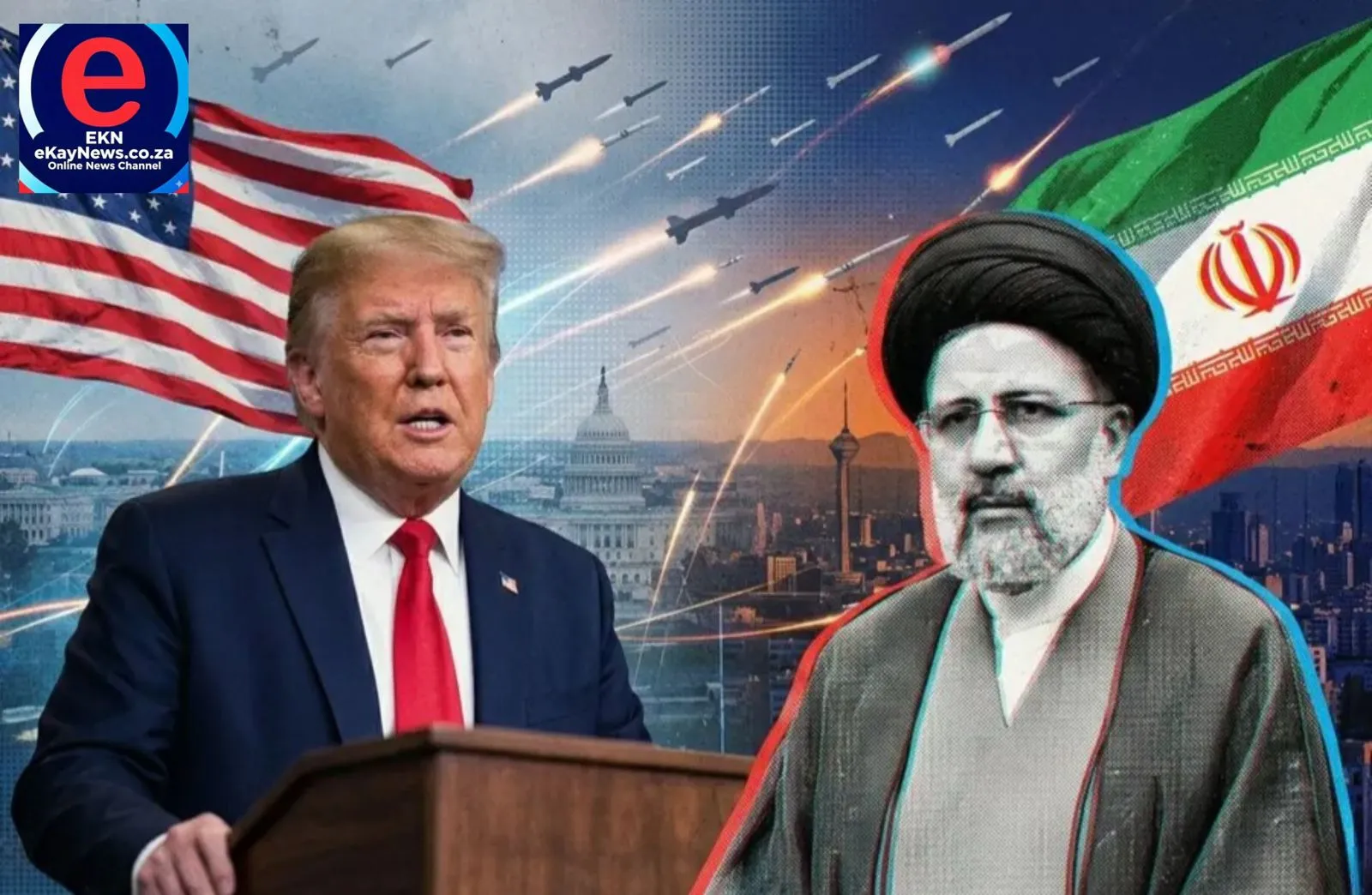
Iran Says It Is Reviewing a U.S. Proposal to End the War
Iran Says It Is Reviewing a U.S. Proposal to End the War as of Wednesday, marking a potential, albeit fragile, turning point in a conflict that has set the Middle East ablaze. This announcement from Tehran comes just twenty-four hours after U.S. President Donald Trump abruptly ordered a “pause” on Project Freedom—the ambitious military operation designed to escort commercial vessels through the volatile Strait of Hormuz. While the White House cite “great progress” in back-channel negotiations mediated by Pakistan, the reality on the ground remains far grimmer than the optimistic social media posts from Truth Social might suggest.
The Iranian foreign ministry spokesman, Esmail Baghaei, confirmed that the government in Tehran is meticulously “finalizing its considerations” before conveying a formal response to Islamabad. This diplomatic dance is occurring under the shadow of a devastating CNN investigation that has recently revealed the staggering vulnerability of the American footprint in the region. Even as diplomats exchange one-page memorandums, the Pentagon is grappling with the logistical nightmare of a decimated base network and a shipping blockade that continues to claim victims.
The 14-Point Plan and the Pakistani Mediation
The core of the current diplomatic flurry is a 14-point U.S. proposal sent via Pakistani Prime Minister Shehbaz Sharif. While the exact contents remain classified, insiders suggest the framework seeks a phased de-escalation: a 30-day window of silence in exchange for the unfreezing of Iranian assets and the gradual reopening of the Strait of Hormuz. Iran Says It Is Reviewing a U.S. Proposal to End the War, but the rhetoric coming from the Iranian parliament suggests that the “review” is anything but a formality.
Ebrahim Rezaei, a spokesperson for Iran’s National Security and Foreign Policy Commission, was quick to temper expectations. He characterized the 14-point plan not as a balanced agreement, but as an “American wish list.” According to Rezaei, Iran remains “ready with its finger on the trigger” should Washington fail to provide what he termed “necessary concessions,” including the total lifting of the naval blockade that currently strangles the Iranian economy.
Trump’s High-Stakes Ultramodern Diplomacy
Speaking at a Mother’s Day event at the White House, Donald Trump maintained his signature blend of confidence and threat. “The Iranians want to make a deal; they want to negotiate,” he told the crowd, while simultaneously reiterating that a nuclear-armed Iran is a non-starter for his administration. However, the President’s optimism was paired with a chilling warning: if the negotiations fail, “the bombing starts” at an intensity “much higher” than anything previously seen in this “skirmish.”
This contradictory messaging has become a hallmark of the administration. While Secretary of State Marco Rubio declared the “active phase” of the war over just a day prior, the President’s threats of intensified aerial campaigns suggest that the Pentagon is still very much on a war footing. This internal friction highlights the difficulty of securing a peace deal when the military reality on the ground is so starkly different from the political narrative.
Military Fallout: The CNN Investigation and US Military Bases
The urgency behind the U.S. proposal may be explained by a recent CNN investigation that has sent shockwaves through the halls of Congress. According to the report, Iran has managed to damage or destroy at least 16 US military bases across eight countries in the Middle East. This represents a majority of the American tactical positions in the region, including high-value sites in Kuwait, Bahrain, and Saudi Arabia.
The CNN investigation used satellite imagery and interviews with high-ranking sources to reveal that the damage is far more extensive than the Pentagon initially admitted. Critical infrastructure, including the radar arrays for THAAD missile batteries in Jordan, has been neutralized. These systems are not easily replaced; they are the “eyes” of the U.S. defense network. Without them, the billions of dollars invested in interceptor missiles are virtually useless, leaving American personnel in the region exposed to the very drone and missile swarms that caused the damage in the first place.
The Financial Strain on the Pentagon
The financial implications of these strikes are astronomical. While the Pentagon has publicly estimated the war’s cost at approximately $25 billion, the CNN investigation cites internal sources suggesting the “reconstitution” of these US military bases will push the true figure closer to $50 billion. Repairs to the Fifth Fleet headquarters in Bahrain alone are projected to cost $200 million.
This financial drain is occurring at a time when the American public is feeling the pinch of the conflict at home. As the blockade of the Strait of Hormuz continues, gasoline prices in some parts of the United States have breached the $8 per gallon mark. The pressure on the Pentagon to find a diplomatic exit is mounting, even as the military insists it still has the “upper hand.”
Tactical Realities: The Case of the Hasna
Even as Iran Says It Is Reviewing a U.S. Proposal to End the War, the tactical conflict continues to simmer. On Wednesday, the U.S. Central Command confirmed that an F/A-18 Super Hornet from the USS Abraham Lincoln disabled an Iranian-flagged oil tanker named the Hasna. The vessel had reportedly ignored repeated warnings to respect the U.S.-led blockade.
In a display of precision, the warplane used its 20-millimeter cannon to strike the ship’s rudder, rendering it unable to transit to its intended Iranian port. This incident serves as a reminder that while Project Freedom may be “paused,” the blockade remains a brutal reality. The disabling of the Hasna proves that the US military is still capable of projection, but it also fuels the Iranian argument that a “peace proposal” is meaningless as long as their maritime sovereignty is being actively challenged.
The Strait of Hormuz: A Global Chokepoint
The Strait of Hormuz remains the ultimate prize and the ultimate weapon in this conflict. Iran has effectively closed the waterway to any traffic that does not comply with its Revolutionary Guard rules. President Emmanuel Macron of France is currently attempting to lead a European effort to decouple the status of the Strait from the broader nuclear negotiations. Macron’s hope is to establish a multinational peacekeeping force—including the aircraft carrier Charles de Gaulle—to escort ships and restore some semblance of normalcy to the global economy.
However, Iran is unlikely to accept this proposal. For Tehran, control over the Strait of Hormuz is their most potent piece of leverage. Giving it up without securing the lifting of all sanctions and the withdrawal of the U.S. blockade would be seen as a strategic surrender—one that the hardliners in the Iranian parliament are not prepared to make.
Regional Fallout and the Israel-Hezbollah Front
The war is not confined to the Persian Gulf. In Lebanon, the ceasefire between Israel and Hezbollah is under immense strain. On the same day that Iran Says It Is Reviewing a U.S. Proposal to End the War, Israeli jets carried out a strike in the heart of Beirut’s southern suburbs, targeting a commander of Hezbollah’s elite Radwan force.
This strike, the first in the capital since the truce began, underscores the fragility of any regional peace. Hezbollah, an Iranian-backed group, serves as a proxy that can be activated at any time to broaden the conflict. For Prime Minister Benjamin Netanyahu, the goal remains the removal of enriched uranium from Iran “one way or another.” Netanyahu’s upcoming call with Trump will likely focus on ensuring that any U.S. proposal includes the total dismantling of the Iranian nuclear program—a demand that has historically been the “poison pill” for any peace deal.
The Human Cost and the “Skirmish” Narrative
While Donald Trump has recently taken to calling this conflict a “skirmish,” the personnel being relocated from damaged US military bases into civilian hotels would likely disagree. The displacement of thousands of troops in the Middle East due to infrastructure failure is a reality that cannot be hidden by clever phrasing.
The CNN investigation highlighted that in some locations, U.S. forces are now operating out of hotel lobbies and rented office spaces because their original barracks were “destroyed beyond repair.” This creates a new set of security risks, as troops are now embedded in civilian areas without the protection of reinforced military perimeters.
YOU MAY LIKE:
Conclusion: A Window of Opportunity or a Prelude to Escalation?
The fact that Iran Says It Is Reviewing a U.S. Proposal to End the War provides a slim window of opportunity for the region to pull back from the brink. However, the caveats are numerous. The Pentagon is facing a $50 billion repair bill, the US military bases are in disarray, and the Iranian leadership is demanding “necessary concessions” that the Trump administration may find politically impossible to grant.
As we look toward the 30-day window triggered by this proposal, the world remains on edge. If the 14-point plan fails to find common ground, the “high-intensity” bombing promised by the President could turn this “skirmish” into a full-scale conflagration. For the eKayNews audience, the stakes are clear: the stability of the global economy, the price of fuel at South African pumps, and the safety of the international shipping lanes all hang on whether Tehran’s “review” ends with a signature or a missile launch.
Iran Says It Is Reviewing a U.S. Proposal to End the War, but in the Middle East, peace is often just the period of time used to reload. The CNN investigation has shown the world the price of the war so far; the next 30 days will determine the price of the peace.
References
- Reuters – Iran reviewing US proposal amid Gulf conflict escalation
- BBC News – Analysis of US-Iran negotiations and military tensions
Kindly consider to support eKayNews, Buy Us a Coffee & Keep the News Flowing!

Love what we do? You can now support eKayNews directly! Your contributions empower us to deliver the breaking news, sports, and local updates you trust.
Ways to Support:
-
Subscribe: Choose any amount (cancel anytime).
-
Virtual Coffee: A quick, once-off donation to say thanks.
Note: Payments are 100% secure via PayFast. We never see your banking details.
To our amazing readers: Your support fills us with gratitude. You are the reason we can keep doing this every day. Thank you for being a vital part of the eKayNews family!
We’re feeling the love at eKayNews!

Facebook: [eKayNews on Facebook] X (Twitter): [eKayNews on X] WhatsApp: [Follow the eKayNews WhatsApp Channel] Join our inner circle for real-time news alerts!
📢 Advertising Packages on www.eKayNews.co.za
Package 1. Link Booster: We add 7 links to 7 articles over 7 days – R2,500
Package 2. Permanent Feature: Sponsored Blog Article (hosted permanently) – R4,000
Package 3. Prime Visibility: Home Page Banner Ad (30 days) – R5,000
Book now: Email info@ekaynews.co.za or WhatsApp us on +27710961185