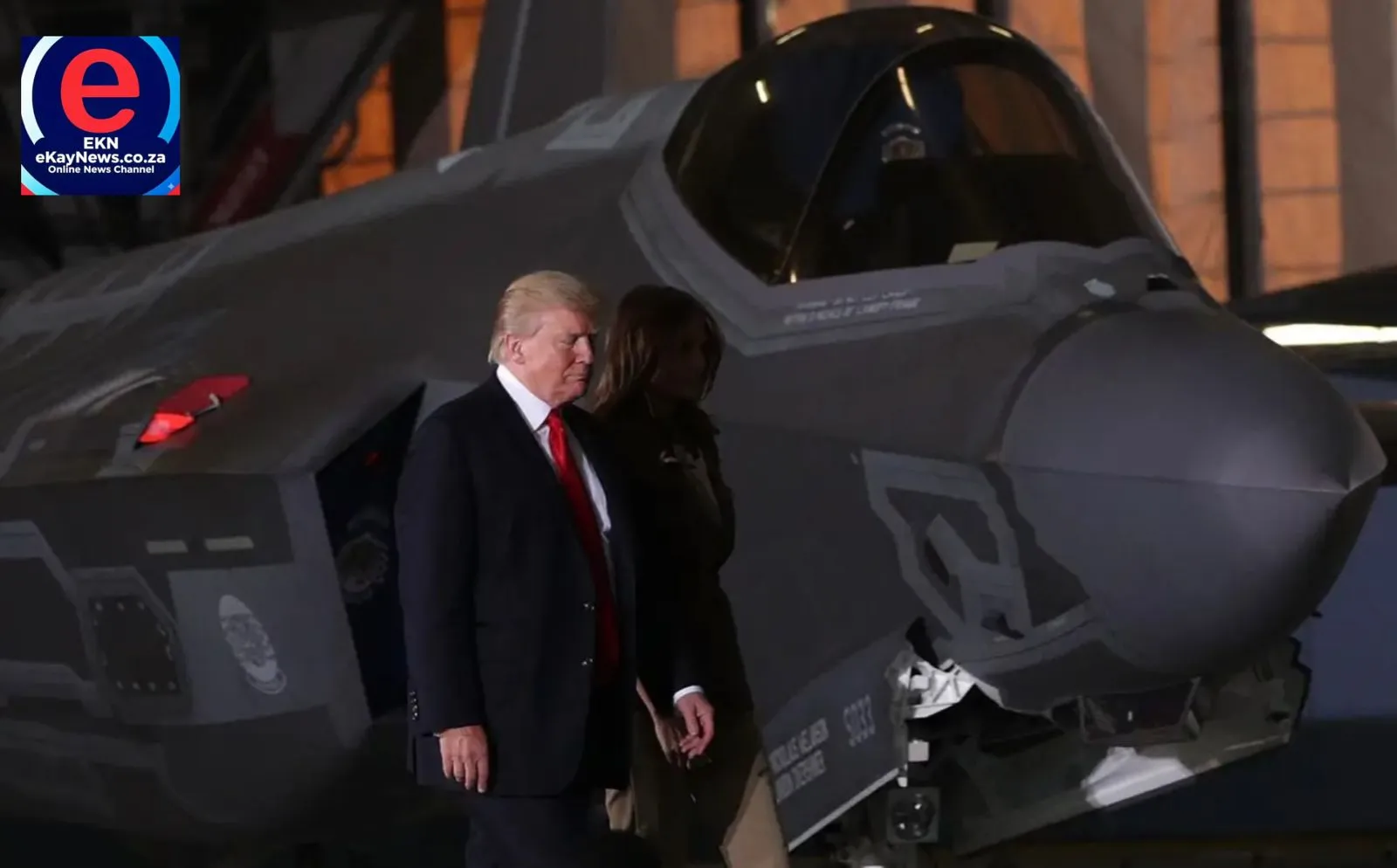
Saudi Arabia has banned USA using Airspace and airports amid Project Freedom rift
Saudi Arabia has banned USA using Airspace and airports for the purposes of the newly launched military initiative, “Project Freedom,” marking one of the most significant diplomatic ruptures between Washington and Riyadh in decades. As of May 7, 2026, the US military finds itself in a logistical stranglehold after the Kingdom of Saudi Arabia officially suspended all access to its sovereign airspace and key military installations, most notably the Prince Sultan Air Base. This drastic move was not a spontaneous act of aggression but a calculated response to what Saudi leadership describes as a “total lack of coordination and respect for regional sovereignty” following President Donald Trump’s unilateral announcement of a high-stakes maritime operation.
The fallout has been immediate and severe. The 36-hour-old “Project Freedom,” which was designed to provide armed escorts for commercial vessels traversing the volatile Strait of Hormuz, has been forced into an indefinite pause. For the US military, the inability to utilize Saudi airspace means that surveillance aircraft, refueling tankers, and fighter jets are currently unable to reach the Persian Gulf without taking much longer, more dangerous routes. This restriction effectively cripples the operational capacity of the mission, leaving international shipping lanes vulnerable at a time when global oil prices are already on a knife-edge.
The Truth Social Diplomacy: A Breach of Trust in Riyadh
The catalyst for this crisis appears to be the President’s preference for “social media diplomacy.” On the evening of May 5, 2026, Donald Trump took to his Truth Social platform to announce the commencement of “Project Freedom.” The post, which went viral within minutes, detailed a plan to use the US military to aggressively secure the Strait of Hormuz, essentially daring regional adversaries to interfere with international trade.
However, the announcement came as a total surprise to the Saudi leadership. Reports indicate that Saudi Crown Prince Mohammed bin Salman and his advisors were not briefed on the specifics of the operation before the public post. In the world of high-level geopolitics, where security arrangements are usually the result of months of quiet, back-channel negotiations, such a public declaration was viewed in Riyadh as an affront.
Consequently, Saudi Arabia has banned USA using Airspace and airports involved in the mission to demonstrate that the Kingdom will not be used as a “staging ground for uncoordinated American impulses.” For the US military, which relies heavily on the “Airport” facilities provided by Prince Sultan Air Base for logistics and refueling, the ban is a catastrophic blow to their regional readiness.
The Strategic Importance of Prince Sultan Air Base and Saudi Airspace
To understand why the decision that Saudi Arabia has banned USA using Airspace and airports is so damaging, one must look at the geography of the Middle East. Prince Sultan Air Base, located southeast of Riyadh, serves as a critical hub for American air power. It is not just an “Airport” in the traditional sense; it is a high-tech fortress capable of launching the most advanced aircraft in the US military arsenal.
When the Saudi government informed Washington that it would no longer permit aircraft involved in “Project Freedom” to operate from this base, they effectively cut the legs out from under the operation. Without this base, the US military loses:
-
Proximity: The ability to respond to threats in the Strait of Hormuz within minutes rather than hours.
-
Intelligence: The launch site for long-range drones that monitor Iranian naval movements.
-
Fueling: The primary station for aerial refueling tankers that keep patrol jets in the sky.
Furthermore, by closing their airspace, Saudi Arabia has forced American pilots to navigate around the entire Arabian Peninsula. This adds thousands of miles to every mission, increases the wear and tear on aircraft, and exponentially raises the cost of the operation.
Project Freedom: A 36-Hour Operation Halted
“Project Freedom” was intended to be a show of American strength. Following a series of missile and drone attacks in the region, the Trump administration felt that a visible, aggressive escort service was necessary to protect global energy supplies. The operation involved a mix of naval destroyers and air cover, designed to act as a “security umbrella” for 1,500 stranded commercial ships.
However, the mission lasted less than two days. Once Saudi Arabia has banned USA using Airspace and airports, the logistical math no longer worked. The US military could not guarantee air cover for the ships if their planes had to fly from bases as far away as Qatar or the UAE, both of which are also reportedly reassessing their participation in light of the Saudi stance.
The pause of “Project Freedom” has left 1,500 ships in a state of limbo. These vessels, carrying billions of dollars worth of oil and liquefied natural gas, are currently stuck behind the Strait of Hormuz, unsure if the American security guarantee still stands. The market reaction has been one of pure volatility, with oil traders watching the diplomatic spat between Trump and MBS more closely than the actual military maneuvers.
The Failed Phone Call: Trump and MBS at an Impasse
In an attempt to salvage the situation, President Trump reportedly initiated a high-level phone call with Crown Prince Mohammed bin Salman on May 6. According to sources familiar with the conversation, the call was “tense and unproductive.”
Trump reportedly argued that “Project Freedom” was designed to protect Saudi interests as much as American ones, citing the need to keep oil flowing to keep the global economy stable. However, the Crown Prince remained firm. The Saudi position is that regional escalation must be avoided at all costs. Riyadh has been pursuing a delicate diplomatic path with its neighbors, including Iran, and views an uncoordinated, aggressive US-led military operation as a threat to that peace.
Because the call did not yield a resolution, the reality that Saudi Arabia has banned USA using Airspace and airports remains the law of the land. This impasse highlights a growing trend in the Middle East: traditional allies are no longer willing to follow Washington blindly, especially when American policy is communicated via social media rather than through official state channels.
Regional Repercussions: A Gulf Divided
The Saudi ban has created a “butterfly effect” across the Gulf. Other close allies, including the United Arab Emirates and Kuwait, were also reportedly blindsided by the “Project Freedom” announcement. While they have not yet followed the Saudi lead in a total ban, they have expressed “grave concerns” about the potential for the operation to spark a wider regional war.
The US military is now facing a crisis of confidence in the region. If the most powerful state in the Arab world—Saudi Arabia—is willing to say “no” to the American President, it signals a shift in the balance of power. The Kingdom is increasingly positioning itself as a mediator that favors “regional solutions for regional problems,” moving away from the era of heavy Western military intervention.
This shift is particularly evident in the way Saudi Arabia and other Gulf states are pushing for diplomatic de-escalation. They have witnessed the renewed missile and drone attacks in the area and understand that a full-scale war would devastate their infrastructure and their “Vision 2030” economic goals. By banning the US military from using their airspace and “Airport” facilities for “Project Freedom,” they are effectively vetoing an American military strategy they find too risky.
The Impact on Global Trade and the Strait of Hormuz
The Strait of Hormuz is the world’s most important oil chokepoint. Approximately one-fifth of the world’s total oil consumption passes through this narrow waterway every day. When Saudi Arabia has banned USA using Airspace and airports, they aren’t just impacting a military mission; they are impacting the energy security of the entire planet.
If the US military cannot provide the security umbrella promised by “Project Freedom,” the insurance rates for commercial shipping will skyrocket. Some shipping companies have already ordered their vessels to turn around, fearing that without American air cover and Saudi logistical support, the risk of seizure or attack is too high.
The irony of the situation is not lost on observers: Donald Trump’s “Project Freedom” was meant to open the Strait, but his method of announcing it has led to a situation where the airspace and bases needed to protect it are now closed.
YOU MAY LIKE:
Iran says strait of Hormuz could reopen after US pauses operation
Conclusion: The Path Forward for Washington and Riyadh
The current crisis underscores a fundamental misunderstanding in the current administration’s foreign policy. While “Project Freedom” may have been a well-intentioned effort to protect trade, the execution was a diplomatic disaster. The fact that Saudi Arabia has banned USA using Airspace and airports serves as a stark reminder that even the strongest alliances require maintenance, communication, and respect.
For the US military to resume “Project Freedom” or any similar operation, there will need to be a major diplomatic climbdown. Washington will likely have to offer significant concessions to Riyadh to regain access to the Prince Sultan Air Base and the Kingdom’s airspace. This might include formal security guarantees, a more inclusive decision-making process, or a shift toward the diplomatic solutions that the Saudi leadership currently favors.
As we move deeper into 2026, the world will be watching to see if the “impulse-driven” diplomacy of the Trump administration can adapt to the “process-driven” requirements of its Middle Eastern partners. Until then, the ships remain stuck, the planes remain grounded, and the reality that Saudi Arabia has banned USA using Airspace and airports stands as a monument to a broken diplomatic link.
References
- Reuters – Gulf tensions and military operations in the Strait of Hormuz
- BBC News – Saudi Arabia, US relations and regional security analysis
Kindly consider to support eKayNews, Buy Us a Coffee & Keep the News Flowing!

Love what we do? You can now support eKayNews directly! Your contributions empower us to deliver the breaking news, sports, and local updates you trust.
Ways to Support:
-
Subscribe: Choose any amount (cancel anytime).
-
Virtual Coffee: A quick, once-off donation to say thanks.
Note: Payments are 100% secure via PayFast. We never see your banking details.
To our amazing readers: Your support fills us with gratitude. You are the reason we can keep doing this every day. Thank you for being a vital part of the eKayNews family!
We’re feeling the love at eKayNews!

Facebook: [eKayNews on Facebook] X (Twitter): [eKayNews on X] WhatsApp: [Follow the eKayNews WhatsApp Channel] Join our inner circle for real-time news alerts!
📢 Advertising Packages on www.eKayNews.co.za
Package 1. Link Booster: We add 7 links to 7 articles over 7 days – R2,500
Package 2. Permanent Feature: Sponsored Blog Article (hosted permanently) – R4,000
Package 3. Prime Visibility: Home Page Banner Ad (30 days) – R5,000
Book now: Email info@ekaynews.co.za or WhatsApp us on +27710961185