US and Iran trade fire, threatening fragile truce in the Middle East
US and Iran trade fire, threatening fragile truce that has barely held the Middle East together since early April, as naval batteries and drone swarms lit up the Persian Gulf on Thursday. What began as a day of cautious diplomatic optimism ended in a hail of lead and high-explosive ordnance, leaving the world to wonder if the 14-point peace proposal currently sitting in Tehran is worth more than the paper it is printed on.
While U.S. President Donald Trump has dismissed the afternoon’s violence as a mere “trifle,” the logistical reality of the US military presence in the region suggests a far more precarious situation. The exchange occurred in the vicinity of the Strait of Hormuz, a vital maritime artery that has remained largely shuttered since the conflict began in late February. According to reports from the scene, the skirmish involved three American destroyers and a coordinated swarm of Iranian missiles, drones, and fast-attack craft. Despite the heavy fire, the ceasefire is officially still in place, though it is currently hanging by a thread thinner than the rudder of the oil tanker disabled just hours earlier.
The Battle of the “Trifle”: What Happened in the Strait?
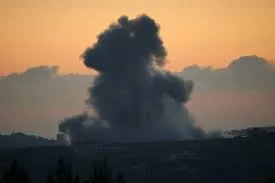
The afternoon of May 7, 2026, will be remembered for the speed at which diplomacy gave way to kinetic action. US Central Command (CENTCOM) confirmed that Iranian forces launched a multi-vector attack against three U.S. Navy warships patrolling the entrance to the Gulf. The US military response was immediate and overwhelming, utilizing onboard Aegis defense systems to swat drones out of the sky and missiles into the sea.
In Washington, the mood was remarkably casual. Asked if the incident meant the end of the peace process, President Trump was characteristically blunt. “Yeah it is [still on]. They trifled with us today. We blew them away. They trifled. I call that a trifle,” he told reporters at the White House.
Conflicting Narratives: Washington vs. Tehran
The Iranian version of events paints a starkly different picture of the engagement. Tehran’s central military command accused the United States of initiating the hostilities by attacking an Iranian oil tanker. According to their official statement, Iranian forces acted “immediately and in retaliation” to protect their sovereign interests.
This “he-said, she-said” dynamic is precisely why these scenarios are so dangerous. In a region filled with hair-trigger alerts, a single misunderstanding or retaliatory strike can easily cascade into total war.
The Hardware of the Skirmish: CENTCOM vs. Tehran
According to CENTCOM’s official post on X (formerly Twitter), the US military “eliminated inbound threats and targeted Iranian military facilities responsible” for the launch. The engagement reportedly featured a mix of advanced and asymmetric warfare tactics:
-
Iranian Drones: Low-cost suicide drones designed to saturate and overwhelm defense systems.
-
Anti-Ship Missiles: Launched from concealed coastal batteries along the Iranian shoreline.
-
U.S. Destroyers: Equipped with the latest electronic warfare suites to neutralize GPS-guided threats before they reach their targets.
-
Retaliatory Air Strikes: F/A-18 Super Hornets were reportedly diverted from their patrols to hit the suspected launch sites.
Despite the intensity of the engagement, CENTCOM maintained that they do not seek escalation. However, the frequency with which these protocols are tested suggests that both sides are pushing the limits of the April 8 ceasefire.
Project Freedom and the Strait of Hormuz Bottleneck
The backdrop to this violence is the ongoing maritime crisis in the Strait of Hormuz. Earlier this week, the Trump administration briefly launched “Project Freedom,” a naval operation intended to force the strait open for commercial shipping. However, the operation was stood down within hours after the President cited “great progress” in negotiations.
Trapped at Sea: The Human Cost of the Blockade
The cost of this diplomatic indecision is staggering on a human and economic level. Arsenio Dominguez, the secretary-general of the UN’s International Maritime Organization (IMO), revealed at a convention in Panama that approximately 1,500 ships and 20,000 international crew members are currently trapped in the Gulf region.
These sailors are essentially hostages to a geopolitical chess match, unable to exit the region without risking a devastating encounter with the US military blockade or Iranian sea mines. When instability spikes, the insurance premiums for these vessels skyrocket, and the global supply chain for oil and gas faces a catastrophic breakdown. For the 20,000 crew members on board, the “trifle” described by the White House is a life-or-death reality.
The Lebanon Connection: A Separate Peace?
The violence in the Gulf is inextricably linked to the wider strategic map, particularly the situation in Lebanon. The Middle East conflict took a dark turn earlier this week when an Israeli strike on southern Beirut killed a high-ranking commander from the Iranian-backed militant group, Hezbollah. This targeted assassination has put the separate Lebanese ceasefire under immense strain.
Interestingly, U.S. State Department officials confirmed that new Israel-Lebanon talks are scheduled for May 14 and 15. Secretary of State Marco Rubio remains optimistic, calling a peace deal “eminently achievable.” According to Rubio, the sticking point is not the Lebanese government, but Hezbollah’s subservience to the Iranian regime. However, as long as hostilities continue in the Persian Gulf, the likelihood of Hezbollah backing down in the south of Lebanon remains incredibly low.
Cynicism on the Streets of Tehran
While diplomats in Pakistan and Washington talk about “long-term ceasefires,” the civilians living in the crosshairs remain deeply skeptical. Shervin, a 42-year-old photographer in Tehran, shared his views with AFP reporters.
“Neither side in these negotiations is really capable of reaching an agreement,” he stated. “This is another one of Trump’s games; otherwise, why are so many warships and military forces being sent toward Iran?”
This widespread cynicism is reflected in the fact that, despite the ceasefire, the Iranian government continues to shutter the Strait of Hormuz, viewing it as their primary piece of leverage against the US military blockade.
International Mediators: Pakistan and the EU
The role of Pakistan as a mediator has been central to maintaining the fragile peace. Prime Minister Shehbaz Sharif had struck an optimistic tone just hours before the missiles started flying, stating his firm belief that the current truce would evolve into a permanent solution. Following the clash, Iranian foreign ministry spokesman Esmaeil Baqaei confirmed that Tehran would still communicate its position to Pakistan, but only after “finalizing its views.”
On the other side of the Atlantic, the US military strategy has faced criticism from European allies. However, President Trump claimed to have a “great call” with European Commission chief Ursula von der Leyen on Thursday. According to the President, the U.S. and the EU are “completely united” in the goal that Iran can never be allowed to possess a nuclear weapon. This unity could eventually pave the way for the multinational peacekeeping force proposed by France.
Truth Social vs. The Pentagon: The Rhetoric of War
Perhaps the most concerning aspect of the current situation is the rhetoric emanating from the commander-in-chief. Shortly after the clash, Trump took to Truth Social to double down on his aggressive stance:
“We’ll knock them out a lot harder, and a lot more violently, in the future, if they don’t get their Deal signed, FAST!”
This approach of “negotiation by threat” is a high-stakes gamble. While it may appeal to a domestic political base, it provides Iranian hardliners with the narrative of American aggression they need to justify their own strikes. The Pentagon, for its part, remains in a “defensive” posture. CENTCOM’s messaging is consistently focused on protection and readiness rather than escalation, creating a jarring disconnect between the White House’s rhetoric and the military’s strategic stance.
The Economic Toll of a “Trifle”
While the missiles and drones are the most visible signs of conflict, the economic war is what is truly strangling the region. The U.S. blockade of Iranian ports remains in full effect, even during the ceasefire.
The impact on global energy markets is undeniable. Every time stability in the Gulf is threatened, the price of Brent crude spikes. With 1,500 ships trapped behind a wall of Iranian missiles and American destroyers, the cost of maritime transport has reached historic highs. For nations in the Global South, including South Africa, this translates directly to higher fuel prices and increased inflation at the consumer level, proving that a localized skirmish has immediate global consequences.
YOU MAY LIKE:
Conclusion
The latest exchange of fire between the US and Iran serves as a stark reminder of the extreme volatility gripping the Middle East. While political leaders may downplay the severity of these skirmishes as mere negotiation tactics, the physical and economic realities on the ground tell a story of a region perpetually on the brink of total war. With thousands of sailors trapped at sea, international supply chains fracturing, and military hardware constantly locked on target, the current ceasefire remains more of a temporary pause in violence than a foundation for lasting peace. As the world watches the Strait of Hormuz, it is clear that true diplomatic resolution will require far more than social media ultimatums and unyielding blockades.
References
- Reuters – US-Iran clashes in the Strait of Hormuz raise fears for fragile truce
- CNN – Rising tensions between US and Iran threaten ceasefire efforts
Kindly consider to support eKayNews, Buy Us a Coffee & Keep the News Flowing!

Love what we do? You can now support eKayNews directly! Your contributions empower us to deliver the breaking news, sports, and local updates you trust.
Ways to Support:
-
Subscribe: Choose any amount (cancel anytime).
-
Virtual Coffee: A quick, once-off donation to say thanks.
Note: Payments are 100% secure via PayFast. We never see your banking details.
To our amazing readers: Your support fills us with gratitude. You are the reason we can keep doing this every day. Thank you for being a vital part of the eKayNews family!
We’re feeling the love at eKayNews!

Facebook: [eKayNews on Facebook] X (Twitter): [eKayNews on X] WhatsApp: [Follow the eKayNews WhatsApp Channel] Join our inner circle for real-time news alerts!
📢 Advertising Packages on www.eKayNews.co.za
Package 1. Link Booster: We add 7 links to 7 articles over 7 days – R2,500
Package 2. Permanent Feature: Sponsored Blog Article (hosted permanently) – R4,000
Package 3. Prime Visibility: Home Page Banner Ad (30 days) – R5,000
Book now: Email info@ekaynews.co.za or WhatsApp us on +27710961185