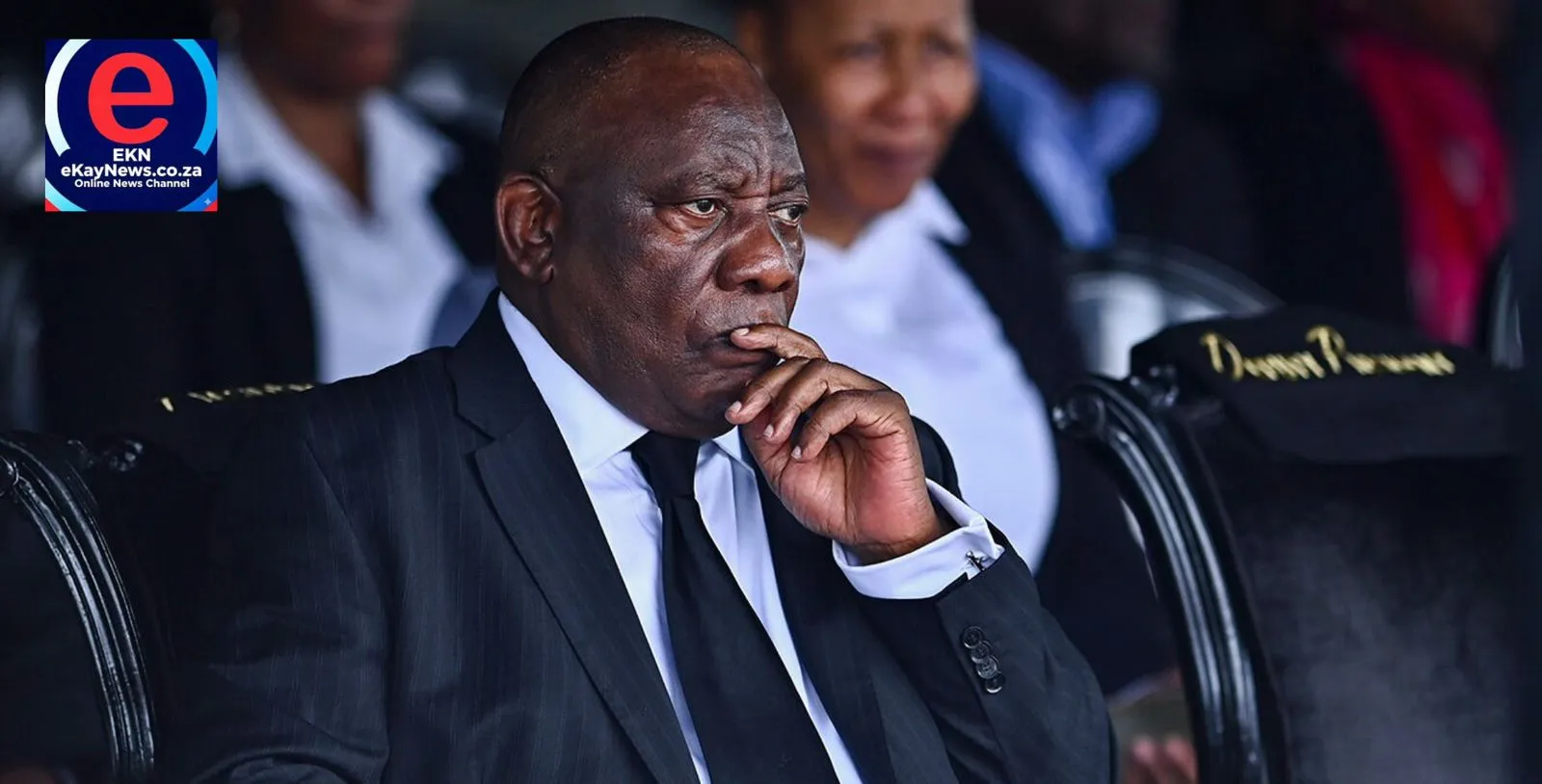
Parliament initiates impeachment probe against Ramaphosa
Parliament initiates impeachment probe against Ramaphosa, marking a historic and unprecedented moment in South African political history. In a breaking news development that has sent shockwaves through the nation, South Africa’s National Assembly is officially setting up an impeachment committee to thoroughly investigate President Cyril Ramaphosa over his involvement in the highly controversial Phala Phala scandal. This monumental decision follows a landmark and unanimous Constitutional Court judgment that declared Parliament’s earlier handling of the matter fundamentally flawed, irrational, and unlawful.
As the political landscape of South Africa shifts dramatically, the nation is bracing for what promises to be one of the most intense legal and legislative showdowns since the dawn of democracy. The initiation of this probe is not merely a procedural formality; it is a profound constitutional reckoning. For years, the Phala Phala saga has hovered like a dark cloud over the presidency, raising serious questions about executive accountability, foreign currency regulations, and the rule of law. Now, the apex court of the land has forced the legislative body to fulfill its constitutional oversight mandate.
The Constitutional Court Ruling on the Phala Phala Scandal
The catalyst for this breaking development is the unanimous ruling delivered on 8 May 2026 by the Constitutional Court. The highest court in South Africa found that Parliament acted irrationally and unconstitutionally when it voted 214–148 in December 2022 to reject the findings of an independent panel’s report.
Chief Justice Mandisa Maya, delivering the damning judgment, emphasised that the National Assembly cannot exercise its impeachment powers in a politically driven or arbitrary manner. The role of Parliament is to hold the executive accountable, and by using its majority to shield the President without engaging substantively with the evidence, the legislature failed in its constitutional duty.
The court’s ruling made it explicitly clear that political majorities cannot be used to override serious legal and constitutional inquiries. Because Parliament initiates impeachment probe against Ramaphosa only after being forced by the Constitutional Court, critics have pointed out the deep flaws in the legislature’s ability to self-regulate when dealing with a sitting head of state. The ruling effectively dismantles the political firewall that was erected around the President in late 2022, legally compelling the National Assembly to establish a formal impeachment committee.
Tracing the Roots of the Phala Phala Scandal
To understand how South Africa arrived at this critical juncture, one must look back to the origins of the Phala Phala scandal. The controversy dates back to 9 February 2020, an event that remained hidden from the South African public for over two years. On that day, a group of thieves infiltrated President Cyril Ramaphosa’s private Phala Phala game farm in the Limpopo province.
The intruders managed to steal approximately $580,000 in foreign currency that had been stuffed inside the cushions of a sofa on the property. When the theft eventually came to light, it sparked immediate and explosive allegations of a high-level cover-up. Questions swirled regarding why a sitting President had such a vast amount of undeclared foreign currency hidden in his furniture, why the crime was not formally reported to the South African Police Service (SAPS) in a conventional manner, and whether state resources—including the Presidential Protection Unit—were unlawfully utilized to track down the thieves across international borders into Namibia.
The Phala Phala scandal quickly evolved from a bizarre farm burglary into a severe constitutional crisis. It raised red flags regarding potential violations of the country’s strict foreign exchange control regulations, the Prevention and Combating of Corrupt Activities Act (PRECCA), and the ethical code of conduct for members of the executive.
Cyril Ramaphosa and the Independent Panel Report
As public outrage grew, Parliament was forced to act, leading to the appointment of a Section 89 independent panel in 2022. Chaired by the highly respected former Chief Justice Sandile Ngcobo, the panel was tasked with determining whether there was sufficient evidence to warrant a parliamentary impeachment inquiry.
After reviewing the available evidence and the President’s submissions, the Ngcobo panel dropped a political bombshell. The report concluded that there was indeed prima facie evidence of serious misconduct by the President. The panel found that Cyril Ramaphosa may have committed serious violations of the Constitution and anti-corruption laws by failing to properly report the theft and by acting in a manner inconsistent with his office.
Despite these damning findings, the ruling party mobilized its members in December 2022. During a highly charged sitting of the National Assembly, Members of Parliament voted 214 to 148 against adopting the Ngcobo report. This vote effectively halted the impeachment process in its tracks, sparking immediate backlash from opposition parties and civil society organizations who accused Parliament of a massive dereliction of duty.
The EFF and ATM Challenge Against Parliament
The refusal of the National Assembly to adopt the Ngcobo report did not sit well with the opposition. The Economic Freedom Fighters (EFF) and the African Transformation Movement (ATM) immediately challenged Parliament’s 2022 decision, escalating the matter to the Constitutional Court.
These opposition parties argued that Parliament’s decision to reject the independent panel’s findings was irrational, politically motivated, and deeply unconstitutional. They contended that the Ngcobo report provided more than enough grounds for an investigative committee to be established. By shutting down the probe before it even began, the National Assembly was accused of placing party loyalty above the Constitution of the Republic of South Africa.
The relentless legal pursuit by the EFF and ATM ultimately bore fruit with the 8 May 2026 judgment. Chief Justice Mandisa Maya’s ruling vindicated their stance, confirming that the National Assembly had prioritized partisan protection over constitutional accountability. This legal victory for the opposition is what paved the way for the current reality, where Parliament initiates impeachment probe against Ramaphosa under strict judicial mandate.
What an Impeachment Probe Means for Cyril Ramaphosa
Now that Parliament initiates impeachment probe against Ramaphosa, the political stakes for the President have never been higher. An impeachment committee—often referred to as a Section 89 inquiry—will now be formally established. This committee will have sweeping powers to summon witnesses, subpoena documents, and conduct a granular investigation into exactly what transpired on 9 February 2020 and the days that followed.
The impeachment committee will be tasked with determining whether to officially recommend the President’s removal from office. Under the South African Constitution, a sitting President can be removed from office by the National Assembly solely on the grounds of a serious violation of the Constitution or the law, serious misconduct, or an inability to perform the functions of the office. A successful impeachment requires a two-thirds majority vote in the National Assembly.
For Cyril Ramaphosa, this represents an existential political threat. While he survived the political vote in 2022, the establishment of an official impeachment committee means that he will be subjected to intense public scrutiny, cross-examination of his narrative, and a potential unearthing of new evidence regarding the Phala Phala scandal.
The Presidency Responds to the Constitutional Court
In the wake of the Constitutional Court’s devastating ruling, the response from both the legislature and the executive has been heavily scrutinized. Parliament has officially stated that it respects the ruling of the apex court and will move swiftly to establish the necessary constitutional structures to facilitate the probe.
Meanwhile, the Presidency has maintained a stoic posture. Following the judgment, the Presidency released a statement indicating that Cyril Ramaphosa reaffirms his unwavering commitment to the Constitution and the rule of law. The President has consistently denied any criminal wrongdoing regarding the Phala Phala scandal, maintaining that the foreign currency was the proceeds of legitimate game sales and that he reported the matter to the head of the Presidential Protection Unit.
However, as Parliament initiates impeachment probe against Ramaphosa, these defenses will be put to the ultimate test. The committee will likely demand to see the financial records of the game farm, the exact details of the transaction that brought the US dollars onto the property, and the specific directives given to law enforcement personnel following the theft.
The Future of South Africa and the Impeachment Probe
The fact that Parliament initiates impeachment probe against Ramaphosa in 2026 is a testament to the resilience of South Africa’s democratic institutions, particularly the judiciary. The Constitutional Court has once again demonstrated its willingness to hold the legislative branch accountable, ensuring that the mechanisms of checks and balances function as intended by the drafters of the Constitution.
However, this process will inevitably cast a long shadow over the nation’s political landscape. The Phala Phala scandal has already caused severe reputational damage to the ruling party and the President, who initially campaigned on a strong anti-corruption, “new dawn” ticket. As the impeachment committee begins its televised hearings, the South African public will be watching closely, demanding transparency, truth, and accountability.
If the committee recommends the President’s removal, it will trigger a historic vote in the National Assembly. Even if the two-thirds threshold is not met, the political damage inflicted by a thorough, evidence-based public inquiry could irreparably harm the President’s legacy and authority.
YOU MAY LIKE:
Conclusion
The news that Parliament initiates impeachment probe against Ramaphosa marks the beginning of a complex, highly charged constitutional process. The ghosts of the Phala Phala scandal have returned to the forefront of South African politics, guided by a Constitutional Court that refuses to allow political majorities to subvert the law. Over the coming months, the impeachment committee will sift through the evidence, interrogating the actions of the President and testing the very fabric of South Africa’s constitutional democracy. The world watches as the nation navigates this unprecedented legal and political storm.