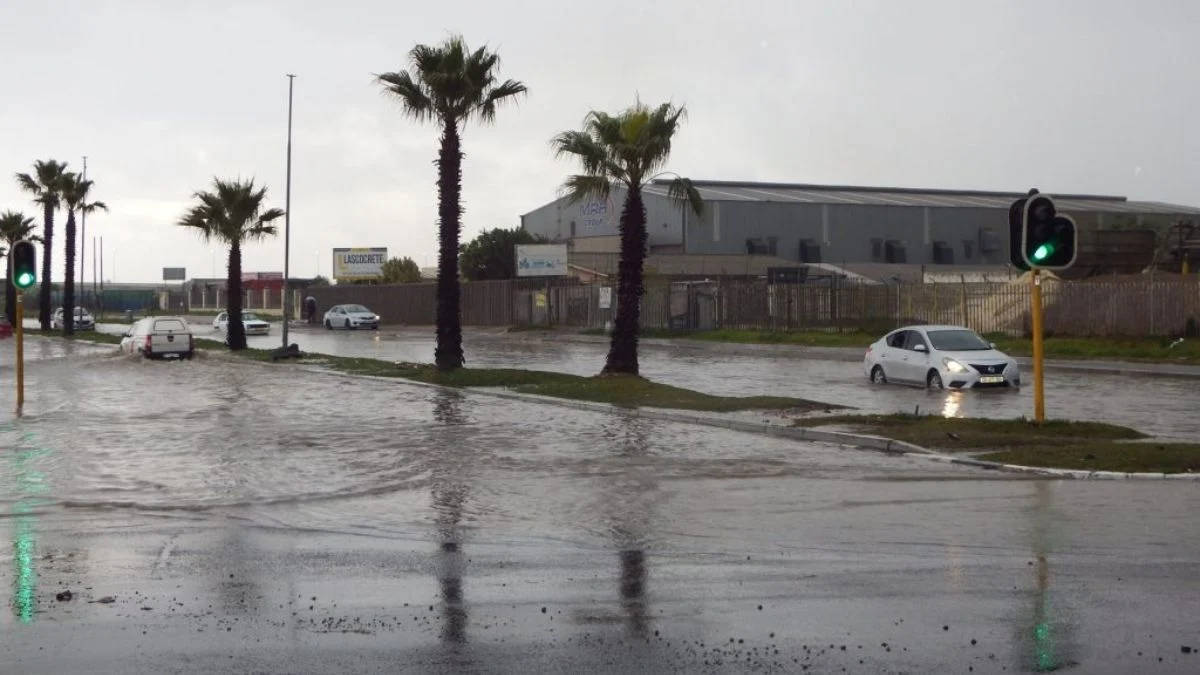
Another level 8 severe storm warning for South Africa
Another level 8 severe storm warning for South Africa has been officially activated by the South African Weather Service (SAWS), signaling a period of extreme meteorological volatility for the southwestern parts of the country. This urgent notification comes as a powerful and significant cold front prepares to make landfall, bringing with it a suite of life-threatening conditions. From Sunday, 10 May, to Tuesday, 12 May 2026, residents in the Western Cape and parts of the Northern Cape are urged to prepare for a relentless onslaught of disruptive rainfall, gale-force winds, and massive storm surges.
The elevation of this alert to an “Orange Level 8” status is not a common occurrence and indicates a high probability of severe impact. According to the South African Weather Service, the intensity of this system is such that it could lead to the flooding of both formal and informal settlements, significant infrastructure damage, and a genuine danger to life due to fast-flowing rivers and mudslides.
Understanding the Impact: Why a Level 8 Warning?
When the South African Weather Service issues a level 8 warning, it is utilizing an impact-based system. Unlike older models that focused solely on the amount of rain in millimeters, the current system evaluates the potential “socio-economic impact” of the weather. A level 8 alert suggests that the combination of the weather’s severity and the vulnerability of the region is at a critical threshold.
In this specific instance, the Western Cape is facing a “perfect storm” of conditions. A deep low-pressure system associated with the cold front is expected to stall slightly over the coast, prolonging the duration of the disruptive rainfall. When the ground becomes saturated, its ability to absorb further moisture vanishes, leading to immediate surface runoff. In mountainous areas like Stellenbosch and Drakenstein, this runoff transforms into mudslides and flash floods with terrifying speed.
Geographic Breakdown of the Severe Weather Zones
The current system is widespread, affecting multiple districts with varying degrees of intensity. It is vital for residents to identify which category their specific municipality falls under to take the appropriate precautions.
The Orange Level 8 Zone: Extreme Risk
This is the highest tier of the current alert. Another level 8 severe storm warning for South Africa specifically targets the mountainous corridors of the Boland and surrounding areas.
-
Affected Areas: Drakenstein, Stellenbosch, western parts of Theewaterskloof, Breede Valley, and Witzenberg.
-
Primary Threats: Intense, sustained rainfall exceeding 100mm in 24 hours in some pockets, leading to the collapse of bridges, flooding of major transport arteries (like the N1 and N2), and mudslides in high-gradient areas.
Orange Level 6: Widespread Flooding
While slightly lower in “level,” an Orange Level 6 warning still carries a high risk of property damage.
-
Affected Areas: The City of Cape Town, the West Coast, and the western Overberg.
-
Primary Threats: Heavy downpours that will likely overwhelm urban drainage systems. In informal settlements, where drainage is often non-existent, the risk of “knee-deep” flooding is almost certain.
Coastal and Marine Warnings
The cold front is generating a massive sea state. Between Lambert’s Bay and Plettenberg Bay, a Level 6 warning is in place for damaging winds and waves. Mariners and coastal residents should expect “very rough seas” with wave heights potentially reaching dangerous levels, threatening coastal infrastructure and making navigation impossible for small to medium vessels.
Wind and Snow: The Interior Challenge
While the rain is the headline act, the wind and temperature drops are equally concerning. Another level 8 severe storm warning for South Africa is accompanied by Level 5 and Level 4 warnings for damaging interior winds.
In the Central Karoo and parts of the Cape Winelands, winds could be strong enough to uproot trees and damage power lines, leading to localized blackouts. These winds, combined with the moisture, create a “wind-chill” factor that can be lethal to livestock.
Snowfall in the Karoo and High-Lying Areas
Perhaps the most dramatic shift in the weather will be the transition from rain to snow in the high-elevation regions. A Yellow Level 2 warning for disruptive snowfall has been issued for the Karoo Hoogland (Northern Cape) and the high peaks of the Western Cape.
Snow on mountain passes often leads to the closure of critical routes like the Hex River Pass. For the agricultural sector, this represents a significant threat. Farmers in the southern Namakwa and Central Karoo must move vulnerable livestock to sheltered areas immediately to prevent loss due to hypothermia.
Infrastructure and Economic Disruptions
The South African Weather Service has warned that the impact of this cold front will extend far beyond wet clothes. The economic heartbeat of the Western Cape—specifically its agricultural and transport sectors—is at risk.
-
Transport: Major disruptions are anticipated on the N1, N2, and R60. Low-lying bridges, which are common in the Breede Valley and Witzenberg municipalities, are prone to being washed away or submerged.
-
Agriculture: The Cape Winelands and Overberg are in the midst of various seasonal activities. Disruptive rainfall can damage crops, wash away topsoil, and destroy irrigation infrastructure.
-
Urban Utilities: With damaging winds and heavy rain, power interruptions are highly likely. Cape Town residents should prepare for potential outages as trees fall on lines or substations are affected by rising water levels.
Safety Protocols: What You Must Do
Because another level 8 severe storm warning for South Africa has been issued, the public is advised to move from “observation” to “action.” Emergency services and disaster management teams are already on high alert, but individual responsibility remains the first line of defense.
Essential Preparedness Checklist
-
Emergency Kits: Ensure you have a “go-bag” ready. This should include flashlights, fresh batteries, a first-aid kit, blankets, and non-perishable food.
-
Home Maintenance: Clear gutters and downpipes today. If you live in an area prone to flooding, consider using sandbags to divert water away from entry points.
-
Travel Safety: The SAWS advice is clear—avoid unnecessary travel. If you must drive, be aware of the “hydroplaning” risk. Never attempt to cross a flooded bridge, even if you think your vehicle is high enough; the force of flowing water is often underestimated and can sweep a 4×4 off the road in seconds.
-
Animal Welfare: Livestock and pets must be given adequate warmth. If you are in the snowfall zones of the Northern Cape or Boland, move animals to higher ground and provide additional feed to help them maintain body temperature.
The Role of Disaster Management Authorities
Community leaders and municipal disaster management centers across the City of Cape Town and the Cape Winelands have activated contingency plans. This involves pre-positioning water pumps, clearing drainage channels in high-risk informal settlements, and readying community halls to serve as emergency shelters for those displaced by floods.
The South African Weather Service will continue to provide satellite-tracked updates. As the cold front makes its final approach, these warnings may be refined. It is crucial to stay tuned to local radio stations and official social media channels for real-time adjustments to the warning levels.
YOU MAY LIKE:
A Call for Public Vigilance
Another level 8 severe storm warning for South Africa serves as a stark reminder of the power of nature. The combination of disruptive rainfall, gale-force winds, and freezing temperatures creates a multi-hazard environment that requires collective vigilance.
We urge all residents of the Western Cape and the southern Northern Cape to take these warnings seriously. By securing outdoor objects, staying off the roads, and looking out for vulnerable members of the community—particularly the elderly and those in informal housing—we can mitigate the “danger to life” flagged by the weather service.
Stay safe, stay dry, and keep a close eye on the latest forecasts from the South African Weather Service. The next 72 hours will be a test of the region’s resilience against the elements.
References
-
BusinessTech “Another level 8 severe storm warning for South Africa – hitting Cape Town” https://businesstech.co.za/news/lifestyle/859982/another-level-8-severe-storm-warning-for-south-africa-hitting-cape-town/
-
eNCA “From heavy rain to floods | What 200mm of rain really means” https://www.enca.com/news/heavy-rain-floods-what-200mm-rain-really-means
Kindly consider to support eKayNews, Buy Us a Coffee & Keep the News Flowing!

Love what we do? You can now support eKayNews directly! Your contributions empower us to deliver the breaking news, sports, and local updates you trust.
Ways to Support:
-
Subscribe: Choose any amount (cancel anytime).
-
Virtual Coffee: A quick, once-off donation to say thanks.
Note: Payments are 100% secure via PayFast. We never see your banking details.
To our amazing readers: Your support fills us with gratitude. You are the reason we can keep doing this every day. Thank you for being a vital part of the eKayNews family!
We’re feeling the love at eKayNews!

Facebook: [eKayNews on Facebook] X (Twitter): [eKayNews on X] WhatsApp: [Follow the eKayNews WhatsApp Channel] Join our inner circle for real-time news alerts!
📢 Advertising Packages on www.eKayNews.co.za
Package 1. Link Booster: We add 7 links to 7 articles over 7 days – R2,500
Package 2. Permanent Feature: Sponsored Blog Article (hosted permanently) – R4,000
Package 3. Prime Visibility: Home Page Banner Ad (30 days) – R5,000
Book now: Email info@ekaynews.co.za or WhatsApp us on +27710961185