Donald Trump escalates tensions with Iran over the Strait of Hormuz blockade
Trump threatens to blow Iran ‘off the face of the earth’ if it attacks US vessels, issuing a stark and unprecedented warning as the Middle East edges dangerously closer to a catastrophic full-scale war. The dramatic escalation follows a major operation launched by the United States on Monday in the Persian Gulf, designed to force open vital maritime routes and rescue thousands of stranded civilian sailors.
The global community watches with bated breath as the rhetoric between Washington and Tehran reaches a fever pitch. With billions of dollars in global trade frozen and international energy markets teetering on the edge of panic, the standoff in the Gulf is no longer just a regional dispute—it is a global economic crisis. As the United States initiates complex naval maneuvers to break an entrenched geopolitical deadlock, the risk of a miscalculation triggering a massive armed conflict has never been higher.
The US military launches operations to break the blockade
The volatile situation reached a boiling point on Monday when the US military officially launched a comprehensive naval operation aimed at dismantling the Iranian grip on the region. The primary objective of this mission is to assist hundreds of commercial ships that have been violently trapped, along with their crews, in the hostile waters of the Gulf.
By taking decisive kinetic action, the United States has inadvertently dragged the entire region back to the brink of full-scale war, shattering whatever fragile diplomatic progress had been made in recent weeks.
Defeating the Strait of Hormuz Blockade
The epicenter of this crisis is the Strait of Hormuz, widely considered the most critical maritime chokepoint on the planet. Tehran has actively sought to reassert its blockade on this vital waterway, essentially holding global trade hostage.
During the initial phases of the operation, the US military reported significant tactical victories. Pentagon officials claimed that American naval forces successfully destroyed six Iranian small attack boats that were harassing commercial vessels. Furthermore, advanced defense systems reportedly intercepted and neutralized multiple Iranian cruise missiles and weaponized drones directed at American assets.
However, Iran vehemently denied these claims, dismissing the American reports as psychological warfare and propaganda. Tehran’s state media broadcasted counter-narratives, insisting that their defensive perimeters remained fully intact and that American forces were the true aggressors in the sovereign waters of the Persian Gulf.
Donald Trump issues severe warnings to Iran
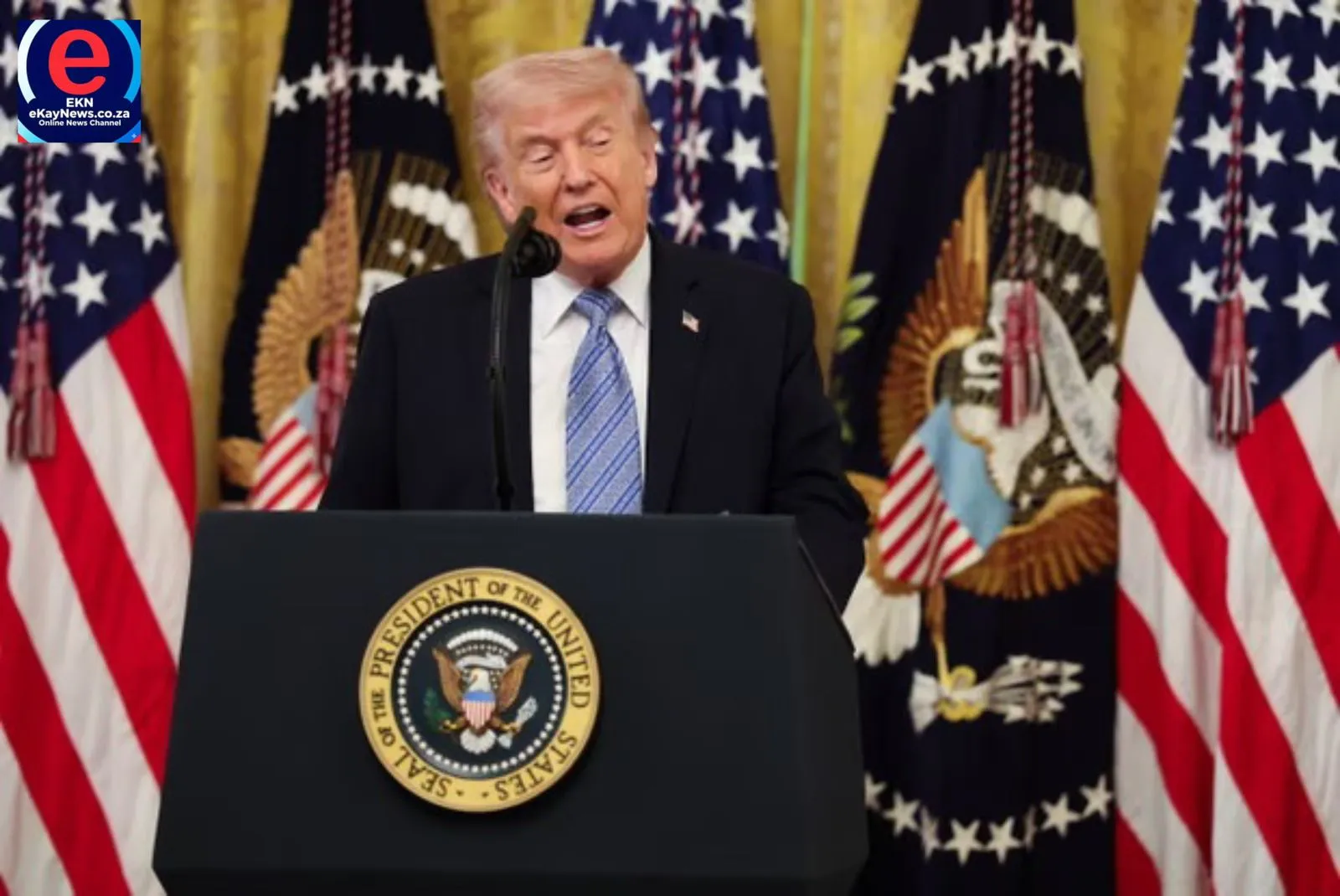
In the face of Tehran’s defiance, Donald Trump has doubled down on his aggressive posture. During a high-profile interview with Fox News on Monday, the President did not mince words, delivering one of the most severe threats of his political career. Trump threatens to blow Iran ‘off the face of the earth’ if it attacks US vessels, a statement that immediately sent shockwaves through international diplomatic circles.
In the interview, Donald Trump described the ongoing American naval effort to clear the strait as “one of the greatest military maneuvers ever done.” Despite the extreme rhetoric, he curiously claimed that Iranian officials had been “far more malleable” in recent back-channel talks than they had been prior to the military buildup.
Highlighting US military superiority
Addressing domestic concerns regarding American weapons stockpiles and military readiness for a prolonged conflict, the President expressed absolute confidence in the country’s arsenal.
“We have more weapons and ammunition at a much higher grade than we had before. We have the best equipment. We have stuff all over the world. We have these bases all over the world. They’re all stocked up with equipment. We can use all of that stuff, and we will, if we need it.” — Donald Trump
This rhetoric serves a dual purpose: intimidating the leadership in Iran and reassuring the American public and international allies that the United States possesses the logistical endurance to outlast any adversarial blockade.
The humanitarian toll: Stranded in the Strait of Hormuz
While the politicians and generals trade threats, a massive humanitarian crisis is quietly unfolding at sea. The geopolitical chess match has real-world victims, primarily the civilian merchant mariners caught in the crossfire.
Currently, over 800 commercial ships and approximately 20,000 crew members remain desperately stranded in the region. These vessels, ranging from massive crude oil supertankers to container ships carrying vital medical and agricultural supplies, are unable to safely navigate the Strait of Hormuz.
The daily reality of the blockade
The conditions for these stranded sailors are rapidly deteriorating. As days turn into weeks, many ships are reporting critical shortages:
-
Fresh Water and Food: Supply lines have been severed, forcing crews to heavily ration their dwindling onboard stores.
-
Fuel Reserves: Ships must keep their generators running to maintain basic life support, refrigeration, and communication systems, rapidly burning through their fuel reserves.
-
Medical Emergencies: With no safe port to dock at, sailors requiring urgent medical attention for injuries or illnesses are left without access to hospital care.
-
Psychological Strain: The constant threat of naval mines, incoming missiles, and drone strikes has created an environment of extreme anxiety and psychological trauma for the 20,000 crew members.
The US military, specifically US Central Command (CENTCOM), announced on Monday that American forces had successfully redirected 50 commercial vessels away from immediate danger zones amid the ongoing blockade. While this represents a small victory, the sheer volume of trapped ships makes a total evacuation practically impossible without completely reopening the strait.
Iran pushes back and the collapse of the ceasefire
Despite the overwhelming display of American naval power, Iran has shown no signs of backing down. The Iranian military central command issued its own set of fiery warnings earlier on Monday, declaring unequivocally that it would strike any US naval vessel that dared to approach the territorial limits of the strait.
In a bold escalation, Iranian military officials claimed to have already successfully struck a US frigate in the area with two precision-guided anti-ship missiles. While the Pentagon has not corroborated this specific claim, the assertion alone dramatically increases the perceived risk for any vessel operating in the sector.
A fragile peace shattered
The latest exchange of fire and threats calls into serious question the viability of the fragile, Pakistan-brokered ceasefire that temporarily halted hostilities last month. While that diplomatic effort successfully paused direct military strikes on urban centers, it fundamentally failed to achieve its primary economic objective: opening up the Strait of Hormuz.
The failure of this ceasefire highlights the deep-seated mistrust between the two nations. Pakistan’s diplomatic corps worked tirelessly to find a middle ground, but the strategic value of the strait proved too critical for Tehran to relinquish. The blockade remains Iran’s most potent leverage against crushing international economic sanctions.
The global economic impact of the Strait of Hormuz blockade
The phrase “Trump threatens to blow Iran ‘off the face of the earth’ if it attacks US vessels” is not just a political soundbite; it is a profound market indicator. The Strait of Hormuz is arguably the most vital artery in the global energy network, through which roughly a fifth of the world’s international oil supplies usually travel.
When this artery is severed, the economic consequences are instantaneous and devastating.
Market volatility and energy security
The ongoing blockade has triggered massive disruptions in global commodity markets:
| Economic Sector | Impact of the Blockade |
| Crude Oil Prices | Skyrocketing risk premiums have pushed Brent Crude to record highs, directly translating to higher gasoline prices worldwide. |
| Liquid Natural Gas (LNG) | Crucial shipments of LNG from Qatar are stalled, threatening energy security in Europe and Asia. |
| Shipping Insurance | Marine insurance premiums for vessels entering the Middle East have surged by over 400%, making transit financially unviable for many shipping companies. |
| Supply Chain Delays | Non-energy commodities, including agricultural products and manufactured goods, are facing weeks of delays, exacerbating global inflation. |
The longer the US military and the Iranian forces remain locked in this standoff, the closer the global economy inches toward a recession driven by energy scarcity.
Echoes of the past: Donald Trump’s history of extreme rhetoric
This is not the first time the world has heard such apocalyptic language from the American President regarding this specific conflict. Donald Trump’s threats against Iran deliberately echo the highly controversial remarks he made in April of this year.
During that previous flare-up, he warned that a “whole civilization will die” if Tehran failed to comply with his strict demands regarding the demilitarization of the Strait of Hormuz. Those comments drew widespread domestic and international backlash, with European allies urging restraint and political opponents accusing the administration of recklessly warmongering.
However, the administration seems to believe that this strategy of maximum pressure and unpredictable rhetoric is the only way to force Tehran to the negotiating table on American terms. By projecting an image of overwhelming, almost disproportionate willingness to use force, the United States hopes to deter the Iranian leadership from taking fatal, irreversible actions against the trapped civilian fleet.
YOU MAY LIKE:
The path forward: Diplomacy or destruction?
As Trump threatens to blow Iran ‘off the face of the earth’ if it attacks US vessels, the window for a peaceful resolution appears to be rapidly closing. The international community is left paralyzed, caught between the unyielding demands of Washington and the deeply entrenched resistance of Tehran.
The US military is fully mobilized, operating under the assumption that the blockade must be broken by force if diplomacy fails. Meanwhile, Iran continues to leverage its geographic advantage, utilizing asymmetric warfare tactics to frustrate the world’s most powerful navy.
The fate of the 20,000 stranded crew members, the stability of the global energy market, and the avoidance of a catastrophic regional war now hang entirely in the balance. Whether the recent back-channel talks mentioned by Donald Trump can yield a miraculous breakthrough, or whether the Gulf will once again become a theater of devastating conflict, remains the most pressing geopolitical question of our time.
References
- Reuters
Trump warns Iran over attacks as Strait of Hormuz tensions rise
https://www.reuters.com/world/middle-east/ - BBC News
Strait of Hormuz: Why tensions between US and Iran matter
https://www.bbc.com/news/world-middle-east
Kindly consider to support eKayNews, Buy Us a Coffee & Keep the News Flowing!

Love what we do? You can now support eKayNews directly! Your contributions empower us to deliver the breaking news, sports, and local updates you trust.
Ways to Support:
-
Subscribe: Choose any amount (cancel anytime).
-
Virtual Coffee: A quick, once-off donation to say thanks.
Note: Payments are 100% secure via PayFast. We never see your banking details.
To our amazing readers: Your support fills us with gratitude. You are the reason we can keep doing this every day. Thank you for being a vital part of the eKayNews family!
We’re feeling the love at eKayNews!

Facebook: [eKayNews on Facebook] X (Twitter): [eKayNews on X] WhatsApp: [Follow the eKayNews WhatsApp Channel] Join our inner circle for real-time news alerts!
📢 Advertising Packages on www.eKayNews.co.za
Package 1. Link Booster: We add 7 links to 7 articles over 7 days – R2,500
Package 2. Permanent Feature: Sponsored Blog Article (hosted permanently) – R4,000
Package 3. Prime Visibility: Home Page Banner Ad (30 days) – R5,000
Book now: Email info@ekaynews.co.za or WhatsApp us on +27710961185