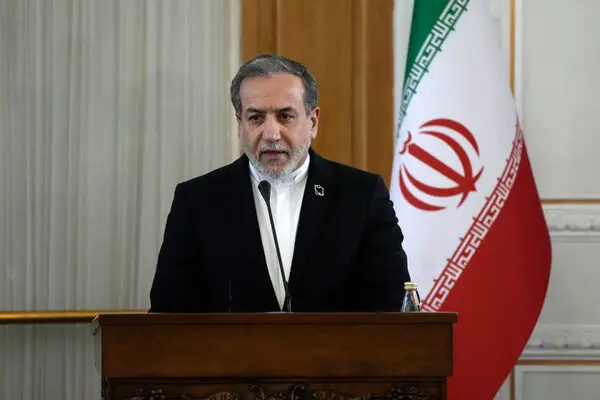
Iran sends response to US proposals to end war
Iran sends response to US proposals to end war, marking a potentially historic shift in a conflict that has held the global economy and Middle Eastern stability hostage since February 2026. According to official statements released Sunday, May 10, 2026, from both Tehran and the mediating government in Islamabad, a formal document is now in the hands of third-party negotiators. This development suggests a pivot—however tentative—from the thunder of artillery and drone strikes to the complex, often frustrating arena of high-stakes diplomacy.
The conflict, which ignited following a series of US and Israeli strikes on February 28, has reshaped regional alliances and sent global energy markets into a tailspin. Now, with a formal response on the table, the international community is holding its breath to see if the “Maximum Pressure” strategy of the current American administration has finally forced a breakthrough or if this is simply a tactical pause in an escalating storm.
Pakistan’s Pivotal Role as a Neutral Mediator
Pakistan’s Prime Minister Shehbaz Sharif confirmed on Sunday that his country has officially received the Iranian response. Serving as the primary back-channel between Tehran and Washington, Pakistan finds itself in a delicate geopolitical balancing act. Sharif, while confirming the receipt of the document, remained tight-lipped regarding its specific clauses, citing the “extreme sensitivity” of the ongoing negotiations.
It remains unclear if the peace proposal has already been transmitted to the United States or if it is currently undergoing a preliminary review in Islamabad to ensure the terms are even remotely reconcilable with Washington’s demands. The silence from the mediator has only fueled intense speculation among diplomats at the UN, many of whom wonder if Pakistan is acting as a mere courier or a substantive filter in these high-stakes talks.
Analyzing the 14-Point Peace Proposal from the United States
As reported by the US news outlet Axios, the foundation for these negotiations is a one-page, 14-point memorandum drafted by the United States. This document isn’t a suggestion; it is a comprehensive roadmap designed to dismantle the strategic pillars of Iranian policy.
Key Provisions of the US Memorandum
| Provision | Description |
| Nuclear Suspension | Immediate and total halt to all uranium enrichment above 3.5%. |
| Sanctions Relief | Phased removal of secondary sanctions contingent on verified compliance. |
| Maritime Freedom | Guaranteed restoration of free transit through the Strait of Hormuz. |
| Proxy Dismantling | Cessation of funding for regional non-state actors and militias. |
| Strait Security | Removal of Iranian naval mines and fast-attack craft from international lanes. |
Sources briefed on the memo suggest that the terms are “all or nothing.” This “Maximum Pressure” 2.0 approach is the definitive hallmark of the Donald Trump administration, designed to leave Tehran with a binary choice: total economic collapse or a fundamental restructuring of its regional influence.
Donald Trump’s “Maximum Pressure” Rhetoric on Truth Social
President Donald Trump has utilized his Truth Social platform to maintain a constant barrage of psychological pressure on the Iranian leadership. While he did not explicitly detail the contents of the news that Iran sends response to US proposals to end war, his recent activity leaves very little room for interpretation. Trump asserted that Iran would no longer be allowed to “play games” with the United States, characterizing the negotiation process as a ticking clock.
“For 47 years the Iranians have been ‘tapping’ us along, keeping us waiting… laughing at our now GREAT AGAIN Country. They will be laughing no longer!” — Donald Trump, Truth Social (May 10, 2026)
Trump’s rhetoric taps into a long-standing narrative of American grievance, citing the loss of US personnel to roadside bombs and the recent tragic reports of internal suppression within Iran. His message is unequivocal: if a deal is not reached imminently, the military intensity will escalate to a level “much higher than it was before.” For Trump, the response from Tehran is not just a diplomatic document; it is a final ultimatum.
The Strait of Hormuz: A Global Chokepoint Under Siege
Central to the conflict and the Iranian response is the Strait of Hormuz. This narrow waterway is the jugular vein of the global energy market, with roughly 20% of the world’s oil and natural gas passing through its waters. Since the war began, Iran has effectively leveraged its control over the Strait to exert counter-pressure on the global economy, leading to the highest oil prices seen in a decade.
Military spokesman Mohammad Akraminia warned that any vessels passing through the Strait would face “severe consequences” without prior coordination with Tehran. This de facto blockade has infuriated the United States, which has responded with its own naval blockade of Iranian ports. This “tit-for-tat” maritime aggression has turned the northern Indian Ocean into a powder keg, with international shipping companies now forced to choose between exorbitant insurance premiums or rerouting around the Cape of Good Hope.
Nuclear Enrichment and Netanyahu’s “Red Line”
Even as Iran sends response to US proposals to end war with a focus on maritime security, the nuclear issue remains the ultimate “red line” for Israel. Israeli Prime Minister Benjamin Netanyahu has been adamant that any peace deal that leaves Iran’s enrichment infrastructure intact is a “surrender.”
In a recent interview for CBS’s 60 Minutes, Netanyahu insisted that Iran’s stockpile of enriched uranium must be “taken out” and enrichment sites dismantled before the war can be considered over. This poses a massive hurdle for Iranian President Masoud Pezeshkian, who must balance the demands of the US with the hardliners within his own Revolutionary Guard who view the nuclear program as the ultimate deterrent against foreign invasion.
Regional Spillover: Drone Incursions and Maritime Strikes
The conflict is rapidly spilling over the borders of the primary combatants. On Sunday alone, the volatility of the Gulf was put on full display:
-
Qatar: A bulk carrier was struck by an “unknown projectile” north-east of Doha. Iranian sources claim the vessel was US-flagged.
-
Kuwait: The military reported “dealing with” unidentified drones that breached their airspace.
-
UAE: Air defenses successfully intercepted two drones originating from Iranian territory.
These incidents have prompted the United Kingdom and France to reconsider their naval presence in the region. UK Prime Minister Sir Keir Starmer and French President Emmanuel Macron are currently championing an international mission to safeguard shipping, though Tehran has already warned of a “decisive and immediate response” to any European naval deployment in the Strait.
The Monday Summit: 40 Nations Search for a Solution
On Monday, May 11, defense ministers from more than 40 nations will convene to discuss a UK-led plan to police the Strait of Hormuz. Co-chaired by John Healey and Catherine Vautrin, the meeting is intended to establish a maritime security framework that can be implemented once—or if—hostilities cease.
The challenge for this coalition is that they are essentially planning for a post-war environment while the “bombing starts” warnings from Trump still echo. However, the fact that Iran sends response to US proposals to end war provides this summit with its first real piece of diplomatic leverage. The coalition must now decide if they are policing a peace or preparing for an even larger maritime conflict.
The Path Forward: Diplomacy or Escalation?
The ceasefire that was established to facilitate these talks is currently the only thing standing between the current status quo and a total regional conflagration. It is an incredibly fragile peace, punctuated by drone interceptions and maritime skirmishes.
If the Iranian response delivered via Pakistan contains substantive concessions—specifically regarding uranium enrichment and the unblocking of the Strait—we could be witnessing the beginning of the end of the 2026 war. If Washington views the response as another attempt to stall for time, the region must prepare for the “higher level of intensity” promised by the White House.
YOU MAY LIKE:
Conclusion: The 48-Hour Window
As Iran sends response to US proposals to end war, the world enters a critical 48-hour window. The transition from the battlefield to the bargaining table is always the most dangerous phase of any conflict. In a war that involves nuclear ambitions, the world’s primary energy chokepoint, and the “Great Again” foreign policy of Donald Trump, the margin for error is non-existent.
Ultimately, diplomacy is currently the only barrier standing between the current shaky ceasefire and a total regional collapse. Whether the 14 points of the US memo and the Iranian counter-proposals can find a middle ground remains to be seen. One thing is certain: the “games” are over, and the next move from Washington will determine the face of the Middle East for the next decade.
References
-
CBS News – Iran war is “not over” until highly enriched uranium is removed, Israel’s Netanyahu says
- Fox News – Iran on ‘full readiness’ to protect uranium at nuclear sites as US awaits response to proposal
Kindly consider to support eKayNews, Buy Us a Coffee & Keep the News Flowing!

Love what we do? You can now support eKayNews directly! Your contributions empower us to deliver the breaking news, sports, and local updates you trust.
Ways to Support:
-
Subscribe: Choose any amount (cancel anytime).
-
Virtual Coffee: A quick, once-off donation to say thanks.
Note: Payments are 100% secure via PayFast. We never see your banking details.
To our amazing readers: Your support fills us with gratitude. You are the reason we can keep doing this every day. Thank you for being a vital part of the eKayNews family!
We’re feeling the love at eKayNews!

Facebook: [eKayNews on Facebook] X (Twitter): [eKayNews on X] WhatsApp: [Follow the eKayNews WhatsApp Channel] Join our inner circle for real-time news alerts!
📢 Advertising Packages on www.eKayNews.co.za
Package 1. Link Booster: We add 7 links to 7 articles over 7 days – R2,500
Package 2. Permanent Feature: Sponsored Blog Article (hosted permanently) – R4,000
Package 3. Prime Visibility: Home Page Banner Ad (30 days) – R5,000
Book now: Email info@ekaynews.co.za or WhatsApp us on +27710961185